
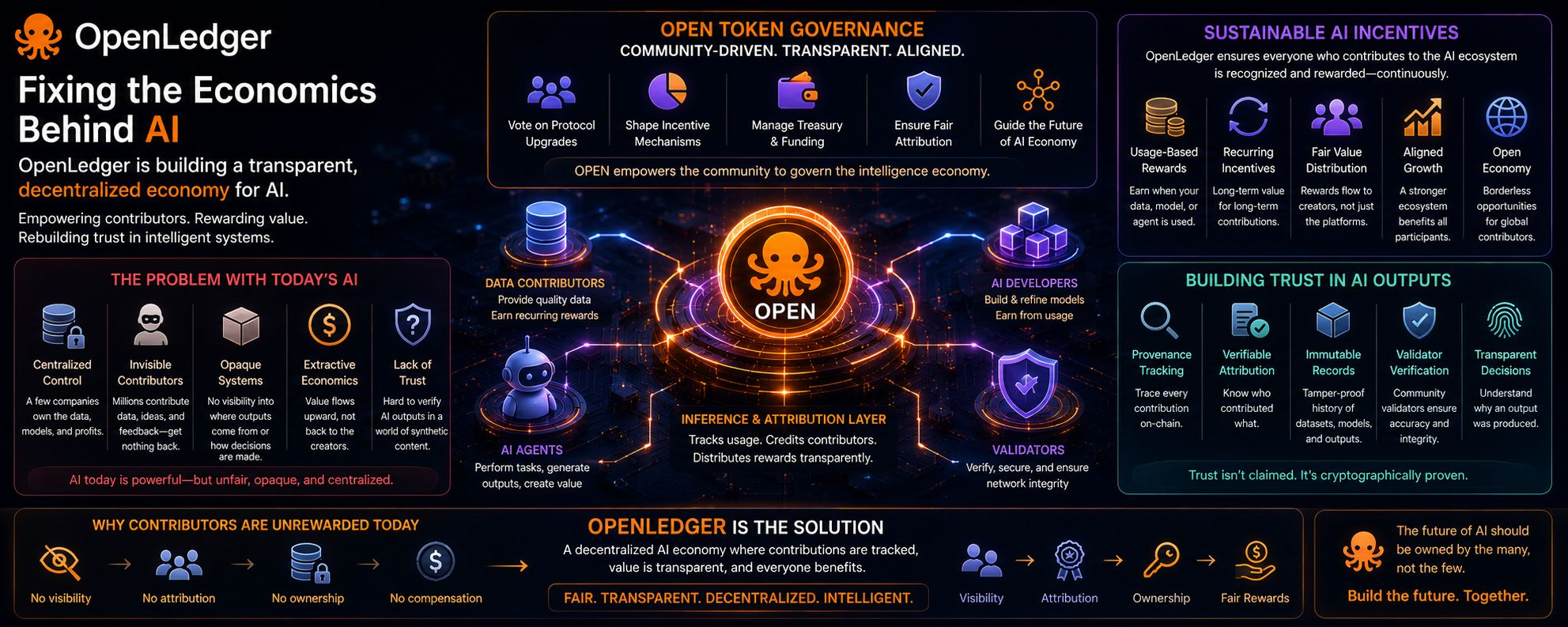


🤓 This morning i have Been sitting with OpenLedger (OPEN) lately, and I think the project is targeting something way deeper than “decentralized AI.” Most people focus on the blockchain layer or token narrative, but what OpenLedger is really attacking is the economic imbalance inside modern AI systems. The current model is honestly kind of absurd when you think about it. Millions of people contribute data, ideas, feedback loops, and model improvements, yet almost all of the financial upside gets captured by a handful of centralized AI companies.
That’s the exact problem OpenLedger seems obsessed with solving.
What I kept coming back to is the role of OPEN token governance in all this. Unlike passive governance tokens that mostly exist for speculation theater, OPEN is tied directly to how incentives, attribution systems, inference rewards, and ecosystem coordination evolve over time. The governance layer matters because AI systems are becoming infrastructure, not just products. Whoever controls incentive structures ultimately controls how intelligence itself develops.
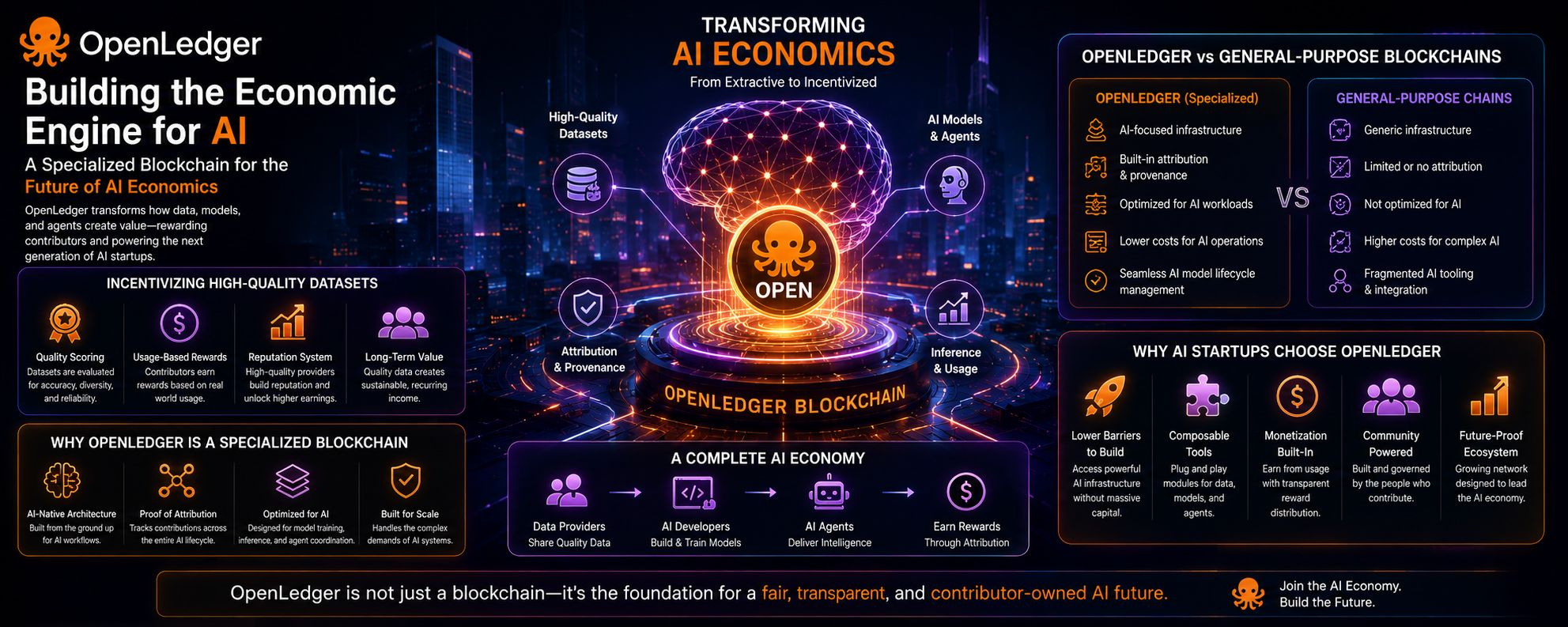
And honestly, sustainable incentives might be OpenLedger’s strongest thesis.
Most AI ecosystems today are extractive. Datasets are scraped, models are trained behind closed systems, contributors become invisible, and nobody can verify where outputs actually came from. OpenLedger flips that dynamic through attribution tracking and transparent on-chain accounting. If a dataset improves model performance or an AI agent generates useful outputs, contributors can theoretically receive recurring rewards tied to usage and inference activity.
That changes AI from a one-way extraction machine into an economic network where participation has measurable value.
The trust layer is important too. AI-generated outputs are becoming harder to verify as models grow more autonomous and synthetic content floods the internet. OpenLedger tries solving that through provenance tracking, validator verification, and transparent contribution histories. In theory, users can trace which datasets, models, or agents contributed to a specific output instead of blindly trusting opaque systems.
But the tension here is complexity.
AI attribution sounds elegant conceptually, yet real-world intelligence systems are messy, probabilistic, and constantly evolving. The deeper models become, the harder it is to define contribution boundaries fairly. There’s also the risk that governance itself becomes concentrated despite decentralization goals. Token governance only works if participation remains broad and incentives stay aligned long term.
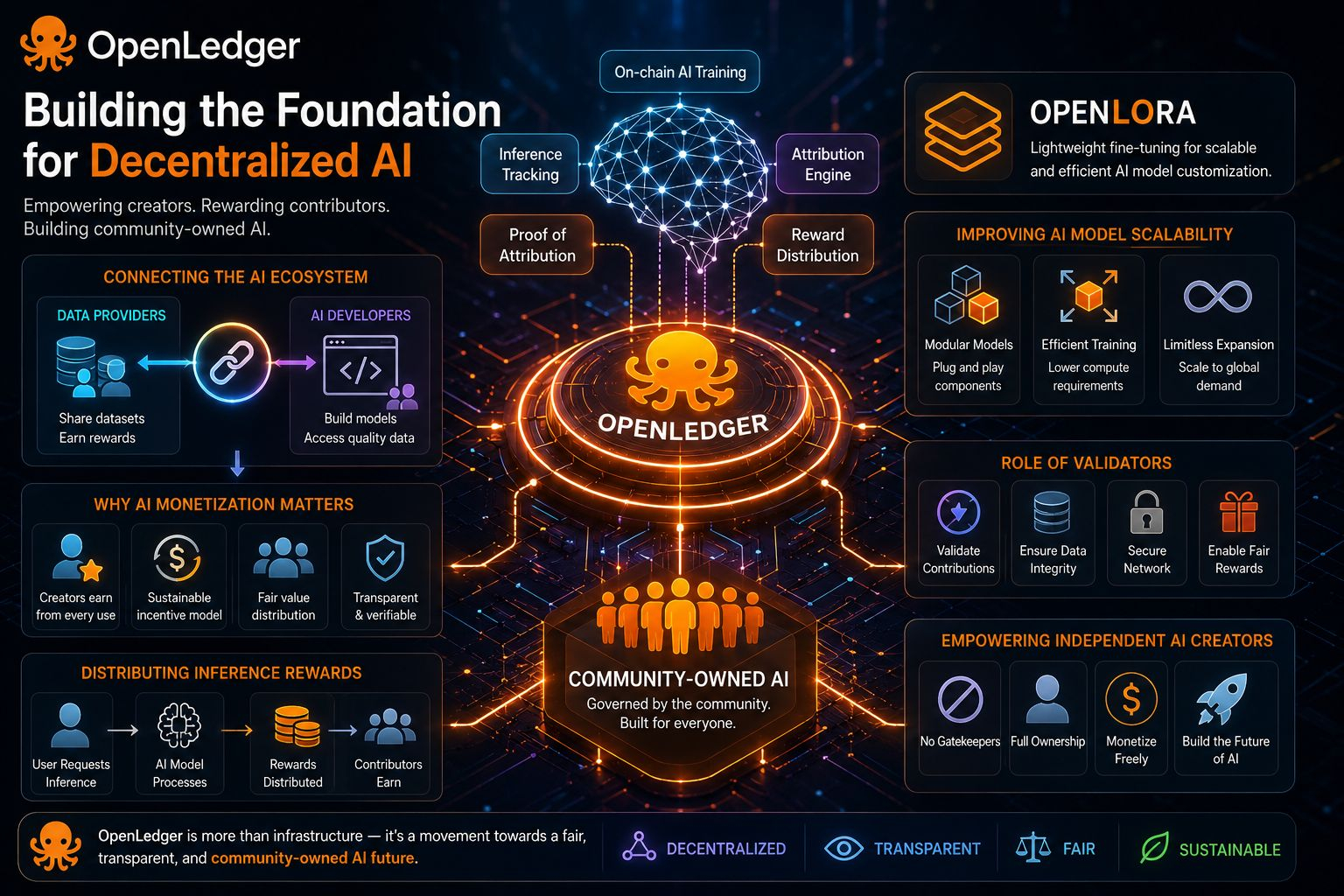
Still, I can’t ignore how directionally important this feels. OpenLedger isn’t just asking who owns AI. it’s asking who deserves to benefit from intelligence creation in the first place. And honestly, that might become one of the defining economic questions of the entire AI era.
