

I've been reconsidering OpenLedger through a fresh lens lately. Most people categorize open within the typical "AI crypto" bucket, but that framing feels increasingly limiting. A more apt comparison? Formula 1 Racing 🏁
Beyond the Driver: It's About the System 🎯
In F1, victory doesn't belong solely to the driver's foot on the accelerator. The decisive advantage emerges from sophisticated telemetry 📊, real-time strategy optimization 🎲, tire dynamics 🏎️, meteorological shifts 🌦️, pit coordination ⏱️, engine optimization ⚙️, and a unified team recalibrating every variable while the vehicle operates at extreme velocity.
This is precisely how I'm beginning to understand OpenLedger.
It transcends mere AI model development. The ambition is constructing an integrated infrastructure where data 💾, models 🤖, agents 🦾, and contributors 👥 continuously reinforce each other within a live feedback system. OpenLedger's research positions Proof of Attribution as the foundational mechanism—an AI blockchain enabling transparent model, data, and intelligent agent evolution on-chain, with verifiable attribution for every inference.
The Actual AI Competition Isn't About Raw Intelligence 🧠💪
Current discourse fixates on model performance metrics 📈:
- Which model demonstrates superior intelligence? 🤔
- Which delivers faster responses? ⚡
- Which reasons more effectively? 🎓
- Which organization secured greater capital? 💰
However, the deeper competition revolves around entirely different questions 🔍:
✅ Who controls the data? 🔐
✅ Who validates its authenticity? ✔️
✅ Who receives compensation when value materializes? 💵
✅ Who can establish the complete origin chain of AI outputs? 🔗
This is where OpenLedger becomes genuinely compelling. The project transcends rhetoric about "decentralized AI." Instead, it's engineering a system enabling AI value traceability—connecting outputs back to the individuals, datasets, and models responsible for generating them. Binance Research identifies Proof of Attribution as OpenLedger's core mechanism: identifying data points influencing model outputs and rewarding contributing parties. 🎁
This single concept restructures the entire conversation. 💡
Without attribution, the AI ecosystem becomes profoundly inequitable. Contributors furnish knowledge, proprietary datasets, corrections, domain expertise, content, behavioral feedback, and training information. Once the model achieves commercial viability, original contributors vanish from the compensation structure.
OpenLedger is ensuring the system remembers. 📝
Data Isn't Limitless Fuel—It's Intellectual Property 🛢️➡️💎
I continuously reflect on how fundamentally broken the contemporary AI data economy operates. AI platforms depend on human-generated input 👨💻, corrections ✏️, specialized knowledge 📚, creative content 🎨, user feedback 🗣️, curated datasets 📂, and behavioral patterns 🔄.
Yet once the model becomes commercially valuable, original contributors systematically disappear from reward distributions. 💸❌
OpenLedger challenges this through Datanets 🌐—domain-specific data networks enabling contributors to provide specialized datasets for AI model training. Developers can leverage this data for model development, while the attribution layer connects outputs to their contributors. Per Binance Academy, OpenLedger functions as an AI-optimized blockchain where users generate, distribute, and leverage datasets for specialized model training, supported by infrastructure including Datanets, Model Factory, and OpenLoRA. 🛠️
The F1 analogy strengthens considerably here. Championship teams don't prevail through vehicle speed alone. They succeed by interpreting every signal—track conditions 🏁, tire characteristics 🔬, engine performance 📊, driver feedback 📢. Similarly, future AI systems will prevail not through scale alone, but through data quality 💎, robust feedback architectures 🔄, dependable attribution 🎖️, and intelligent adaptation capacity 🧠.
OpenLedger is democratizing this entire ecosystem. 🌍✨
Payable AI" Is More Profound Than It Initially Appears 💰🤖
I appreciate the terminology "Payable AI" for its elegant clarity. The underlying thesis: if AI generates value from someone's data or model contribution, that value shouldn't evaporate into a centralized platform.
It should be compensable. 💳
Not philanthropically. Not aspirationally. As foundational infrastructure. 🏗️
This positioning makes $OPEN genuinely interesting. The token integrates into the network's economic architecture—specifically interactions and attribution reward distribution across the OpenLedger AI blockchain. Project documentation describes it as powering Proof of Attribution rewards, where the attribution engine identifies which data dimensions influenced specific model outputs. 🎯
This distinction matters profoundly because numerous AI tokens possess attractive narratives but lack genuine economic integration. With OpenLedger, the compelling thesis suggests data contribution 📊, model training 🧠, agent activity 🤖, and attribution rewards 🏆 can form one cohesive system.
If this succeeds, $OPEN isn't merely correlated with AI trends—it becomes AI's accounting infrastructure itself. 📑💼
The Story Protocol Integration Changes Everything 🎬✍️
My attention amplifies considerably due to the Story Protocol alignment.
Story Protocol and OpenLedger established a standardized framework for rights-cleared AI training with automatic creator compensation in January 2026. This demonstrates how intellectual property utilization within AI training becomes transparent and creates direct payment mechanisms for rights holders. 📋💰
This is critically important. ⚠️
As AI training datasets become increasingly contested—both legally and economically—the industry can no longer dismiss clear ownership, licensing, and compensation. Enterprise adoption will soon demand more than model performance evaluations 📊. Organizations will interrogate:
🔍 Are datasets properly licensed?
🔍 Were creators compensated?
🔍 Can usage be documented?
🔍 Will training methodology withstand legal examination?
OpenLedger's attribution emphasis transcends cryptocurrency mechanics—it becomes infrastructure for AI legitimacy. ⚖️
From Static Models to Continuous Strategy Loops 🔄🎮
The concept of "strategy loops in motion" perfectly encapsulates my understanding of OpenLedger's vision.
AI is transitioning from producing static outputs toward perpetual operational cycles ♻️:
📥 Data ingestion → 🤖 Model processing → ⚡ Agent execution → 📊 Performance measurement → 🔧 System refinement → repeat 🔁
This cycle operates continuously without meaningful interruption.
In trading environments 📈, agents interpret market signals, optimize strategies, implement risk management, and execute faster than human operators. In data marketplaces 🛒, contributors continuously enhance models while capturing earnings from valuable contributions. In AI development 🔬, attribution must persist through model updates, parameter fine-tuning, and dynamic output evolution.
This explains why Proof of Attribution represents such a formidable yet essential challenge 🎯. Models don't remain static artifacts—they continuously evolve, undergo fine-tuning, incorporate new datasets 📚, and agents learn from novel environments 🌍.
If attribution cannot traverse these transformations, contributor recognition gradually dilutes or disappears entirely. 😞
OpenLedger's genuine test isn't one-time attribution tracking. The authentic challenge is maintaining attribution accountability throughout a model's complete lifecycle. 🏁
The F1 metaphor intensifies here: championship cars aren't evaluated on isolated lap performance. They must demonstrate consistent adaptation throughout the entire race distance. 🏎️💨
AI Agents Elevate This From Theory to Necessity 🦾🔗
OpenLedger's premise becomes increasingly compelling when considering AI agents' role.
Cryptocurrency AI agents are transcending simple conversational assistants. The broader ecosystem is progressing toward agents managing cryptocurrency wallets 💼, executing sophisticated DeFi strategies 📊, supervising smart contracts 🔐, and orchestrating cross-chain automated workflows 🌉. Contemporary discussions from 2026 document agents actively participating in wallets, smart contracts, and decentralized finance ecosystems—not merely providing passive intelligence. 💡
Yet agents introduce a novel accountability challenge: if an AI agent executes transactions, who validates its decision rationale? 🤔
This is where OpenLedger's infrastructure becomes invaluable. Suppose an agent executes trading operations, manages liquidity pools 💧, or interfaces with blockchain protocols. The infrastructure must provide transparency regarding which datasets and models influenced those decisions. Without this layer, autonomous agents become impenetrable boxes controlling financial assets—and that's genuinely concerning. ⚠️😰
The future demands more than accelerated autonomous agents. It demands accountable autonomous agents. 👮♂️✅
The Challenges Are Legitimate, and I'm Not Dismissing Them 🚨⚠️
I won't pretend OpenLedger faces a straightforward trajectory.
Attribution mechanisms present genuine difficulty. 🤯 Data quality assurance requires ongoing attention. 🔍 Spam prevention demands constant vigilance. ⚔️ Ensuring equitable contributor compensation over extended periods presents real complexity. 📊 Moreover, once meaningful rewards enter the equation, gaming incentives become inevitable. 🎮
This reality escapes many analysts' consideration. 👀❌
As Datanets scale, OpenLedger will inevitably confront low-quality synthetic data 📉, duplicate submissions 📋, leaderboard manipulation 🎪, attribution disputes 🥊, and potential systemic tampering. This reality applies universally to decentralized incentive networks.
The consequential question isn't whether problems materialize—they certainly will. 💯
The authentic question is whether OpenLedger can establish validation sufficiently robust to preserve system functionality at scale. 🔒💪
This is precisely why I'm examining OpenLedger beyond superficial market enthusiasm 📢. I'm evaluating whether the network can transform its conceptual framework into something developers and data contributors genuinely trust. 🤝✨
My Honest Assessment of $OPEN 🎯💭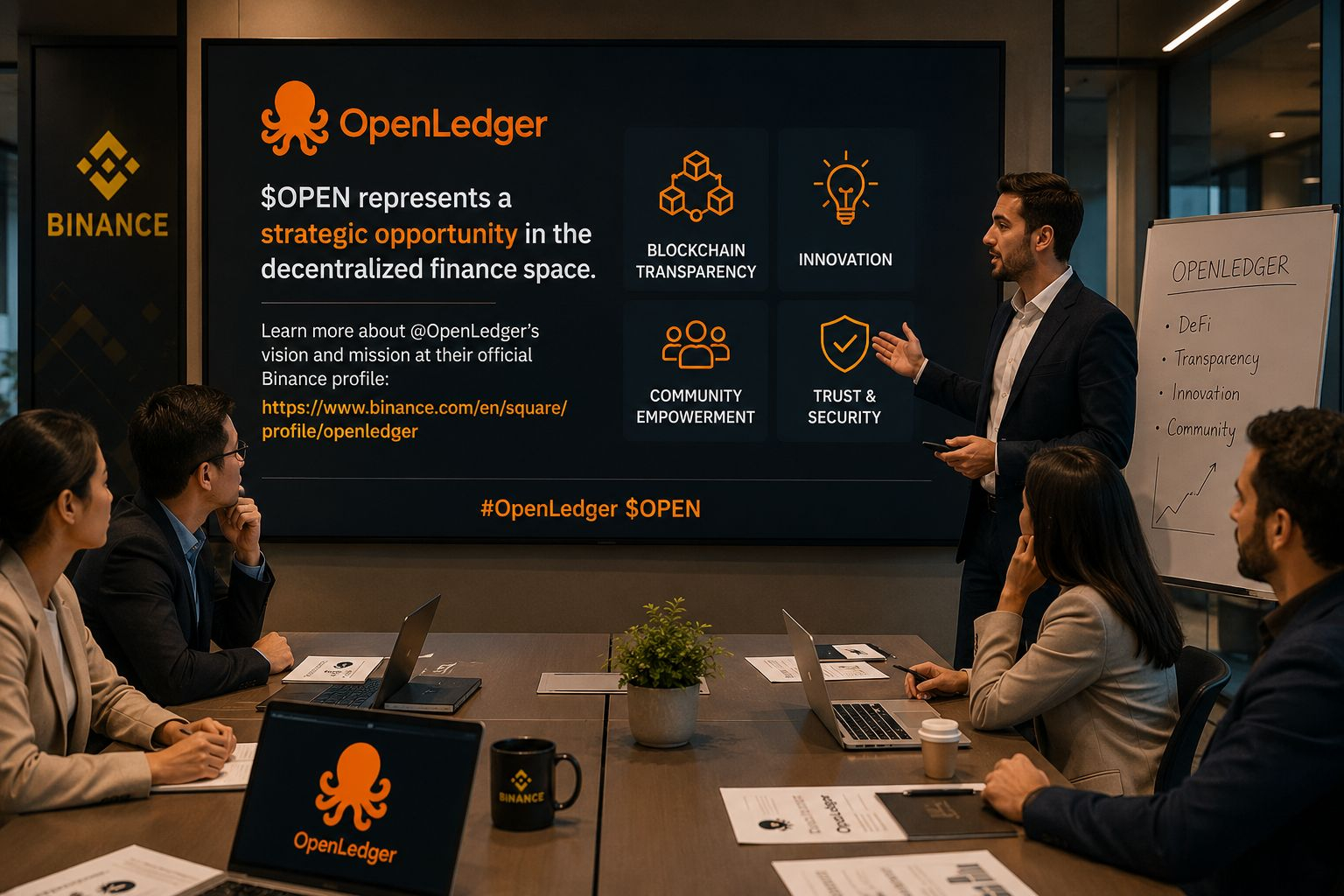
OpenLedger represents one of the more compelling AI projects because it tackles a problem the entire industry will likely confront eventually.
The AI competition won't reduce to superior model performance alone. It will equally concern data ownership 🔐, output verification 🔍, compensation mechanisms 💵, and the capacity to establish transparent contribution chains. 🔗
This represents the infrastructure layer OpenLedger is constructing.
I don't regard open as merely another "cryptocurrency AI token." 🙅♂️
Instead, I perceive it as a wager on whether AI requires economic memory—a system preserving contributor identity 📝, tracking model improvements 📈, documenting data influence 🔍, and orchestrating appropriate value distribution to intelligence architects. 🧠💰
Perhaps the market currently undervalues this thesis because it sounds unglamorous compared to model performance theater. 🎭 However, unsexy infrastructure frequently becomes transformatively important eventually. 📚💼
Formula 1 championships don't depend on the most audacious engine specifications alone. 🏎️ Success belongs to teams that interpret tracks more intelligently 🧠, adapt faster ⚡, and execute with mechanical precision under extreme conditions. 🎯
That's precisely how I conceptualize OpenLedger presently. 🏆
Not simply constructing AI infrastructure 🔧
But engineering the strategy loop behind verifiable, compensable AI. 🔄💎
#OpenLedger #open #AI #Web3 #DeFi #AttributionProtocol #PayableAI #FutureOfWork 🚀🌟✨