
Most of the AI crypto stuff out there feels like pure cosplay. You know the drill — some generic L2, a whitepaper loaded with buzzwords, a quick token launch, and then radio silence. The "AI" angle is usually just slapping a chatbot on top or promising autonomous agents that never really ship.
But OpenLedger feels different. I'm not here to push their token or anything, just sharing what they're actually putting together and why it could be important while everyone else is chasing the next hype.
The real headache with AI agents in DeFi is coming fast. These things will soon handle liquidity, execute trades, rebalance portfolios, and chase yield across protocols. Some are already out there doing it. But here's the big question nobody wants to face: when an AI moves your money and screws up, what actually happened?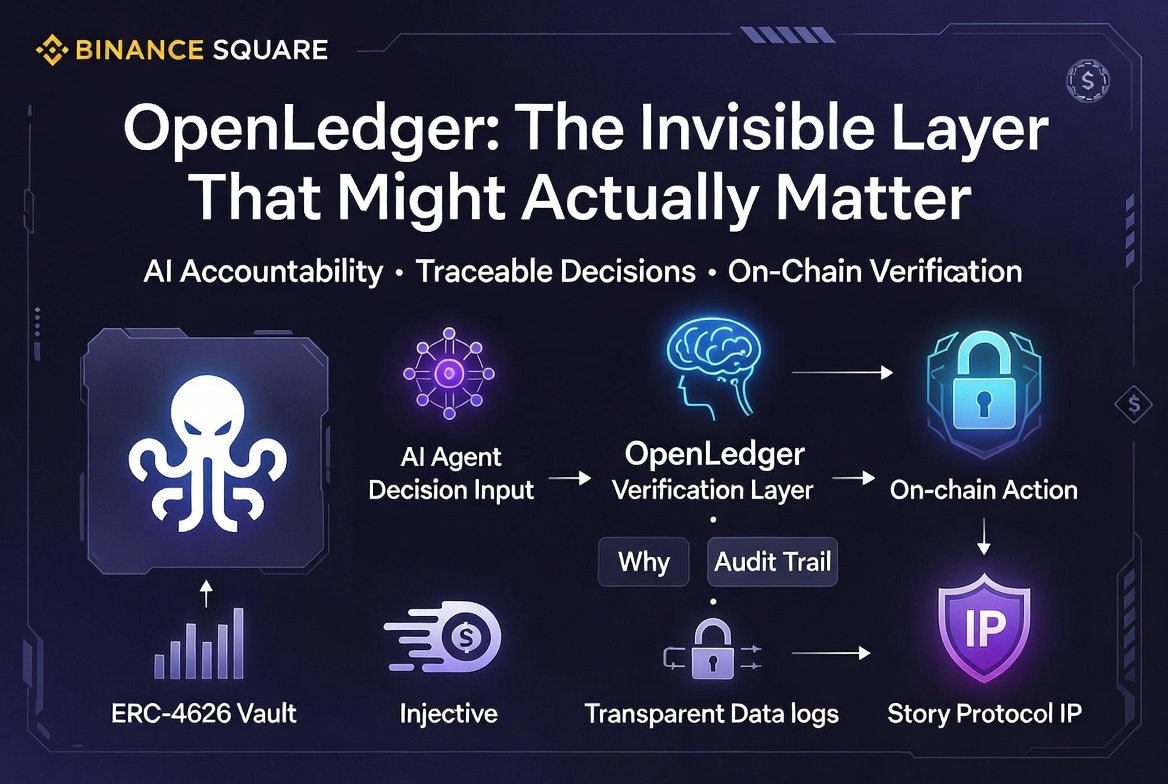
Which model made the decision? What data fed into it? What exact inputs triggered that move right then? Right now, it's mostly a black box. Funds shift, tx goes through, and the reasoning vanishes. Retail users get uneasy. Institutions? It's a total non-starter.
This attribution problem isn't some small tech detail — it's the core issue stopping serious capital from trusting AI with real money.
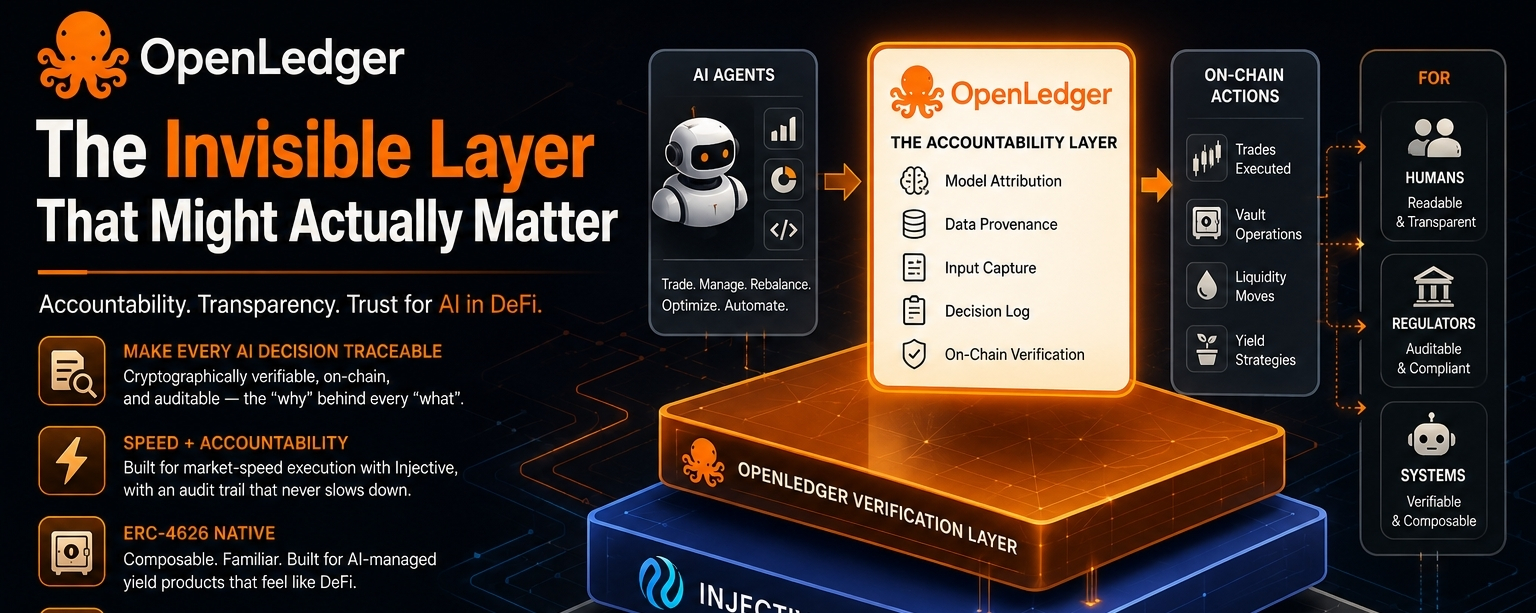
OpenLedger's main idea is straightforward but tough to pull off: make every AI decision traceable. Not "trust us" vague stuff, but cryptographically verifiable, on-chain, and auditable later. They want to build an accountability layer. When an AI agent trades, manages a vault, or does anything that moves capital, OpenLedger logs the "why" next to the "what" — which model, what data influenced it, the inputs at that moment.
It's not about slowing AI down with extra bureaucracy. It's about making those actions readable for humans, regulators, and other systems. Transparency baked in as actual infrastructure. They're not chasing the title of smartest AI chain. They're aiming to be the verification layer that every serious AI project might eventually need.
Their integration with Injective back in January makes a lot of sense. Injective is built for speed — proper order book matching, low latency, real DeFi trading muscle. AI agents need that market-speed execution. If a 400ms arb window pops up, the agent has to move instantly. But you still need that record of why it happened.
OpenLedger layers the accountability on top without killing performance. Fast execution on Injective, solid audit trail on OpenLedger. Institutions talk a big game about AI in DeFi but won't touch black boxes with client funds. Compliance, risk, audits — they all need explanations. This setup directly answers that.
Then there's the ERC-4626 move in March. Sounds like boring dev housekeeping, but it shows maturity. It's the standard for tokenized vaults that Yearn, Aave, and others use. Makes everything composable — other devs don't need to learn custom stuff. Integrations flow easier, risks are clearer, audits simpler.
They're steering toward AI-managed yield products that feel like normal DeFi, not some weird custom thing. An AI can handle allocation and rebalancing inside the vault, but the structure is familiar to everyone. Opposite of the usual crypto habit of inventing proprietary standards for lock-in. This screams "we want to be useful."
The Story Protocol partnership is the one that keeps sticking with me. Story is building IP infrastructure — registries, licensing, on-chain rights. With AI content exploding, tracking provenance and enforcing licenses at protocol level is going to be crucial.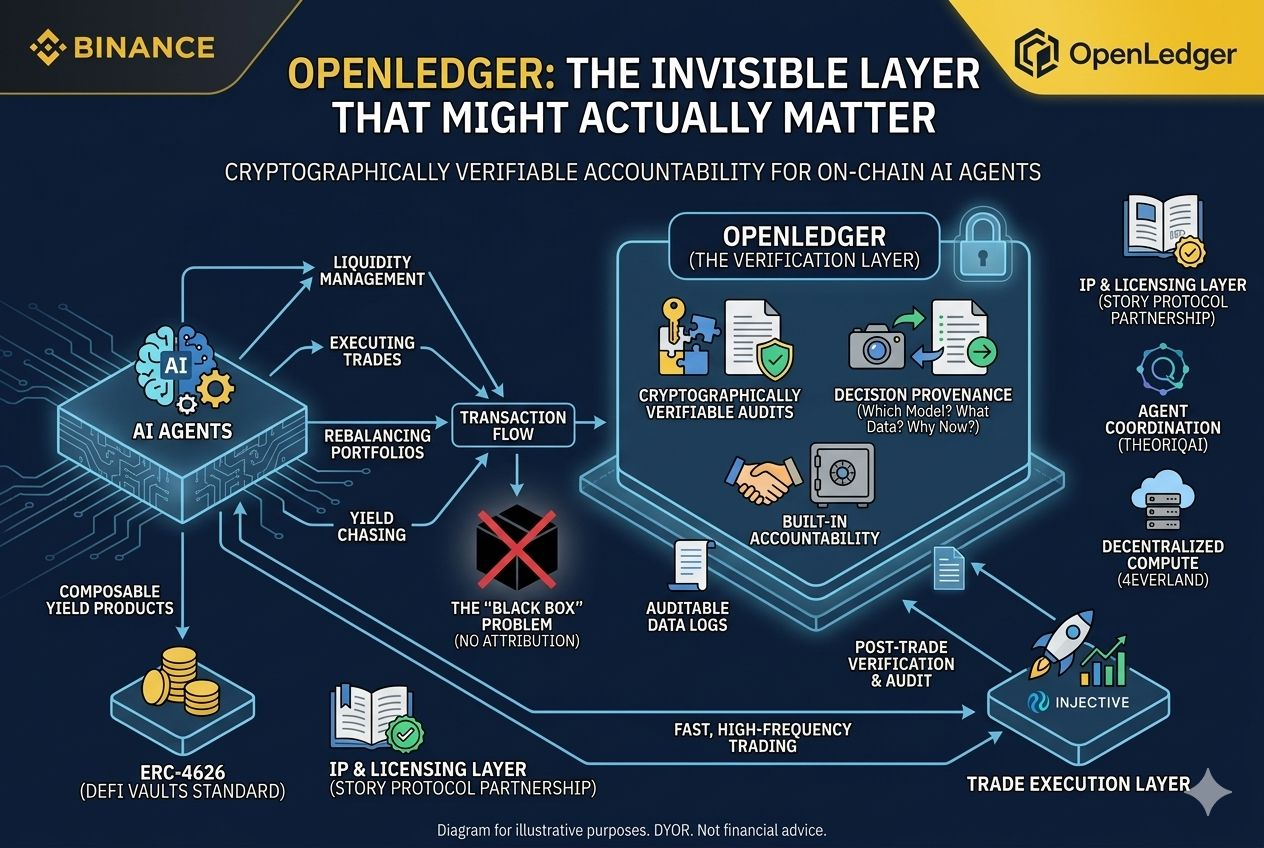
OpenLedger does the execution and verification side. Story handles the IP and licensing. Together, an AI can train on properly licensed data, prove it cryptographically, and even auto-compensate creators. AI training data lawsuits are everywhere right now. Regulators are circling in the US, EU, everywhere. The "scrape now, fix legally later" approach has limits.
If rules eventually demand proof of licensed data and compliance, this kind of infrastructure gets important. OpenLedger and Story are trying to build it ahead of time instead of scrambling later. That's a much more forward-thinking approach than most projects pumping for today's cycle.
On the stack side, TheoriqAI integration helps with multi-agent coordination in DeFi — specialized AIs handing off tasks while keeping OpenLedger's verification intact. And 4EVERLAND brings decentralized cloud compute, keeping things trustless instead of relying on big centralized providers.
The pattern is clear: OpenLedger isn't trying to own the whole stack. They're positioning as the verification middleware that others plug into. Solid if the ecosystem grows around them, risky if things fragment.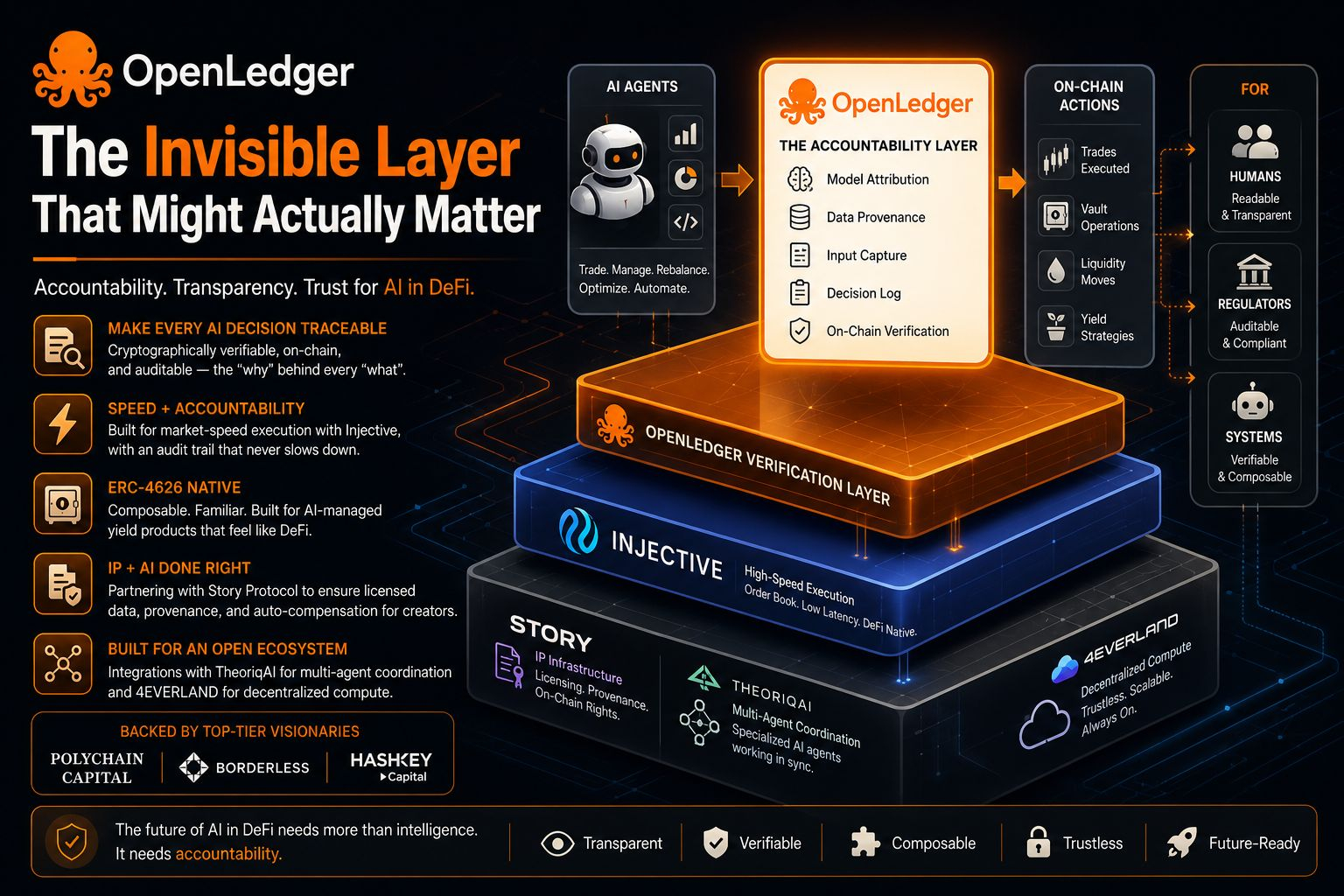
The backers are worth noting too — Polychain, Borderless, HashKey. Not random names for hype. These guys do proper diligence. Multiple serious funds landing on the same thesis about AI accountability says something.
It's been relatively quiet since March. No huge announcements lately, hype has moved elsewhere. Could mean the team is just grinding away building. Or momentum slowed. Hard to tell from outside.
But the core idea hasn't weakened. If anything, the need for AI accountability feels more urgent every week with new stories of unchecked decisions. The infrastructure they're working on — proper attribution and verification for on-chain AI actions — could become essential once agents handle real capital.
Whether OpenLedger captures the value or just enables others while staying in the background, who knows. But this layer needs building, and they're one of the few seriously on it.
This isn't financial advice. DYOR always — plenty of AI crypto projects look great on paper and deliver zilch. OpenLedger at least deserves a proper look. Whether it deserves capital is up to you.
