
A few years ago, the internet felt like an endless library for AI.
Need knowledge? Scrape more websites. Gather more text. Train bigger models.
The formula worked, until the cracks started showing.
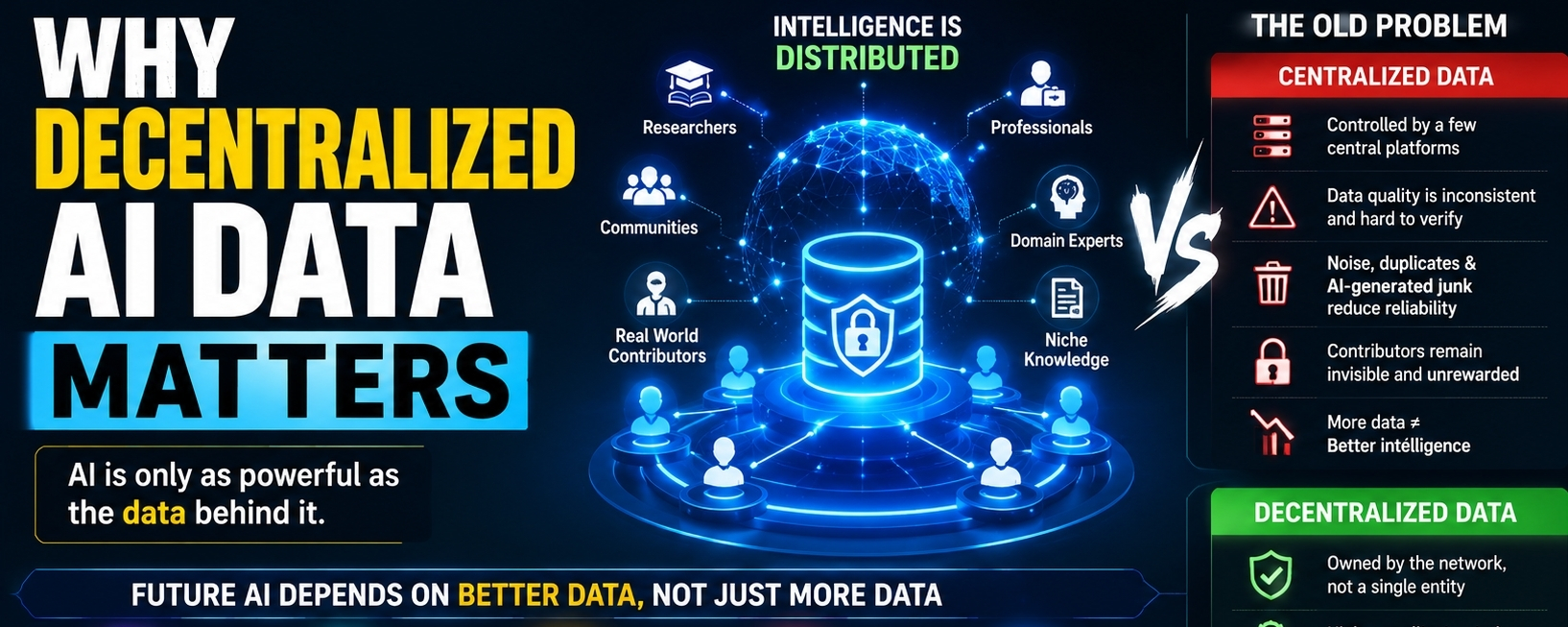
As AI became mainstream, the web slowly changed. Low-quality content multiplied. AI-generated information began feeding other AI systems. Noise increased. Trust became harder to measure.
Suddenly, more data no longer meant better intelligence.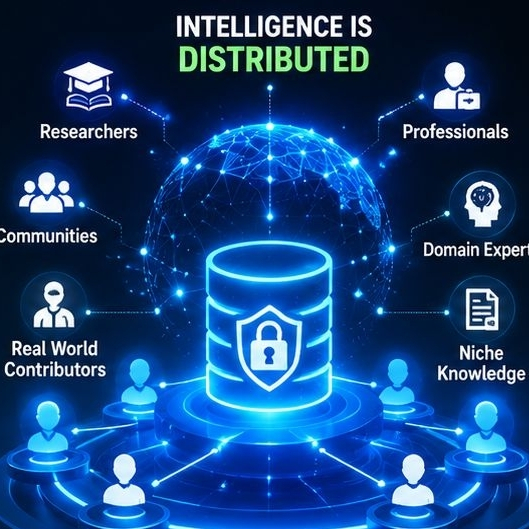
That is where the conversation around decentralized AI data begins.
Not because decentralization sounds exciting, but because intelligence increasingly depends on trusted, specialized human knowledge.
The old model assumes a few centralized platforms can gather and control most useful data. But expertise does not live in one place. It exists inside communities, industries, researchers, niche experts, and real-world contributors spread everywhere.
The question becomes difficult to ignore:
How do you organize valuable human intelligence without depending entirely on closed systems?
That is why decentralized AI data matters.
The goal is not simply collecting more information. It is creating systems where better data becomes easier to source, organize, and sustain through distributed participation.
Of course, decentralization brings problems of its own. Quality control becomes harder. Coordination gets messy.
Still, if future AI depends on trusted expertise rather than internet noise, the systems managing data may quietly become just as important as the models themselves.
