
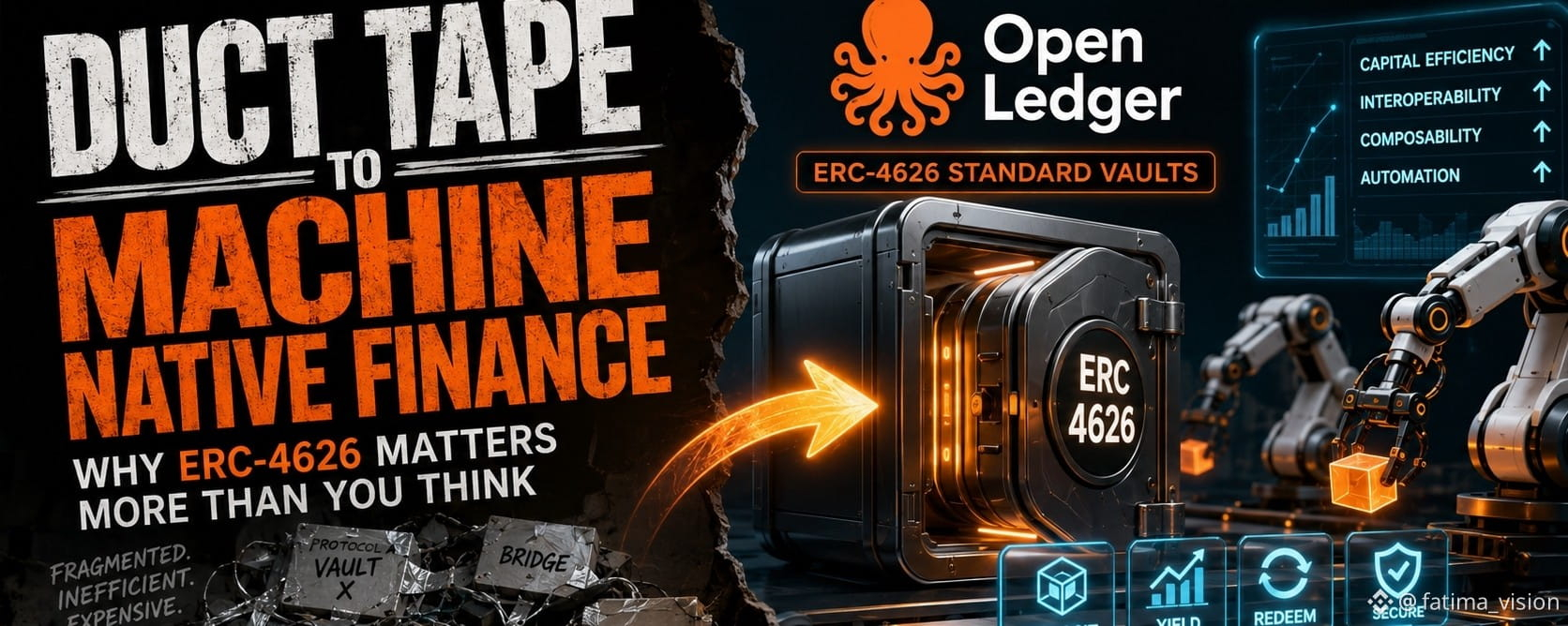
I was staring at my monitor at two in the morning yesterday instead of sleeping because I fell down a rabbit hole tracking Open Ledger activity. While the rest of the crypto timeline was busy screaming about the latest meme coin rotations or whatever flavor of AI narrative is currently inflating, I found myself watching a few transactions move through standardized vault contracts. It was a stark reminder of where we actually are in this cycle because while most people are still busy trading empty hype, the underlying infrastructure of on-chain finance is essentially held together with literal duct tape.
We have modular execution stacks and endless branding exercises but liquidity movement remains a fragmented mess. Moving capital across these protocols feels like trying to assemble cheap furniture without any instructions. That is why seeing Open Ledger integrate the ERC 4626 standard caught my attention. It is not some flashy breakthrough since it is really just a boring standardized vault framework designed to stop protocols from reinventing their own weird deposit logic every few months but this is the dull stuff that actually matters for long term survival.
If you have ever moved significant size on chain you know the soul crushing pain of the process.
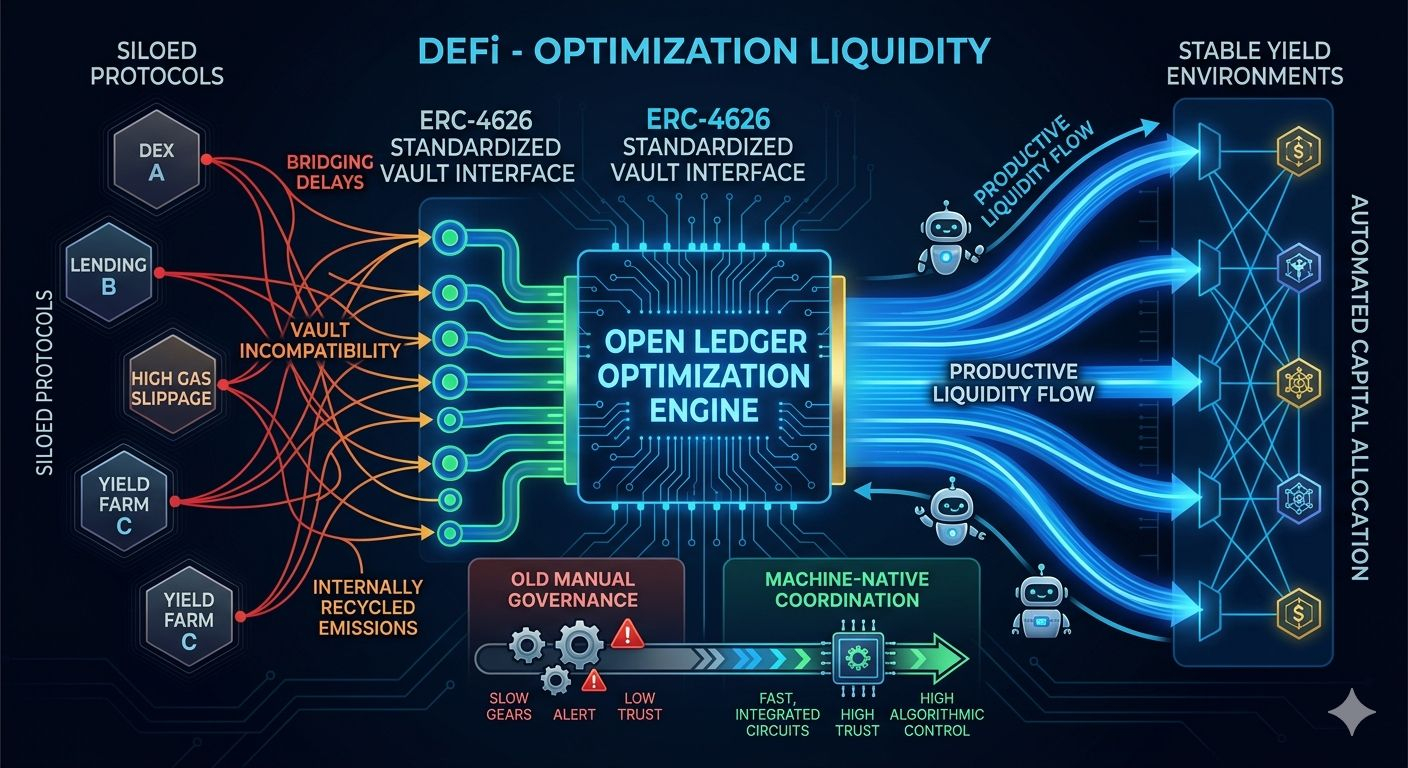
You spot a better yield setup somewhere else then you spend half an hour fighting bridging delays and vault incompatibilities while gas spikes eat your margin and slippage destroys the rest. By the time you finish the rotation the opportunity has already been farmed by bots and you are left holding the bag. Open Ledger seems to be treating capital efficiency as the actual product instead of just another yield carousel disguised with shiny marketing.
I was digging into a few wallet interactions and the execution flow looked significantly cleaner than the typical vault routing I see. There was less of that awkward token hopping and unnecessary wrapping behavior that usually ruins transactions during periods of high volatility. It suggests they are trying to make their infrastructure machine readable from the start because they understand that humans simply aren't fast enough to handle these markets anymore. We are past the point where Discord debates and slow governance proposals can keep up with automated execution.
The real danger here is the speed at which bad decisions can scale when you remove the human element.
If an optimization engine misprices exposure or a standardized vault assumption breaks under stress the automated systems will accelerate the collapse faster than anyone can react. It is a transition from manual coordination to machine native finance where the infrastructure is becoming too complex for the average user to even audit. We are trading the slow inefficiency of human oversight for the cold precision of code and if that code fails the damage will be instantaneous.
Ultimately this is about more than just one project or one technical standard. Blockchain is quietly moving toward a model of total machine native coordination where the rails are built to support automated capital flow rather than human interaction. Open Ledger is just one early signal that the space is finally getting serious about building infrastructure that actually works under pressure. Think of it like watching the transition from a disorganized pier where sailors haul cargo by hand to an automated container terminal where the machines move everything and the humans are just standing back watching the gear turn.
The machines are taking the wheel and they are not looking back.