
You can tell a lot about where crypto infrastructure is heading by watching what developers stop talking about.
A year ago, every new chain pitch sounded the same. Faster throughput. Lower fees. Better architecture. But lately the conversation underneath developer forums and trading chats has shifted toward something quieter. Compatibility. Not because it sounds exciting, but because most teams are exhausted from rebuilding the same tooling stack every cycle.
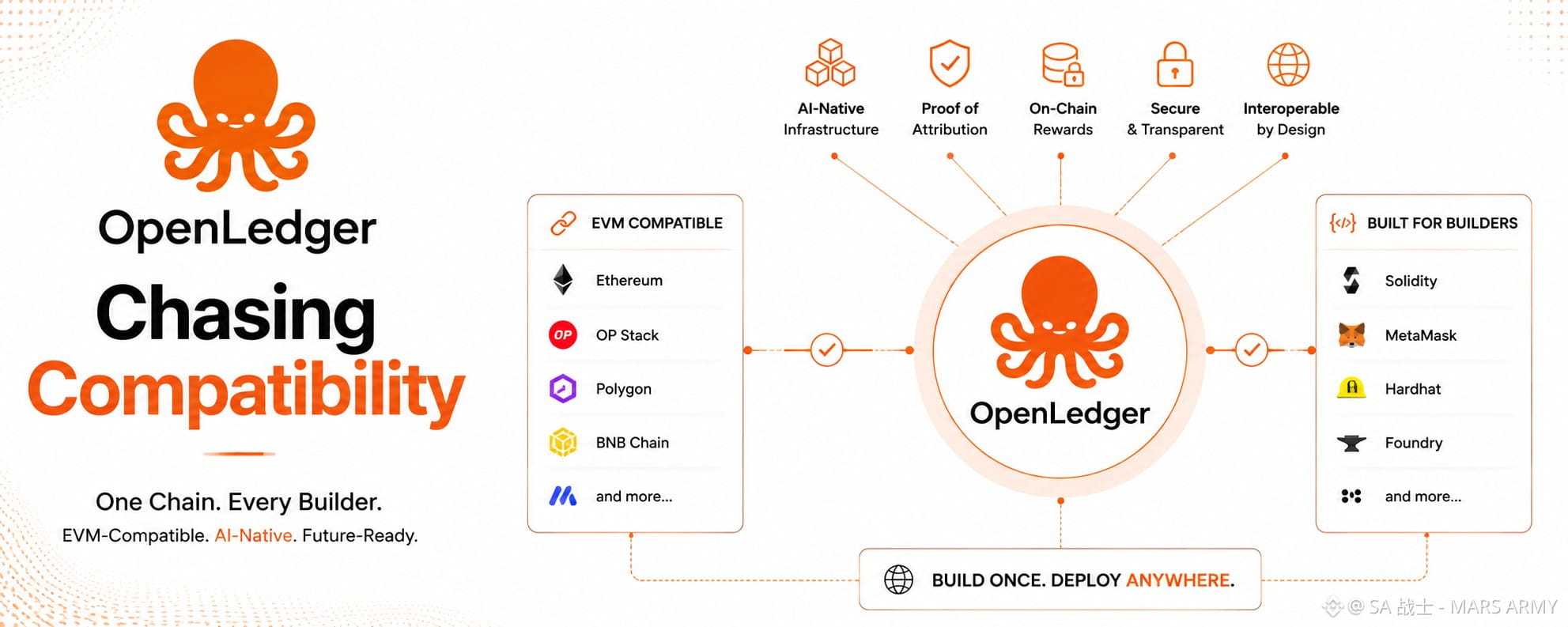
That’s what makes @OpenLedger EVM-compatible infrastructure interesting right now. Not the marketing language around AI or modular systems, but the decision to lean fully into Ethereum standards instead of trying to replace them. Underneath all the AI narratives, the real bet seems simpler: developers do not want another ecosystem to relearn. They want existing wallets, existing contracts, existing habits. OpenLedger appears to understand that friction is usually what kills adoption long before technology does.
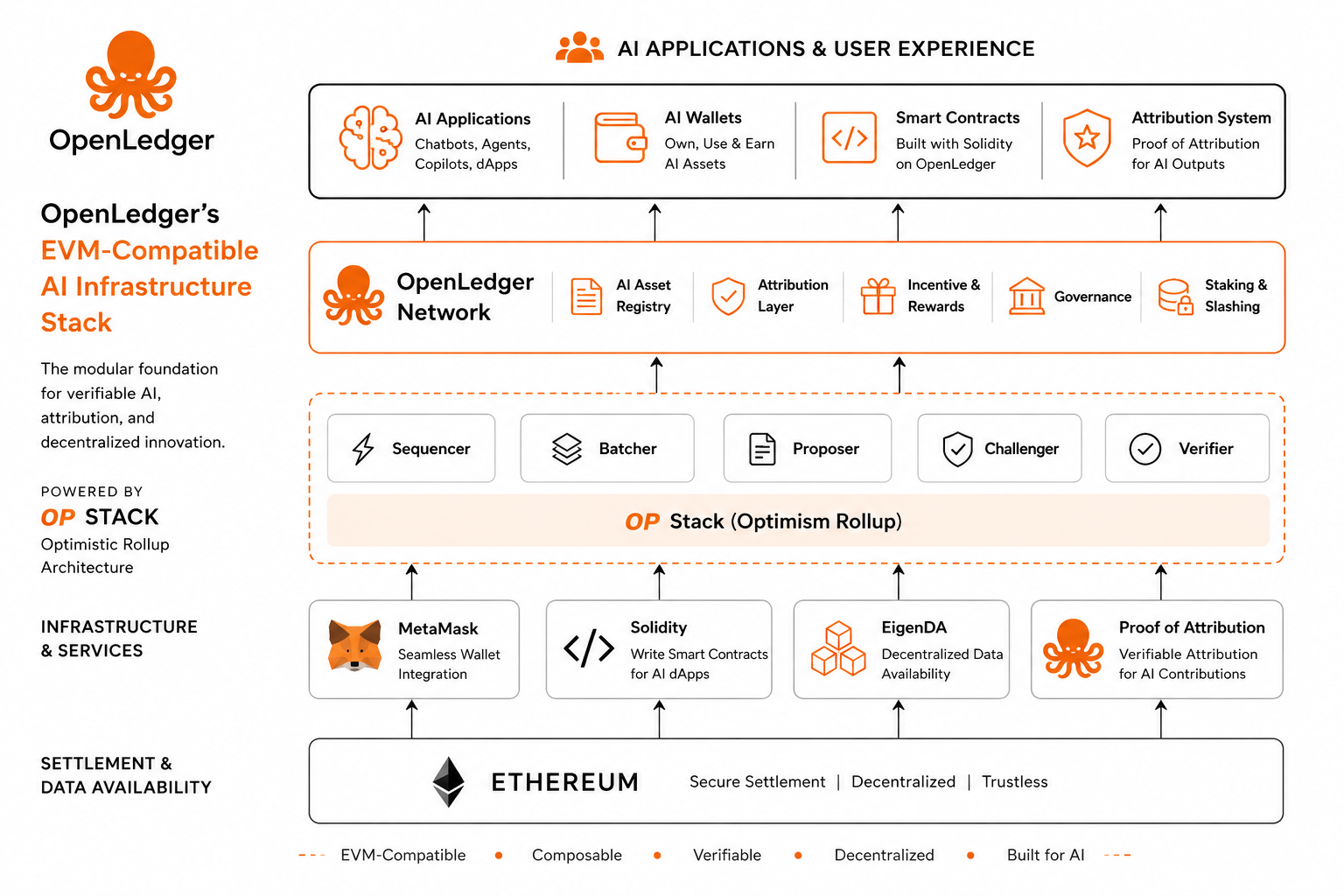
The surface layer is straightforward. OpenLedger runs as an Ethereum-compatible Layer 2 built on the OP Stack, the same framework used across much of the Optimism ecosystem. That means MetaMask works. Solidity contracts work. Existing Ethereum developer tools like Hardhat and viem work without modification. The bridge architecture itself uses canonical OP Stack components rather than custom infrastructure, which matters more than most people realize because every custom bridge introduces another security assumption.
But underneath that technical familiarity is the real strategy.
Ethereum already has the network effects. Roughly 4,000 monthly active developers still contribute across Ethereum ecosystem repositories according to Electric Capital tracking from earlier market reports, and even during quieter cycles, liquidity tends to flow back toward EVM environments because that’s where wallets, stablecoins, and user behavior already exist. OpenLedger is not fighting that gravity. It’s attaching itself to it.
That changes the onboarding equation completely.
If a developer building an AI application can deploy using the same Solidity patterns they already know, they save weeks of migration work. If a user can bridge assets using familiar wallet flows, the chain stops feeling experimental. That sounds small until you remember how many projects lost momentum asking users to install entirely new wallet systems or learn unfamiliar programming environments. The industry keeps relearning the same lesson: people tolerate innovation better when the interface feels boring.
There’s another layer here that matters even more in the current market.
OpenLedger is positioning itself around what it calls “Payable AI,” essentially creating infrastructure where datasets, AI models, and inference outputs can be tracked and compensated on-chain through attribution systems. The technical mechanism behind that is called Proof of Attribution. In practice, it means trying to trace which data sources influenced model outputs so contributors can theoretically receive value back.
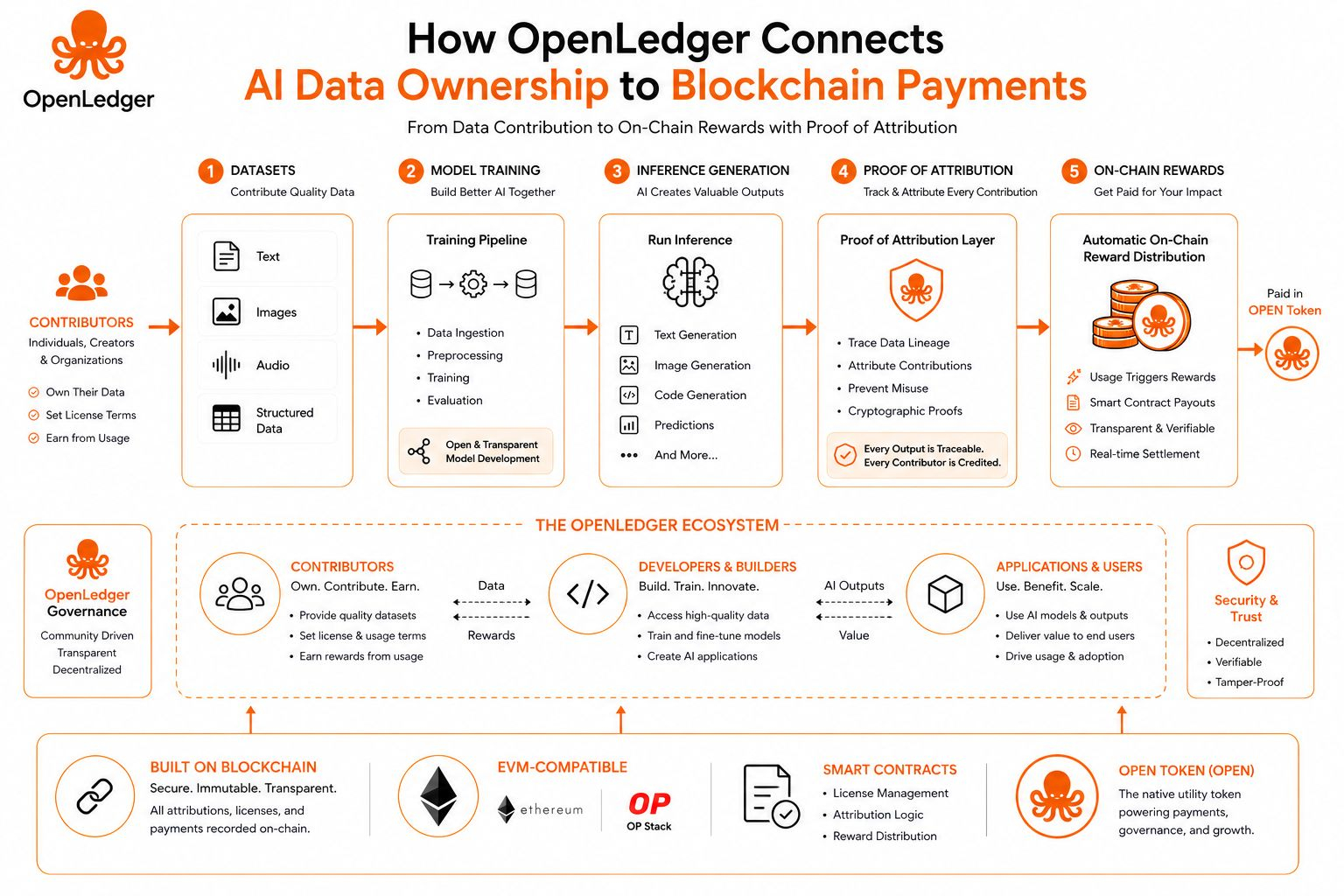
Most AI conversations today still revolve around centralized models trained behind closed doors. OpenLedger is pushing toward an opposite structure where ownership and contribution histories become visible infrastructure. Whether that fully works at scale remains to be seen, but the architecture choice matters because EVM compatibility gives those attribution systems immediate composability with existing DeFi and Ethereum ecosystems.
That momentum creates another effect. AI infrastructure starts behaving less like isolated software and more like financial infrastructure.
You can already see hints of this across the market. AI-related blockchain narratives pulled billions in speculative capital during the last cycle, but most projects lacked meaningful integration with broader liquidity environments. OpenLedger seems to be trying to avoid that isolation by settling transactions back to Ethereum while using OP Stack rollup architecture for scale. Blocks reportedly process every two seconds on the network, while data availability routes through EigenDA to reduce storage pressure on Ethereum itself.
Of course, there are tradeoffs.
Right now OpenLedger still relies on a centralized sequencer operated through AltLayer infrastructure. That improves coordination and speed early on, but it also means the system inherits familiar concerns around censorship resistance and operational dependency. Meanwhile, optimistic rollup systems carry withdrawal delays because of fraud proof challenge periods. OpenLedger’s bridge documentation references a seven-day challenge window for withdrawals back to Ethereum. Traders chasing fast liquidity rotations notice details like that immediately.
And there’s a broader risk most infrastructure projects quietly face. EVM compatibility helps onboarding, but it also makes differentiation harder. Research around blockchain network effects has consistently shown that EVM chains benefit from easier migration while struggling to build truly distinct ecosystems unless they offer either stronger incentives or genuinely different functionality.
That’s probably why OpenLedger keeps tying its identity to AI attribution rather than just transaction throughput.
Because underneath all the infrastructure discussions, the real competition now is not chain versus chain. It’s whether blockchains become invisible coordination layers underneath AI systems, data markets, and autonomous applications people actually use daily.
And if that holds, the chains that win may not be the loudest ones. They’ll be the ones that made complexity feel familiar enough for everyone else to build on top of quietly.

