
Most Web3 AI Projects make the mistake they think that if agents are doing things and tokens are moving that means the infrastructure is working.
Really the Sys is just making a lot of noise and then it falls apart because nothing was built to last.
OpenLedger does things differently.
i spent alot of time looking at how the orchestration layer in OpenLedger works and the people who made it thought about it carefully.
The $OPEN token is at the center of everything.
It is doing something that most people have not noticed yet.
Oky Let me explain what I mean.
Not every single model prompt should be handled on an isolated blockchain.
OpenLedger knew this from the start.
It sounds good to record every single text generation that agents execute on a public ledger. It is slow and expensive.
It also makes a lot of noise that can hurt the network runtimes.
OpenLedger was built as a purpose-built AI blockchain environment.
The people who made it made a choice to let developers build workflows freely using the OctoClaw framework.
Only record the essential coordination states on-chain.
OctoClaws local cloud config options make this possible.
The underlying network security makes sure that everything is trustworthy.
This choice is not a limitation it is how OpenLedger was designed.
The $OPEN ken does not just control who can stake it also controls when automation happens.
This is what changed how I think about the token.
Open is not a wall that you have to pay to get past it is more like a confirmation that you are deploying something that will last.You can.
Test scripts without Open when you use it things become more real across the network.
Your agent progress is not just temporary it is now a part of the platforms execution history.
This is a new way of thinking about utility assets.
Most AI tokens just control who can access an API. OPEN ls when you make important architectural decisions.
It is like asking yourself if now's the right time to make an automated strategy count.
Imagine two developers who build with the same amount of compute but have very different results.
This is where the economy of OpenLedger shows itself.
One developer uses the native EVM Bridge at the right times to let their trading agent deploy across multiple L2 networks and the other developer does not.

After six weeks the difference between them is not about speculative rewards it is about what they have built.
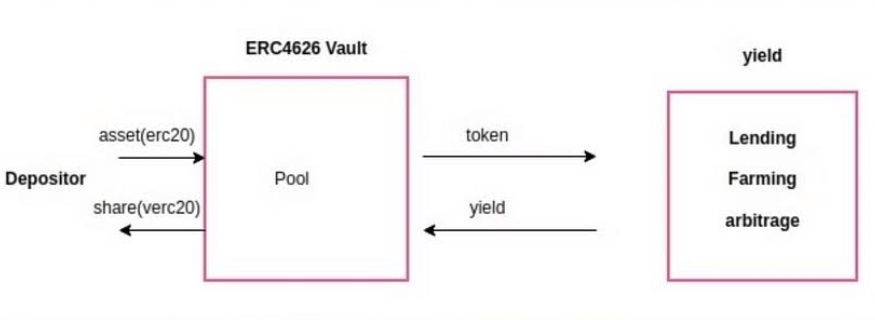
One developer has built a multi-chain yield asset routing through ERC 4626 standard vaults.
The other developer has just scripted a noisy bot that will be forgotten.
This difference is not meant to punish the casual builder it is just a signal that the verification layer is working correctly.
The network is rewarding developers who make sound decisions, not just developers who farm data for a long time.
This is a step forward from the old way of building bots, where the goal was just to extract as much speculative value as possible.
OpenLedger does not force developers to use Vibecoding to generate code it just encourages them to.
There is a difference between forcing someone to use an architecture and encouraging them to adopt it.
Forcing someone to use a tool can create friction. Encouraging them to build through real-time code generation can create a behavior that they want to adopt permanently.
The result is a developer community that understands the role of OctoClaw automation and wants to utilize it.
This kind of design creates something that's rare in crypto AI infrastructure: a demand for the token that comes from the active builders themselves.
Users are not forced to use $OPEN to power their agents they want to use it because it helps them achieve global liquidity goals across different ecosystems.
The moment when you hesitate before deploying an untrusted strategy that is the moment when the economy of OpenLedger is working correctly.
It is like a voice in your head that asks if your agent has enough verified data credit to act.
That hesitation is what separates an intelligent infrastructure layer from a basic script farm.
One is a mindless automated loop and the other is an execution environment that requires thought and systemic judgment.
What does this mean for the future of decentralized machine intelligence?
OpenLedger and its cross-chain bridges are building something that most people are still just talking about, a machine economy where autonomous actors are free to execute choices but also have a structure that rewards good infrastructure decisions.
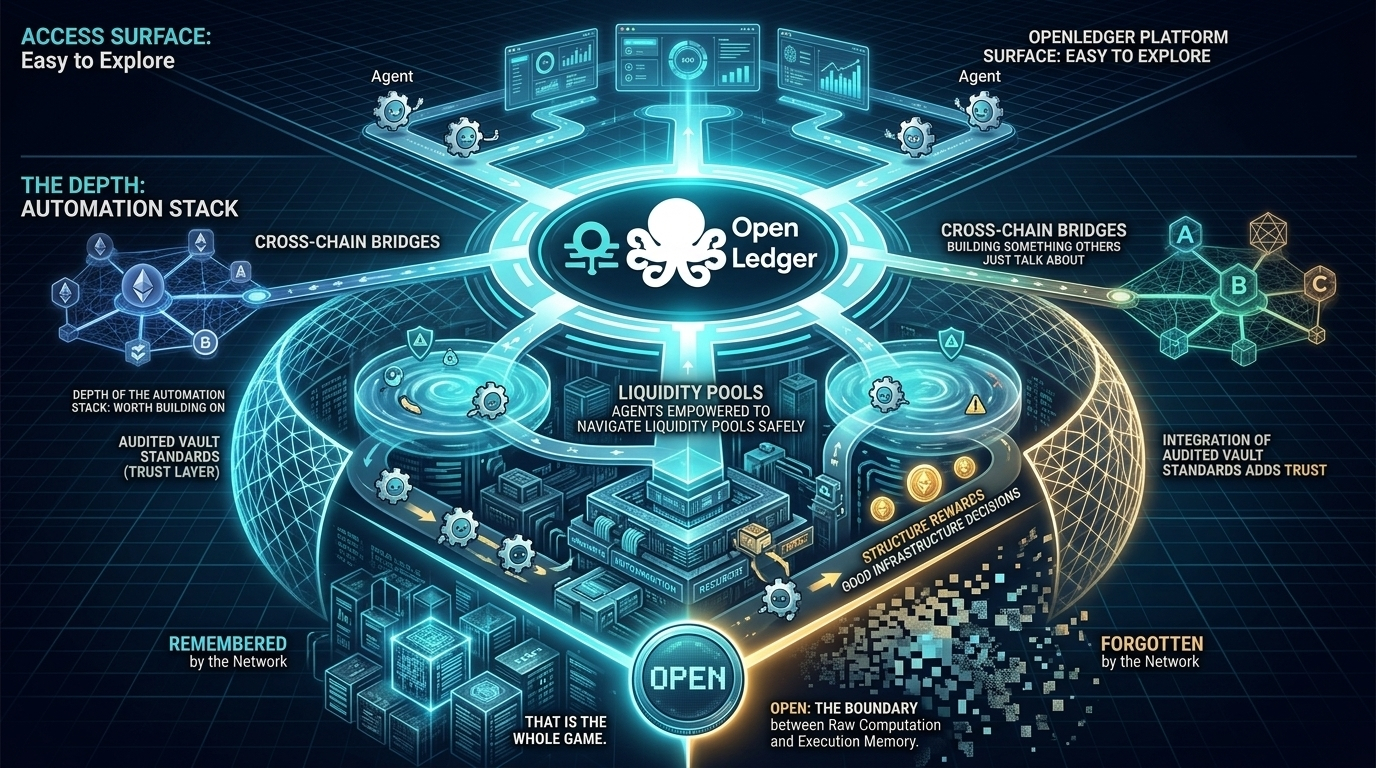
Agents are not restricted they are empowered to navigate liquidity pools safely.
The integration of audited vault standards adds a level of trust that other wrapper projects do not have.
The surface of the platform is easy to explore.
The depth of the automation stack is what makes it worth building on.
OPEN is not just a gas token it is the boundary between raw computation and execution memory.
It is what decides what will be remembered and what will be forgotten by the network.
That is not a minor thing that is the whole game.
#OpenLedger @OpenLedger #openledger