Everyone keeps talking about how powerful AI is becoming.
Smarter models.
Faster agents.
Autonomous systems.
Infinite automation.
But honestly?
Most people outside the industry still don’t understand where the real struggle actually happens.
It’s not always model creation anymore.
It’s deployment.
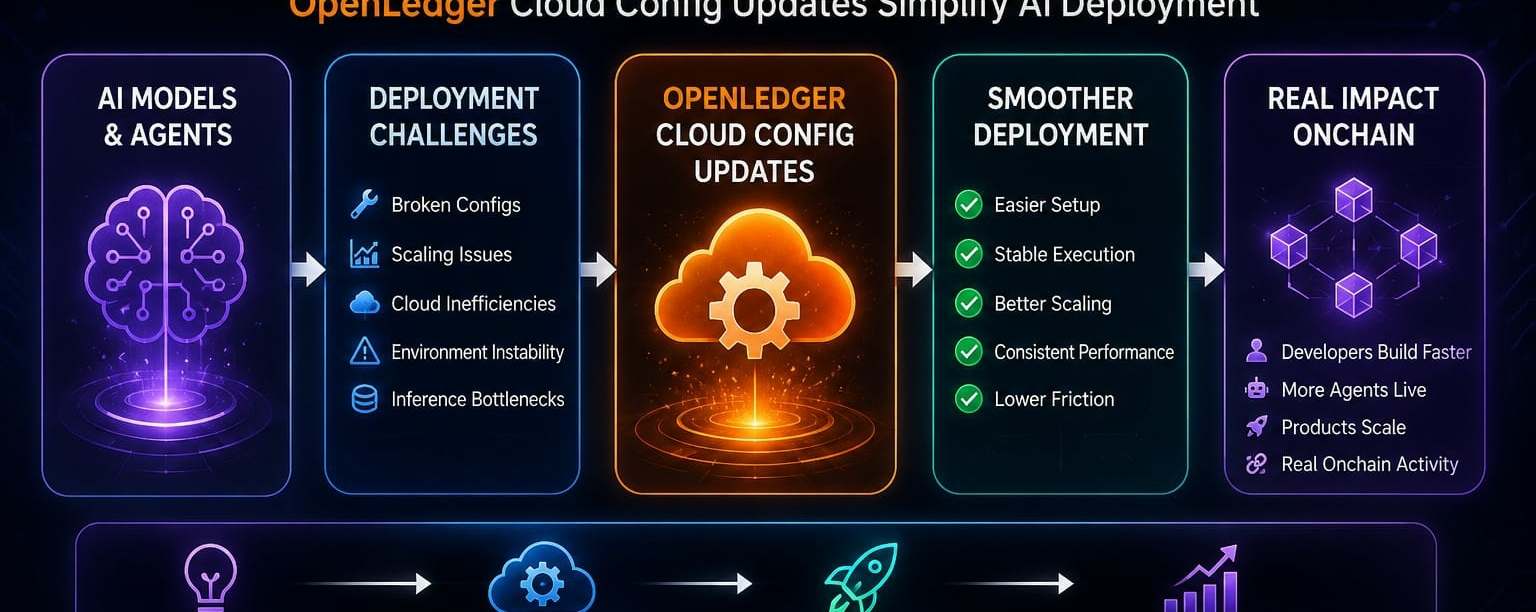
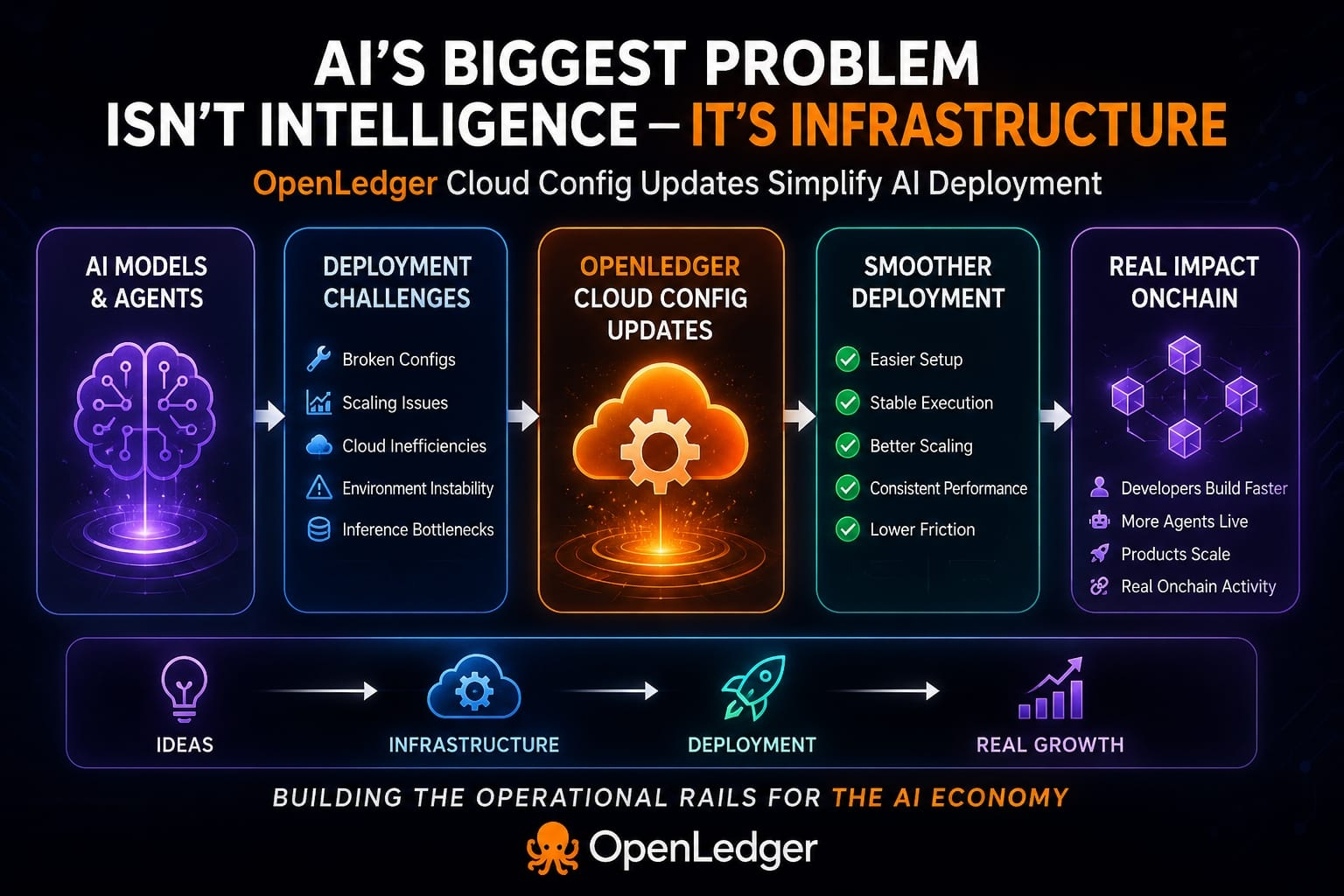
Because behind almost every impressive AI demo online… there’s usually a developer spending hours fixing broken cloud configs, unstable environments, scaling issues, infrastructure mismatches, failed inference setups, and systems that suddenly stop behaving the moment real traffic hits.
@OpenLedger That’s the side of AI nobody posts about.
And ironically, it may become one of the most important parts of the entire industry.
That’s why OpenLedger’s recent cloud configuration updates genuinely caught my attention.
At first glance, it looked like a small technical improvement most people would ignore.
But the deeper I looked, the more it felt like one of those quiet infrastructure upgrades that could matter far more over time than flashy announcements or temporary hype cycles.
Because the reality is simple:
AI does not scale through intelligence alone.
It scales through infrastructure.
And right now, infrastructure friction is still slowing down AI adoption more than most people realize.
Even highly skilled teams still deal with deployment headaches constantly:
- Configuration inconsistencies
- Cloud inefficiencies
- Environment instability
- Scaling failures
- Inference bottlenecks
- Resource management issues
- Maintenance complexity
People love discussing billion-dollar AI narratives…
But very few talk about what actually allows AI systems to operate reliably in the real world.
That’s where projects like OpenLedger become interesting to me.
Because they aren’t only trying to build another AI-related token.
They’re trying to build the operational rails underneath AI execution itself.
Datanets.
Inference layers.
AI agents.
Attribution systems.
Economic coordination connected directly to usage.
And infrastructure improvements inside that ecosystem matter more than people think.
Because every time deployment becomes easier:
- developers build faster
- agents run more consistently
- products launch sooner
- systems scale more reliably
- and real onchain activity becomes possible
That last part is important.
A lot of AI crypto still lives mostly inside narratives, concepts, and whitepapers.
But infrastructure is what converts ideas into actual usage.
And historically, the biggest technology shifts were never powered only by the most exciting applications.
The real winners were often the companies building the systems underneath everything else.
The internet itself followed that pattern.
The companies that quietly improved hosting, deployment, cloud services, scalability, and developer tooling ended up becoming foundational layers of the digital economy.
AI feels like it’s entering that exact phase now.
The market is still heavily focused on short-term hype, speculative rotations, and temporary attention cycles…
while some projects are trying to solve the deeper operational problems that could define the next decade of AI growth.
Personally, I think that’s where long-term value gets created.
Because eventually AI won’t just need smarter models.
It will need:
- scalable execution
- stable deployment
- reliable inference
- efficient coordination
- developer-friendly infrastructure
- and systems capable of supporting millions of real-world interactions
Without that foundation, even the best AI models struggle to create lasting impact.
That’s why updates like OpenLedger’s cloud configuration improvements feel more important than they initially appear.
They may not create immediate hype.
But they reduce friction.
And in technology, the platforms that reduce friction often become the platforms everyone builds on later.
The market may still underestimate infrastructure today.
But over time, deployment layers, execution systems, and AI operational frameworks could easily become some of the most valuable parts of the entire AI ecosystem.
And honestly?
We may still be very early in that transition.