
i had a weird moment recently while researching a market narrative.
Nothing major honestly.
I opened a bunch of AI-generated articles about the same topic and somewhere halfway through... everything started feeling identical.
Different wording.
Same emotional texture underneath.
That part stayed with me longer than I expected.
A few years ago AI felt exciting because it expanded access to information.
Now I’m starting to wonder if it slowly compresses originality too.
Maybe that sounds exaggerated.
But the pattern keeps showing up.
Even on CT sometimes.
You scroll long enough and eventually everything starts sounding statistically optimized. Same clean confidence. Same perfectly structured insight. Same “smart” tone.
And weirdly... the smarter the writing sounds, the less I trust it sometimes.
Not because it’s wrong.
More because it feels detached from actual experience.
Real expertise usually has friction attached to it.
People hesitate.
They contradict themselves.
They overfocus on strange details.
Sometimes they explain things badly because the understanding came from lived experience instead of polished communication.
AI is getting very good at simulating that texture.
But simulation and origin still feel different to me.
And honestly I think that gap becomes important later.
That’s partly why OpenLedger keeps sitting in the back of my mind lately.
At first I viewed it mostly as another decentralized AI project trying to monetize data contribution.
Crypto has a lot of those narratives already.
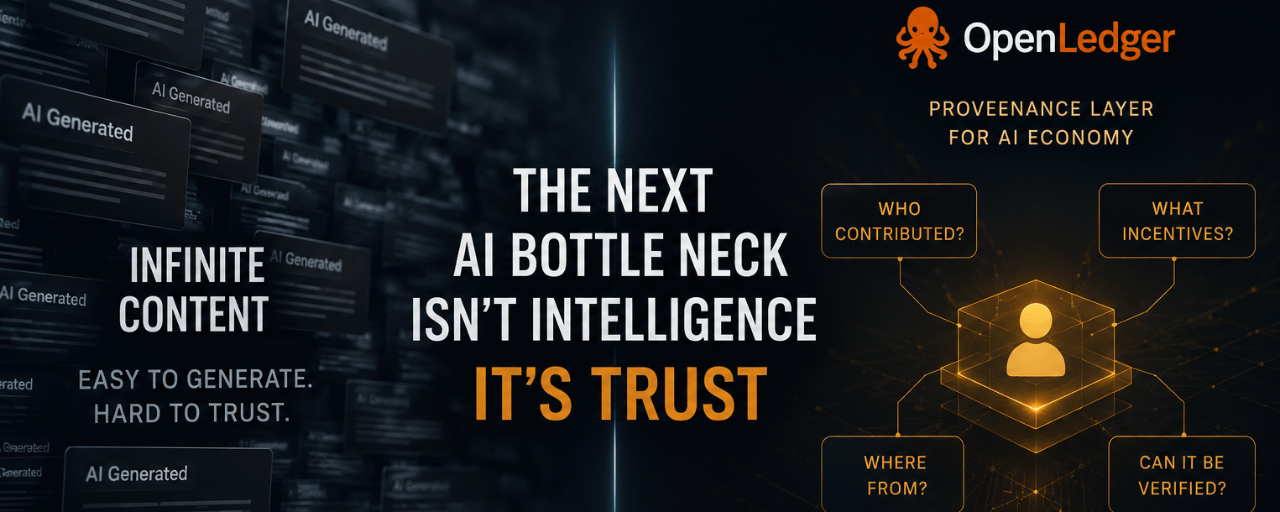
But the deeper AI spreads into the internet, the more the attribution layer itself starts feeling like the real infrastructure.
Not just intelligence.
Provenance.
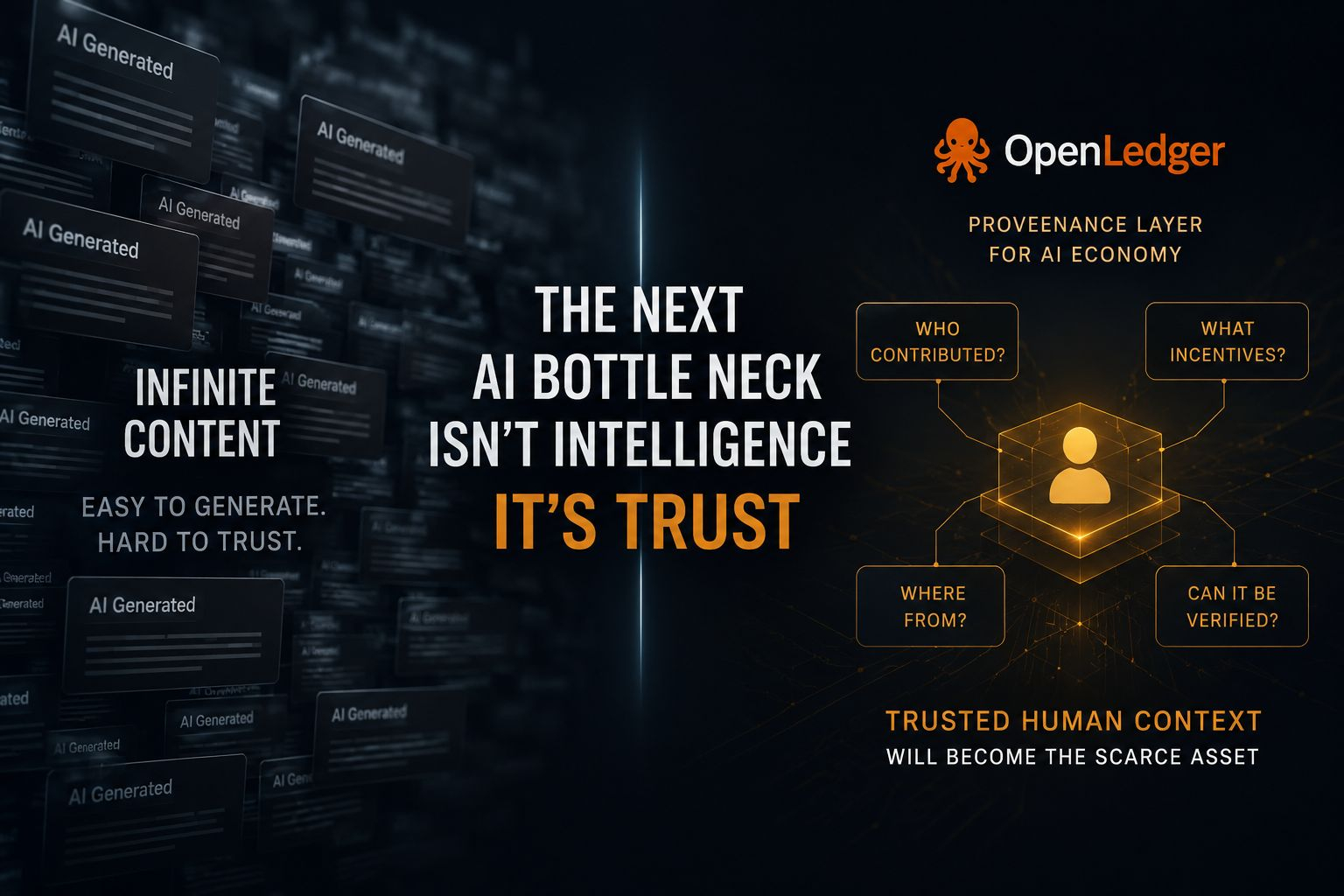
Who contributed what.
Where information came from.
What incentives shaped the output.
Whether source history can actually be traced.
Those questions used to feel secondary.
Now they feel closer to the core problem.
Because once AI-generated information becomes effectively infinite... context itself becomes scarce.
And honestly I don’t think markets fully understand what happens psychologically when that shift starts accelerating.
We already live in an internet optimized around visibility instead of credibility.
AI just scales that dynamic harder.
More content.
Less friction.
Infinite production loops.
At some point the bottleneck probably stops being information access.
It becomes trust filtering.
That changes the economics completely.
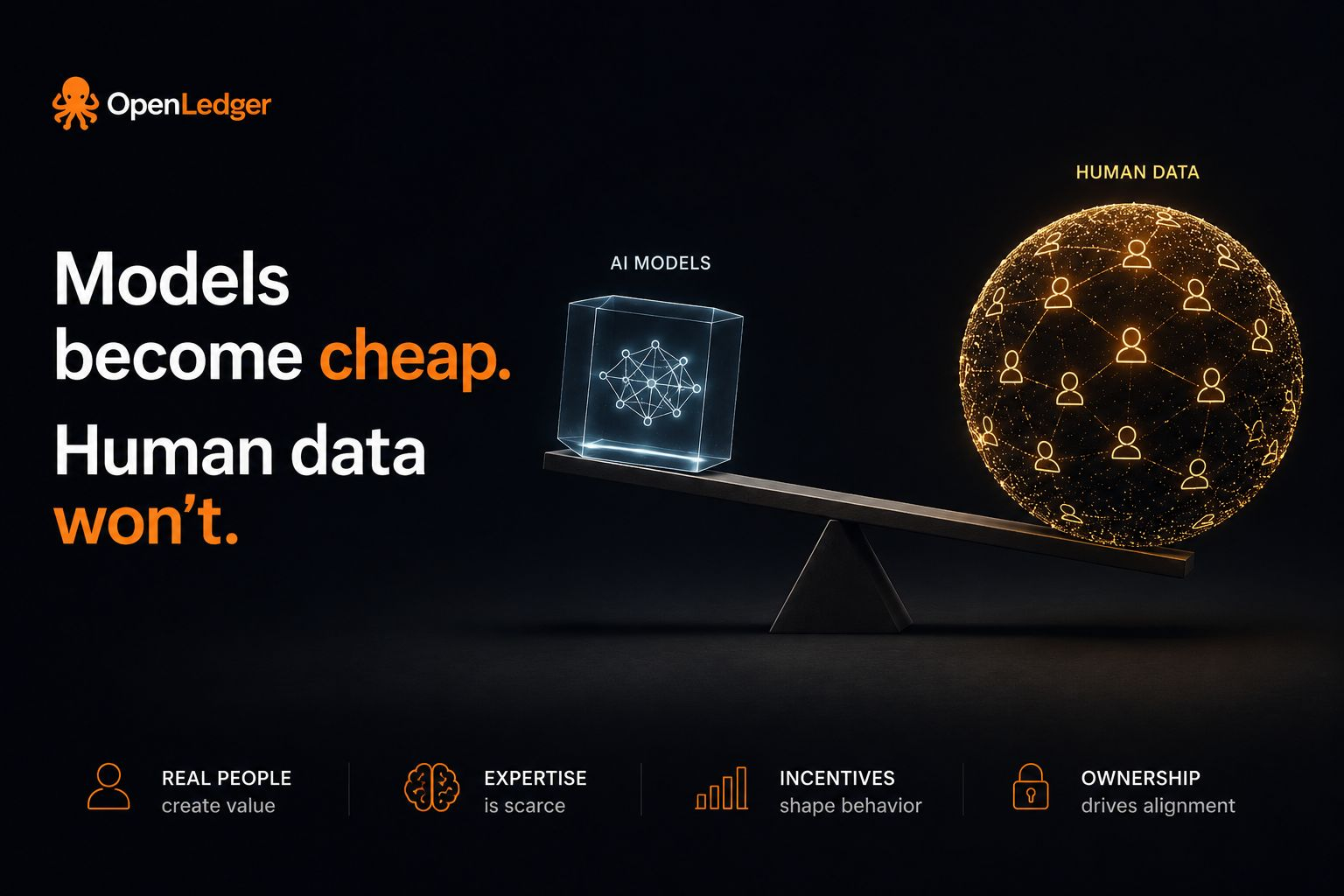
A dataset produced by people risking real capital probably carries different signal than engagement-farmed summaries optimized for reach.
Same with research.
Same with sentiment.
Same with communities honestly.
The internet starts behaving differently once synthetic participation becomes cheap enough.
And crypto feels especially vulnerable there.
You could theoretically manufacture entire narratives at industrial scale.
Synthetic research.
Synthetic sentiment.
Synthetic consensus.
Sounds extreme until you realize parts of that already happen manually today.
AI just lowers the cost dramatically.
That’s where OpenLedger starts feeling more interesting to me.
Not because I think they solved this already.
Far from it honestly.
There are still huge problems with incentive quality, spam resistance, verification, governance... all of it.
But the direction feels more aligned with where the internet itself might be heading.
The project feels less like “AI infrastructure” and more like an attempt to build economic provenance around intelligence generation.
Subtle difference.
Potentially very big difference later.
Because if intelligence itself becomes abundant...
then maybe the scarce asset becomes traceable human context.
Not perfect humans.
Just attributable ones.
People with history.
Risk exposure.
Reputation.
Economic alignment.
That emotional layer matters more than most tech discussions admit.
Maybe I’m overestimating this shift completely.
Possible.
Convenience usually beats ideology in the long run.
Most users probably won’t care where outputs came from as long as the product works well enough.
But then again...
finance eventually cares.
Healthcare cares.
Legal systems care.
Scientific research definitely cares.
Those industries eventually hit trust thresholds where provenance stops being optional.
AI probably reaches that stage too.
And when it does, infrastructure around attribution suddenly stops looking niche.
It starts looking necessary.
I keep thinking about that lately.
Because maybe the next AI arms race isn’t only about generating intelligence anymore.
Maybe it’s about generating intelligence people can still trust once the internet becomes flooded with synthetic everything.
And honestly...
that changes the map more than people realize.
$OPEN #OpenLedger @OpenLedger #OpenLedger $OPEN