
It was 1986...
NASA launched the Challenger Space Shuttle live on television. Engineers had already warned about the O-ring failure risk in cold weather... but the communication chain failed, pressure overrode caution, and the system nobody fully listened to exploded just 73 seconds after launch.
Seven astronauts were lost not because the mission lacked talent, but because the people inside the system didn’t fully understand or respect the hidden risk at the critical moment.
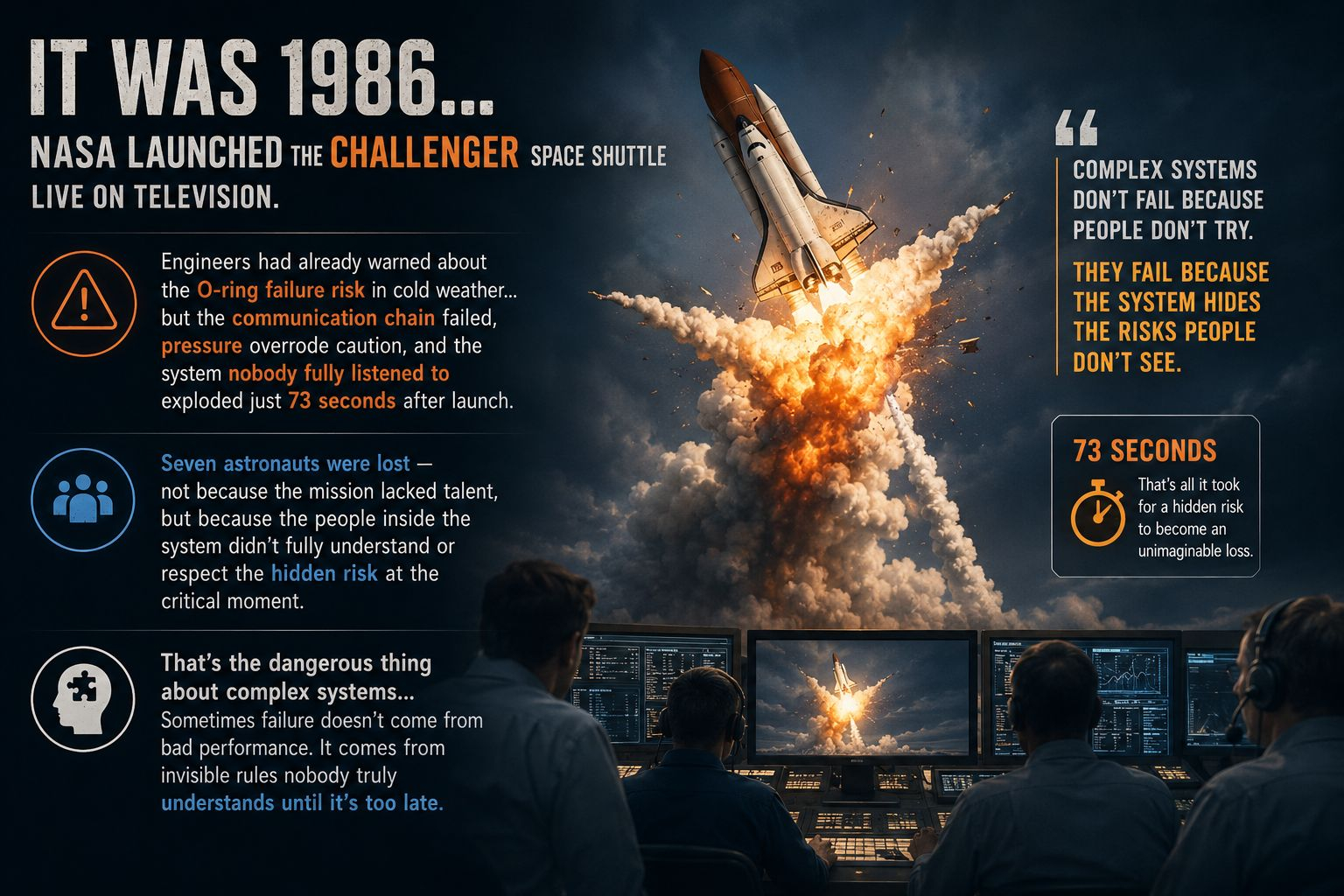
That’s the dangerous thing about complex systems...
Sometimes failure doesn’t come from bad performance. It comes from invisible rules nobody truly understands until it’s too late.
And honestly, the more I think about modern AI systems, the more this story feels strangely relevant today.
Right now, AI is evolving at insane speed. New models launch every week. Companies compete over performance benchmarks, token speeds, and valuation numbers. But behind all the hype sits one uncomfortable truth:
Most people still have no idea where the data comes from, who owns it, how it was verified, or who profits once AI starts generating real economic value.
That’s a dangerous setup for the future.
Because AI systems are slowly becoming black boxes incredibly powerful, but increasingly difficult to audit, verify, or trust.
And if history teaches anything, it’s that systems nobody fully understands eventually create risks nobody can control.
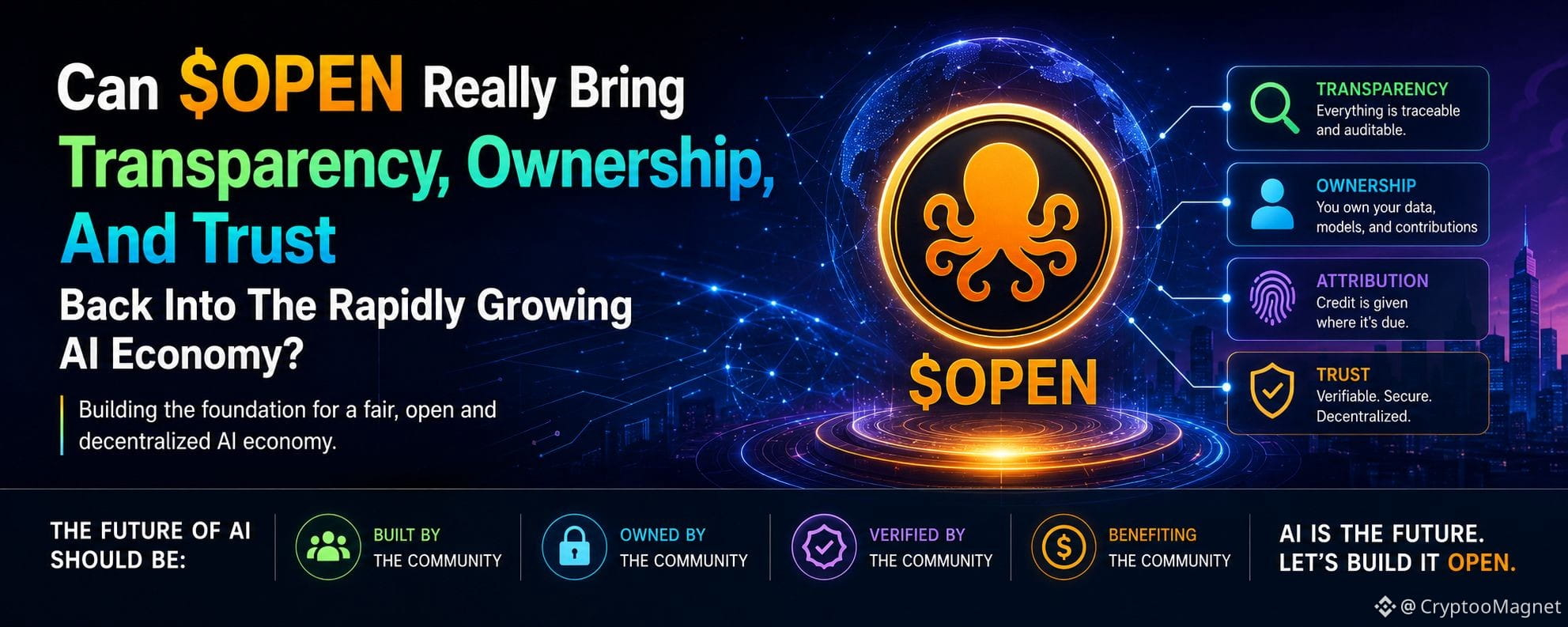
That’s why projects like $OPEN caught my attention.
What OpenLedger seems to be building isn’t just another AI blockchain narrative chasing hype cycles. The bigger idea appears to be creating an ownership and verification layer for AI itself.
A system where datasets, models, and even AI agents can have traceable attribution attached to them.
A system where contributors are rewarded transparently instead of value flowing only toward centralized platforms.
A system where Proof of Attribution can potentially show exactly where intelligence originated from — instead of treating community-generated knowledge like free fuel for trillion-dollar companies.
And honestly, that changes the conversation completely.
Because the next AI war may not simply be about who has the smartest model.
It may become a war over who controls trusted data, who verifies outputs, and who owns the economic layer underneath artificial intelligence.
That’s where transparency stops becoming a “feature” and starts becoming infrastructure.
If OpenLedger succeeds, it could push AI toward something far healthier: verifiable intelligence instead of blind trust, shared ownership instead of extraction, and transparent contribution economies instead of invisible exploitation.
Of course, execution is still the biggest challenge.
Building decentralized AI infrastructure that developers actually use is incredibly hard. Scalability, adoption, incentives, and real-world utility will decide whether this vision survives beyond theory.
But the core problem OpenLedger is trying to solve feels real.
Because once AI begins influencing finance, healthcare, governance, education, and global decision-making at scale...
Humanity cannot afford systems nobody understands.
The Challenger disaster taught the world what happens when hidden risks stay buried inside complex systems.
AI may become the next version of that lesson.
And maybe transparency will be the difference between systems humanity can trust... and systems humanity simply hopes won’t fail.