
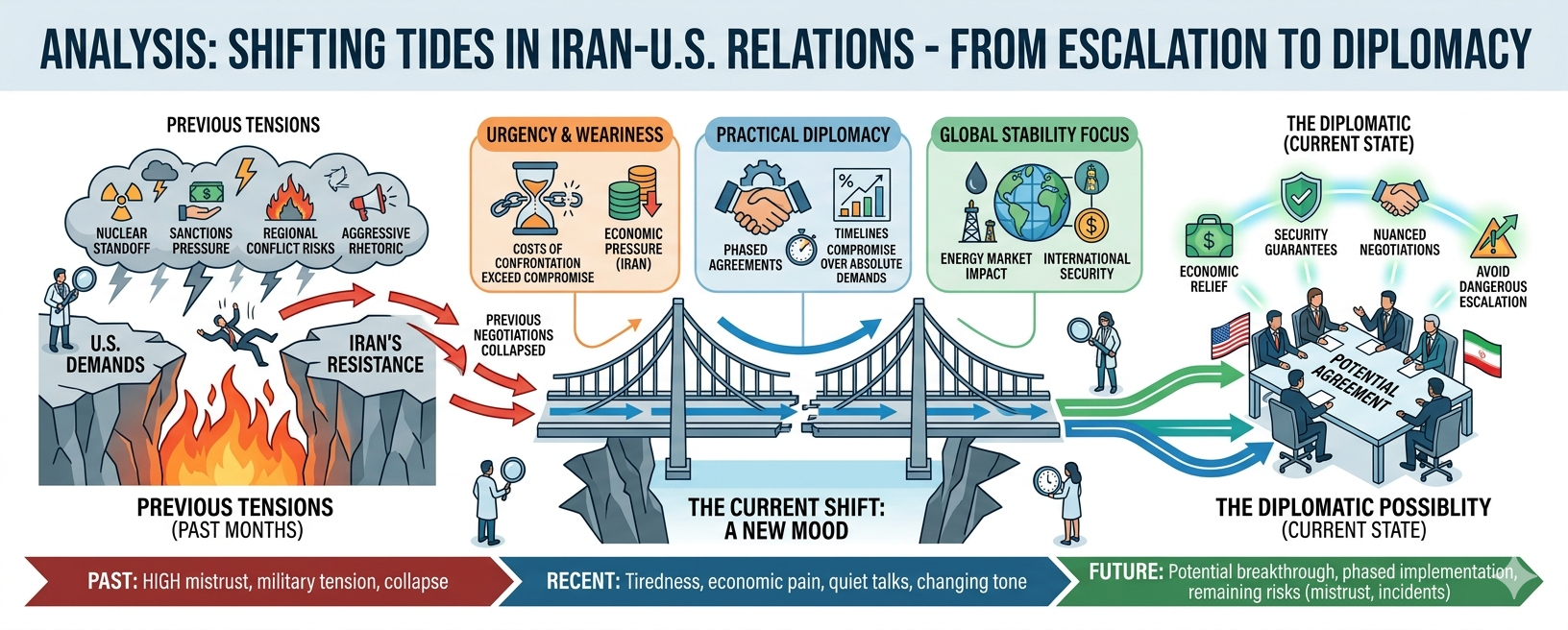

For a long time, every headline about Iran and the United States felt like another step toward disaster. I have spent months watching the tension grow, reading diplomatic reports late at night, following political statements, and trying to understand whether the world was moving toward another dangerous conflict in the Middle East or toward a breakthrough nobody expected. Most people only see the public speeches and dramatic headlines, but after spending so much time on research, I started noticing small changes in tone that often reveal more than official press conferences ever do. Recently, those changes have become impossible to ignore.
The conversations happening behind closed doors now appear more serious than anything we have seen in recent years. Diplomatic sources continue hinting that both sides are closer to some kind of agreement, and the atmosphere surrounding the talks feels far less aggressive than before. I have been watching how officials speak carefully instead of emotionally, and that alone says a lot. When governments stop focusing only on threats and start discussing timelines, compromises, and economic relief, it usually means negotiations are entering a critical stage.
What makes this moment feel unique is that both countries seem tired of the constant pressure. Iran has spent years facing crushing sanctions that damaged its economy and created frustration among ordinary citizens. At the same time, the United States understands that endless instability in the region affects global markets, oil prices, and international security far beyond the Middle East. I spent weeks researching previous negotiations between these two countries, and one thing became clear every single time: real diplomacy only begins when both sides quietly realize confrontation is costing more than compromise.
There is still deep mistrust between Washington and Tehran, and nobody should pretend those problems disappeared overnight. The nuclear issue remains one of the biggest obstacles, while regional tensions continue creating fear that a single incident could destroy months of progress. But despite all of that, I have been watching something unusual happen. Instead of speaking only to their supporters, officials now seem focused on finding a realistic outcome that prevents another dangerous escalation. That shift matters more than many people realize.
The world is also paying close attention because the consequences of any agreement would reach far beyond politics. Financial markets react immediately whenever positive news about the talks appears. Oil traders, investors, and global analysts all understand that stability between Iran and the United States could reshape energy markets and calm fears of a wider regional conflict. After spending so much time following this story, I can honestly say the current mood feels different from the false optimism we saw in previous years. There is now a level of urgency that did not exist before.
What I find most interesting is how diplomacy has slowly replaced the language of absolute demands. Earlier negotiations often collapsed because both sides wanted total victories instead of gradual solutions. This time, the discussions appear more practical. There are reports about phased agreements, economic measures, sanctions discussions, and security guarantees instead of unrealistic promises. I have spent countless hours on research trying to understand whether these reports were simply political theater, but the consistency of the information coming from multiple diplomatic circles suggests something serious may finally be happening.
Of course, nobody knows how this story will end. I have watched enough international negotiations to understand that progress can disappear overnight. One political speech, one military incident, or one internal disagreement could push everything backward again. That uncertainty will remain until an official agreement is signed and implemented. Still, after months of watching this situation closely, I believe the possibility of a diplomatic breakthrough is more real today than it has been in a very long time.
For years, the relationship between Iran and the United States has been defined by anger, suspicion, and fear. Now, for the first time in a while, there are signs that both sides may finally understand the cost of continuing the same cycle forever. I spent months researching this story expecting more escalation, more threats, and more instability. Instead, I am watching the possibility of diplomacy slowly return to the center of one of the world’s most dangerous political rivalries.