

The run said stopped at 14:07:22. Four seconds later, the vault still minted 937.41 shares.
That is the OpenLedger pause problem I keep coming back to. Not because the pause button is useless. The next scan can be blocked. The signer can be cut off. The loop can stop asking OctoClaw for another route. That part is clean enough.
The ugly part is the action already outside the room.
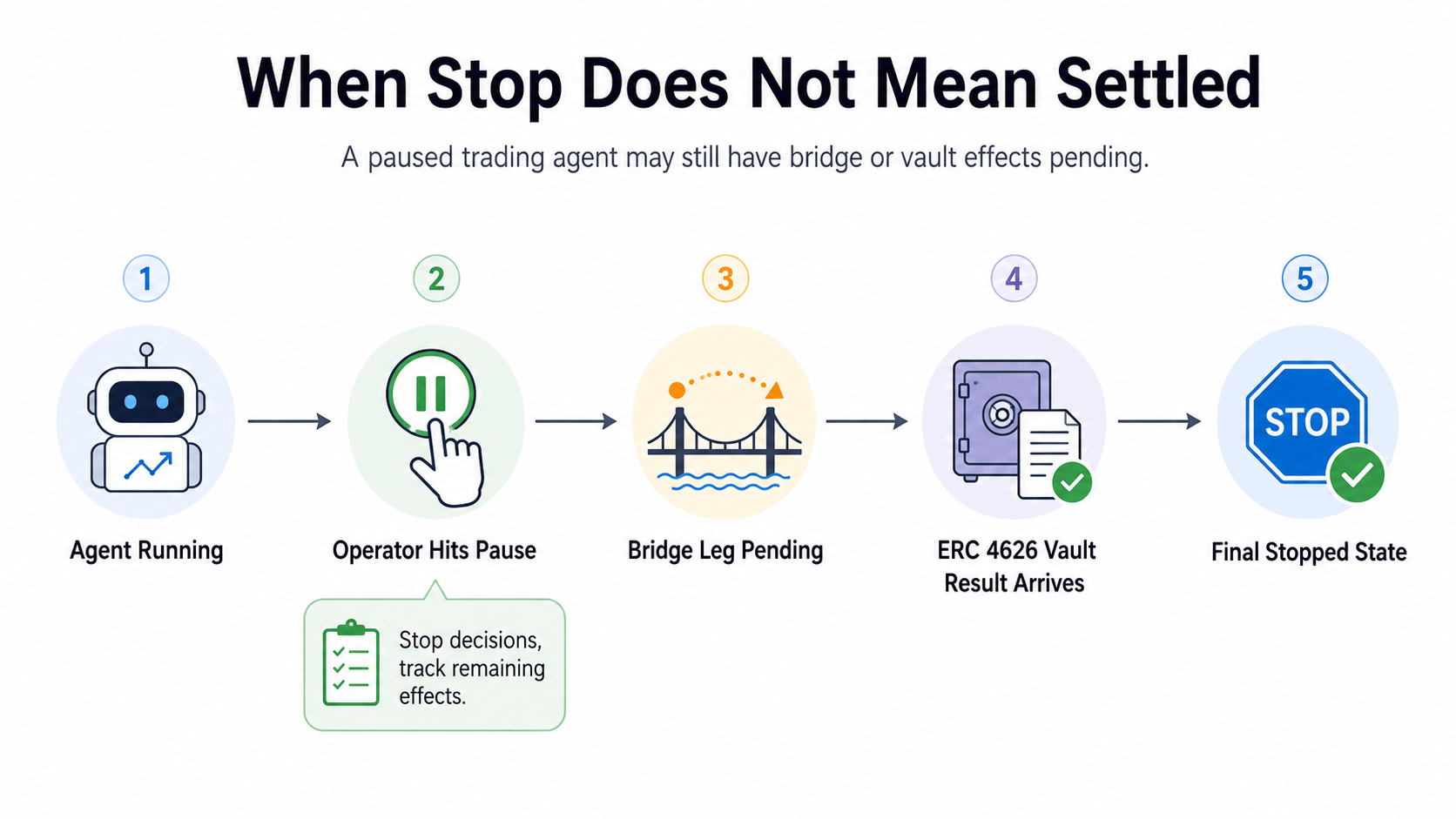
My paused run needed one receipt sitting beside the badge.
pause_ts=14:07:22 last_decision_ts=14:07:18 bridge_tx_status=broadcast_before_pause vault_result_after_pause=937.41_shares_minted signer_status=blocked_after_pause run_id=octo_7f31 open_fee_status=attached_to_pre_pause_decision
That record changes the whole argument.
Without it, the user sees a stopped screen and a moving balance. They do not care that the bridge leg was already signed. They do not care that one RPC endpoint still had pending while another already had the receipt. They do not care that the vault mint settled late because ERC 4626 does not wait for the dashboard label to feel honest.
They hit stop. The UI agreed. Then funds moved.
From the outside, that looks like the agent ignored the pause.
Maybe it did not. Maybe the deposit was already broadcast before pause_ts. Maybe the signer was already blocked after that point. Maybe the $OPEN activity belongs to the pre-pause decision and not some new action after the freeze.
But OpenLedger has to prove that in the run record itself.
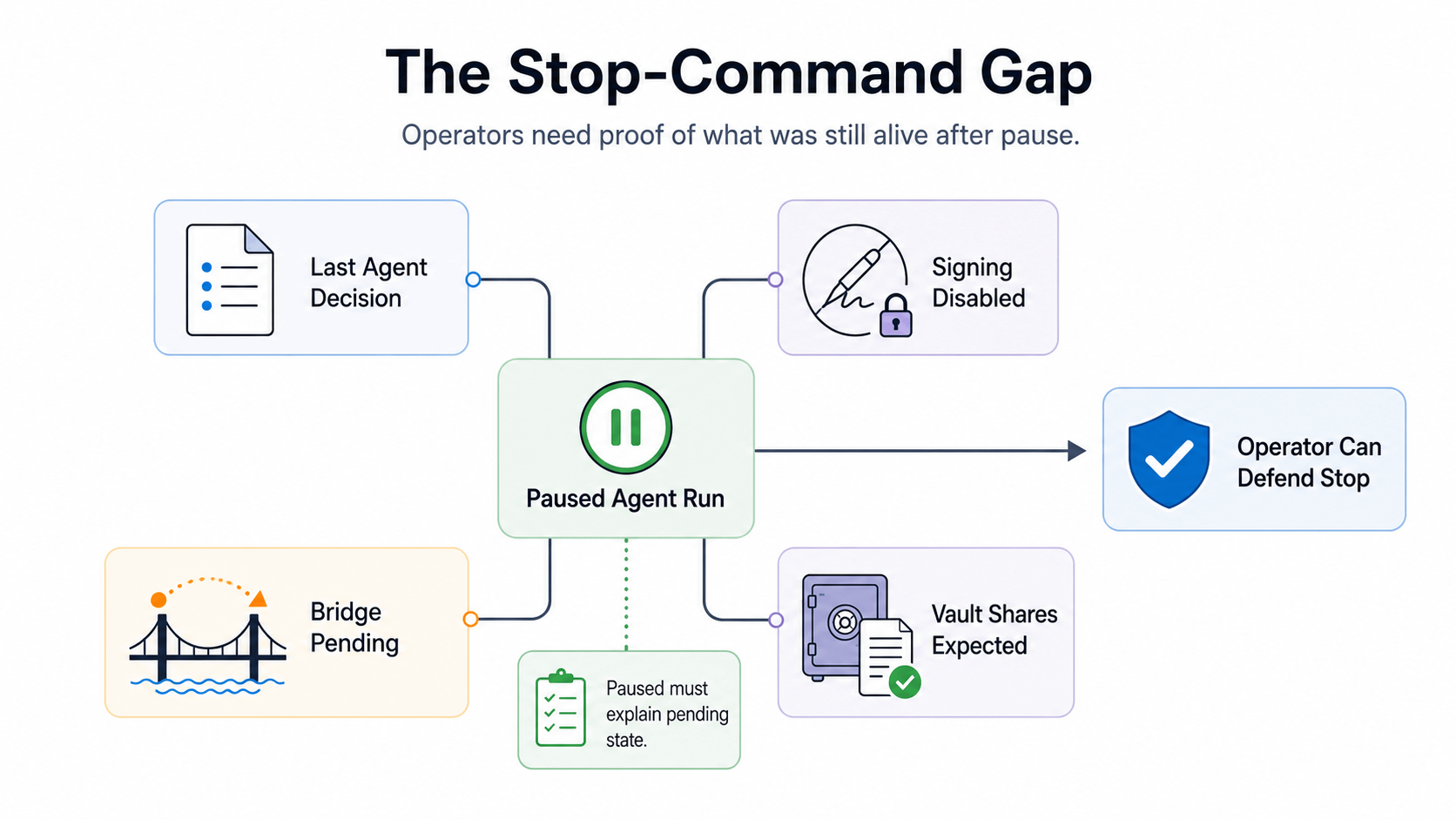
This is where a polished paused badge can actually make the situation worse. It makes the screen look settled while the chain path is still catching up. The moment vault_result_after_pause is blank, or open_fee_status floats away from the parent run_id, the operator is back to explaining a live balance change with explorer tabs and timing excuses.
That is a bad place to put user trust.
I do not want the pause screen to sound calmer. I want it to show what escaped before the stop landed.
A stopped agent should prove three things in one place.
No new signer action happened. The late vault result came from the last valid decision. The $OPEN activity was charged to that same pre-pause run.
If OpenLedger can show that, the user sees a delayed settlement. Annoying, but explainable.
If it cannot, the user sees a stopped agent still moving money.
That is the line that matters.