
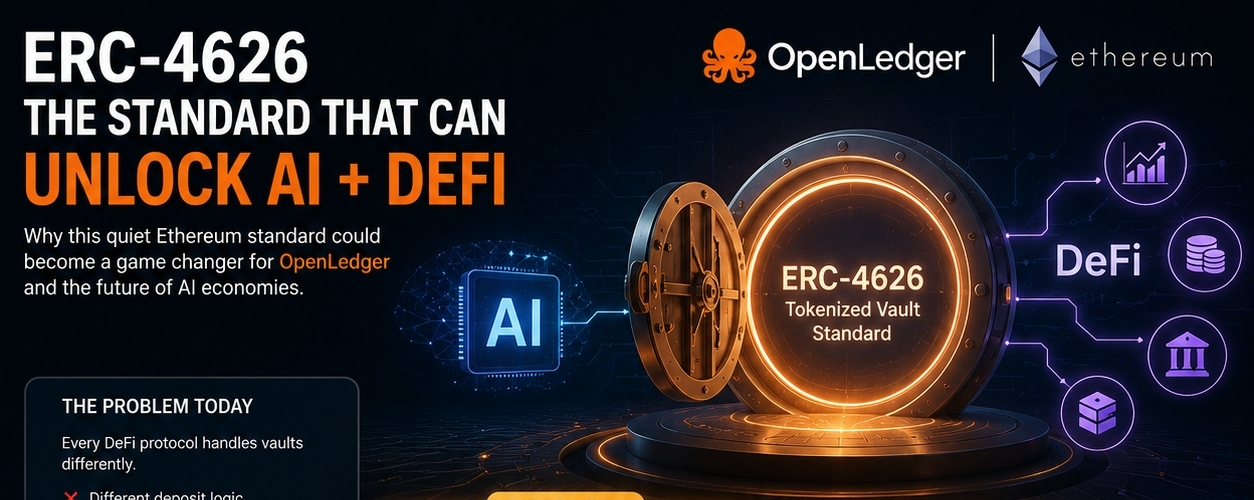
A few months ago, if somebody casually mentioned ERC4626 in a conversation, I probably would have ignored it completely. It sounded like one of those deeply technical Ethereum standards that only smart contract developers cared about while normal users focused on price charts and token launches.
But after spending more time exploring AI driven crypto ecosystems and projects like OpenLedger, I started realizing something important.
The infrastructure layer quietly shapes the future of every ecosystem long before the market notices it.
Most people in crypto pay attention to narratives because narratives move prices fast. Memecoins trend overnight. AI tokens explode during hype cycles. Traders chase momentum because momentum creates opportunity.
But underneath every successful ecosystem, there is usually a foundation most users never talk about.
Standards.
That is why ERC4626 suddenly became far more interesting to me than I expected.
At first glance, it does not sound exciting. It is simply a standardized framework for tokenized vaults across Ethereum compatible ecosystems. But once you understand the problem it solves, you begin to see why it matters so much for long term scalability.
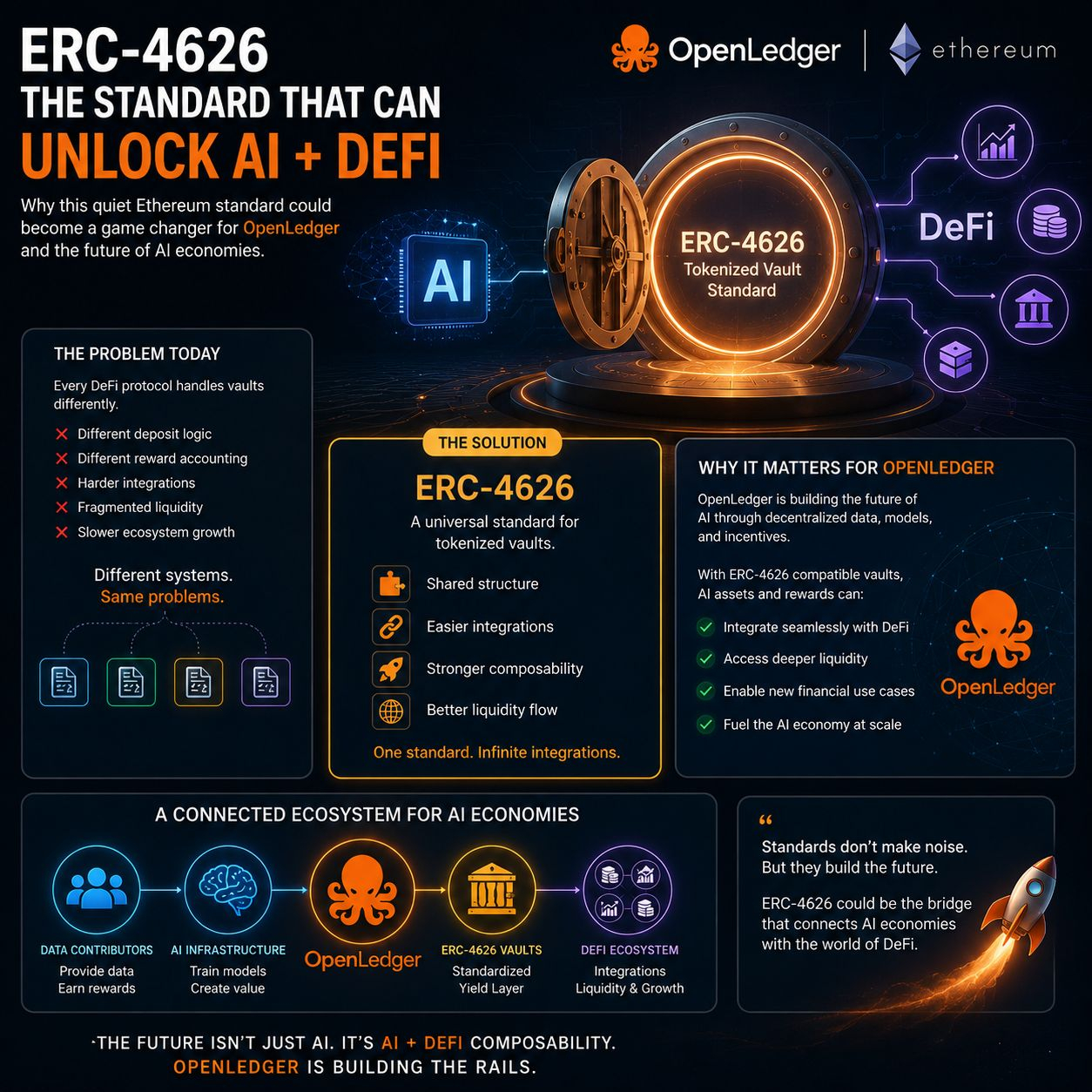
Right now, many DeFi protocols handle vaults and yield systems differently. Deposits work differently. Withdrawals work differently. Reward accounting changes from one platform to another. Even integrations often require developers to build custom solutions every single time.
That fragmentation creates invisible friction across DeFi.
Liquidity moves slower. Integrations take longer. Developers waste resources rebuilding similar infrastructure repeatedly. Entire ecosystems become harder to connect together smoothly.
ERC4626 changes that by creating a shared structure for yield bearing assets.
In simple terms, it gives DeFi protocols a universal language.
Once applications follow the same standard, wallets, aggregators, lending platforms, bridges, and yield systems can integrate with much less complexity. Instead of creating custom infrastructure for every vault, developers can plug into standardized systems far more efficiently.
And honestly, the more I think about it, the more relevant this becomes for AI based ecosystems.
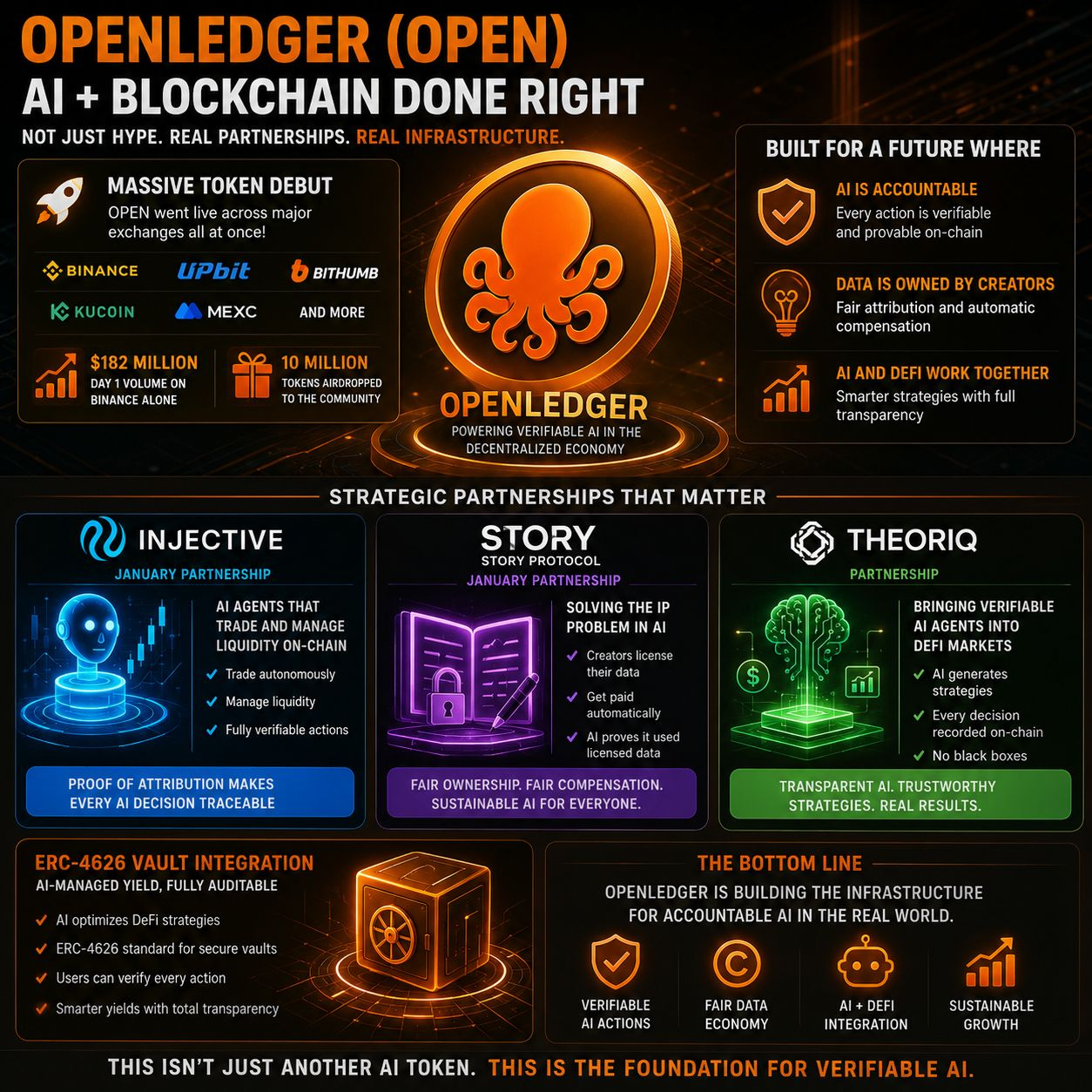
Projects like OpenLedger are not simply trying to launch another speculative token. The broader vision appears much larger than that. It touches AI infrastructure, decentralized data contribution, incentive systems, model economies, and monetization around AI assets.
That is where the connection becomes fascinating.
Imagine an AI ecosystem where contributors earn rewards for supplying valuable data, validating models, or participating in decentralized AI infrastructure. Now imagine those rewards interacting seamlessly with standardized DeFi vault systems powered through ERC4626 compatible frameworks.
Suddenly those assets become easier to integrate across the broader crypto economy.
Yield aggregators could support them faster. Lending protocols could potentially interact with them more efficiently. Wallet infrastructure becomes simpler to support. Liquidity movement becomes smoother instead of isolated.
That kind of composability is what helped DeFi grow so rapidly in previous cycles.
The biggest DeFi ecosystems succeeded because protocols could stack on top of one another like financial building blocks. One application became useful because another application could integrate it easily.
Composability created network effects.
And I believe AI ecosystems will eventually need the exact same thing if they want to scale beyond niche communities.
Right now, many AI crypto projects still feel isolated. They operate inside their own ecosystems without deep interoperability across the broader DeFi landscape. But standards like ERC4626 could eventually help bridge that gap by making AI related assets easier for existing financial infrastructure to understand and support.
The interesting part is that none of this creates instant excitement on social media.
You will not usually see explosive hype candles because a protocol improved backend composability. Most retail traders ignore infrastructure conversations entirely because they feel slow and technical compared to short term speculation.
But crypto history repeatedly shows that the strongest ecosystems are often built quietly underneath the noise.
Ethereum became powerful because developers could build on common standards. DeFi expanded because protocols became composable. Stablecoins succeeded because infrastructure made them easy to integrate everywhere.
Standards rarely dominate headlines during the early stages.
Yet they often determine which ecosystems survive long term.
That is why I think infrastructure narratives deserve far more attention than they currently receive. Memes create temporary attention, but infrastructure creates sustainability. Hype can attract users quickly, but standards are what allow ecosystems to scale without collapsing under fragmentation.
The more I study projects connected to AI and decentralized infrastructure, the more I believe the next major evolution of crypto will not simply be about launching smarter AI models.
It will be about building systems that allow those AI economies to connect seamlessly with the broader financial ecosystem around them.
And if projects like OpenLedger successfully combine AI infrastructure with standardized DeFi rails, they could help create an entirely new layer of composable digital economies that feel far more connected than isolated.
Maybe that sounds less exciting than chasing the latest meme trend.
But long term, foundations usually matter more than fireworks.
#OpenLedger #AI #defi #ERC4626 #Crypto #Blockchain #BinanceSquare #Web3 #OpenLedger $OPEN
