

I remember reading about autonomous agents years ago. Academic papers. Futurist blog posts. Promises of AI that would act on our behalf, execute trades, manage workflows. Always coming soon. Never arriving.
OctoClaw arrived.
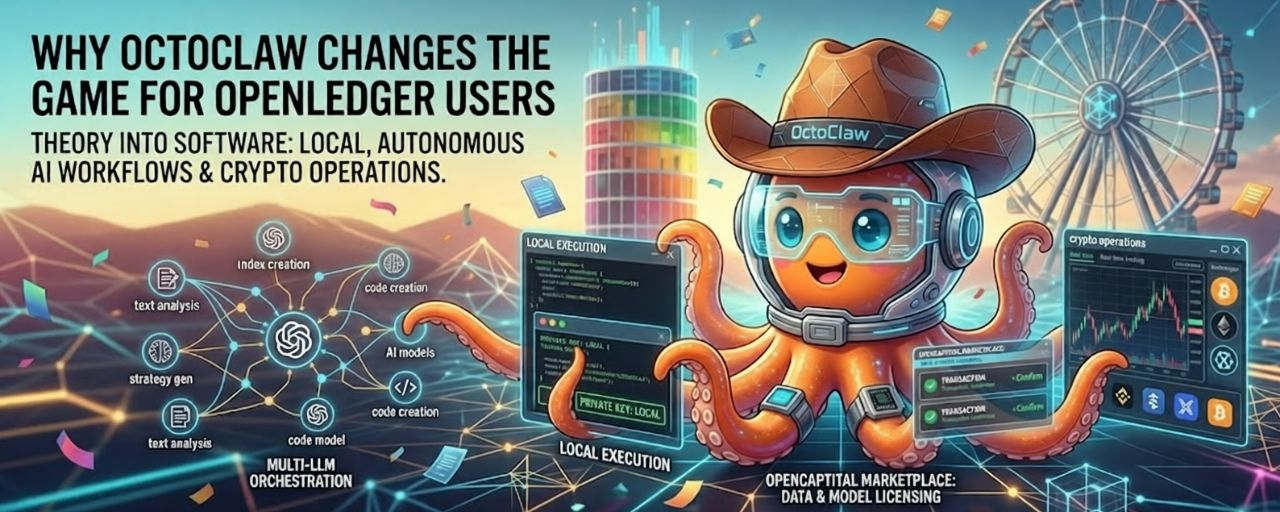
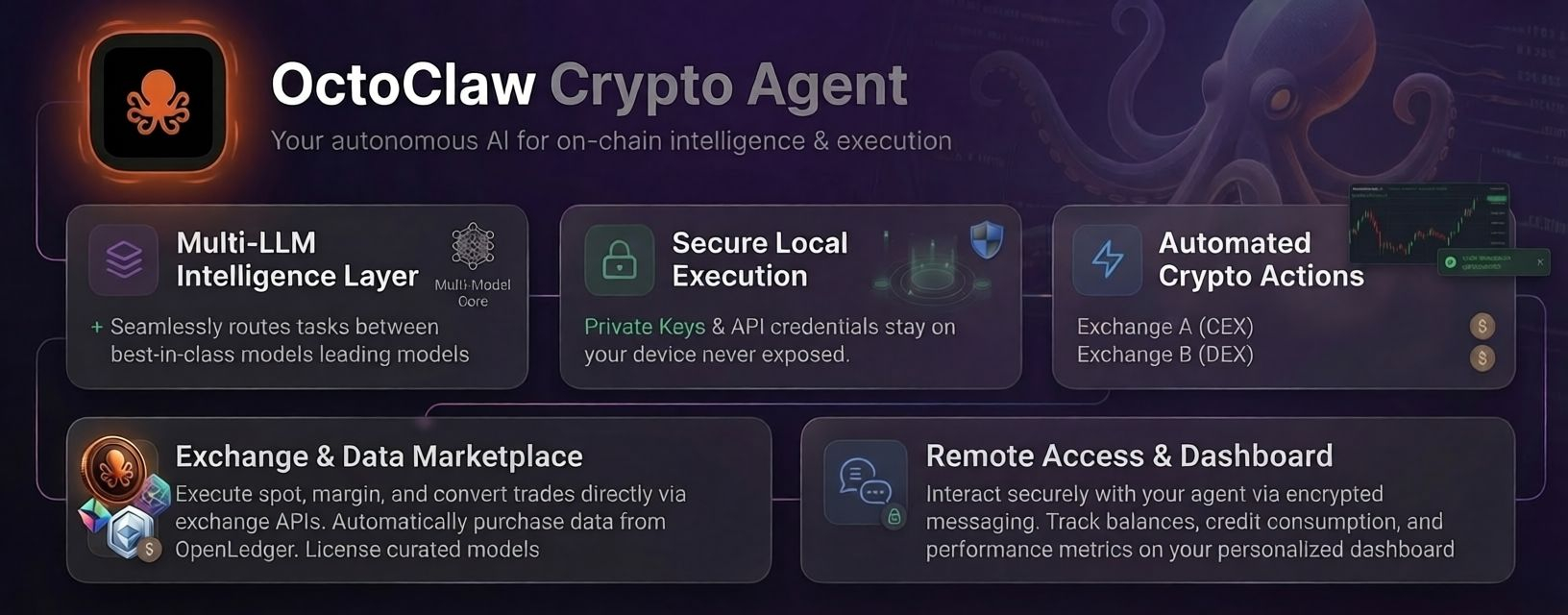
@OpenLedger agent framework turns theory into software. A claw bot designed for multi-LLM orchestration. Secure local execution of AI workflows. Autonomous crypto operations through exchange integrations. The name sounds playful. The capabilities are not.
Most blockchain projects talk about autonomous agents as a future feature. Coming soon. Next quarter. Roadmap item number forty-seven. OpenLedger shipped OctoClaw now. Today. Ready to install and run on macOS systems. This changes the conversation entirely.
The gap between AI and blockchain has always been action. AI models can analyze markets. They cannot place trades without human approval. They can monitor data feeds. They cannot purchase new datasets without someone clicking buttons. OctoClaw closes this gap. The agent connects directly to exchanges. It executes trades based on model decisions. It purchases data from OpenLedger's marketplace. It licenses models from other creators. All without hand-holding.
Automation is not new. Bots have existed for years. The difference is autonomy. A bot follows fixed rules written by humans. An agent makes decisions based on models that learn and adapt. OctoClaw operates in the agent category, not the bot category.
Multiple AI models work together inside OctoClaw. One model might analyze market data. Another model might execute trades. A third model might monitor results and adjust strategy. The orchestration layer manages these interactions without human intervention. A single model has blind spots. Multiple models cross-check each other.
Security matters more than features for crypto operations. OctoClaw runs locally. Private keys stay on the user's machine. API credentials never leave the local environment. The agent signs transactions locally. Remote compromise becomes much harder when nothing sensitive travels over networks.
The recommended model choice delivers the best performance. Testing shows reliable code generation, better reasoning about market conditions, and fewer unexpected outputs. OctoClaw supports multiple provider options because different tasks need different approaches. Some models excel at analysis. Others handle execution better. Flexibility matters.
Accessibility is built into OctoClaw through secure messaging channels. Users can interact with their agent remotely. The agent responds, executes commands, and reports results. This works well for monitoring positions or checking data purchases without sitting at a computer.
A warning exists in the documentation. The agent can execute actions on behalf of users. Adding it to shared environments or giving others access lets unauthorized users send commands that trigger trades or actions. Loss of funds becomes possible. The only safe approach keeps the agent private and never shares access. Any autonomous agent with trading capabilities carries this responsibility.
The skills system expands OctoClaw's capabilities beyond basic chat. Exchange integrations enable spot trading, convert operations, margin trading, and access to market data. Other integrations add more functionality. The agent becomes a unified interface for multiple services.
Balance tracking happens through the dashboard. Usage metrics. Credit consumption. OpenLedger provides transparency about what the agent spends. No hidden fees. No surprise charges.
Software version requirements matter for installation. Older versions cause failures. The documentation mentions this clearly. Small details like this separate polished projects from rushed ones.
What makes OctoClaw different from other agent frameworks is the direct connection to OpenLedger's economy. Data purchases. Model licenses. Agent transactions. The agent participates in the same marketplace it helps monitor. This creates alignment. The agent's success ties to the network's health.
OctoClaw enables what was impossible before. A researcher could deploy an agent to monitor for new datasets in a specific domain. The agent purchases relevant data automatically. The researcher receives curated results without manual searching. A trader could deploy agents to test multiple strategies simultaneously. Each agent operates independently. Results get compared. The best strategy gets funded.
The local execution model preserves privacy. Cloud-based agents send data to third-party servers. OctoClaw keeps everything on the user's machine. Sensitive trading strategies never leave local storage. API keys stay where they belong. This matters for serious operators.
OctoClaw is not finished software. No complex tool ever is. Updates arrive regularly. New skills get added. Bugs get fixed. The important part is that it works now. Users can install it today. Connect exchanges. Deploy agents. Execute autonomous operations.
That is rare in Web3. Most projects sell vision. OpenLedger shipped software.
