
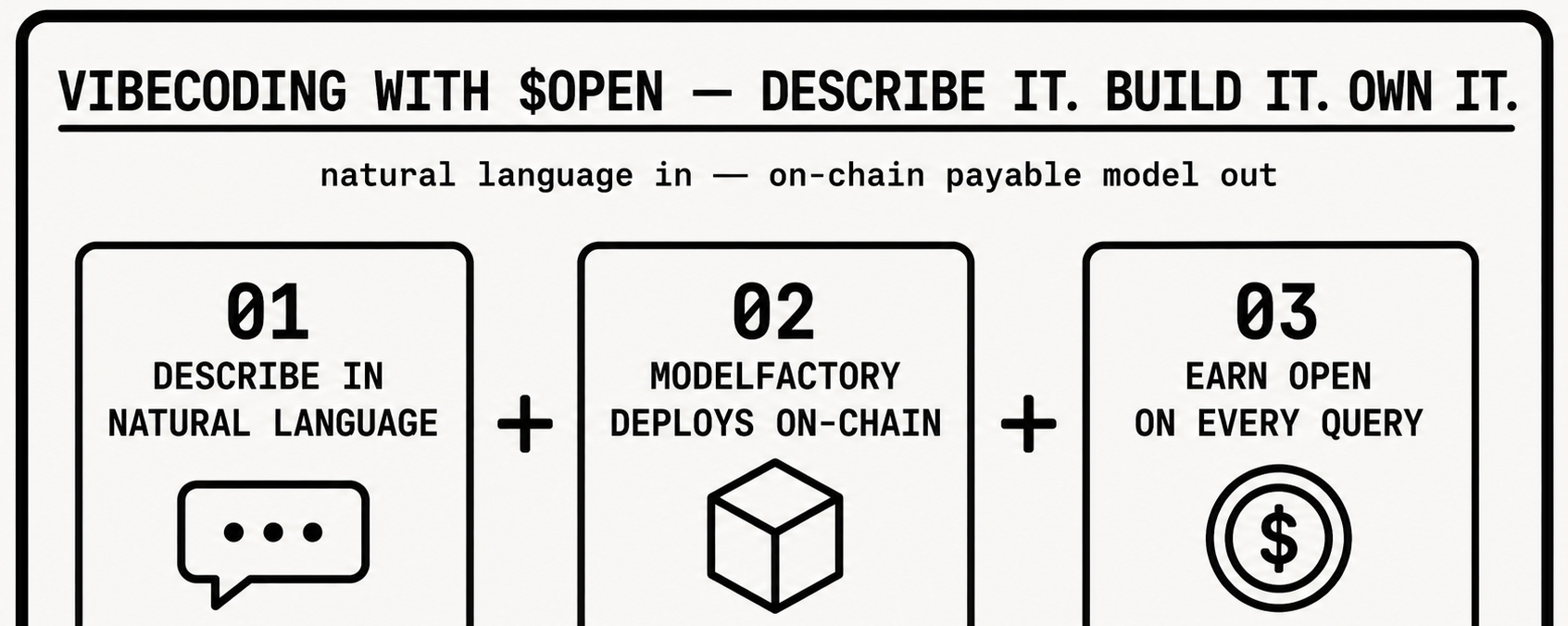
i didn't believe you could build an ai model by just describing what you wanted
i will be honest when i first saw vibecoding with openledger i dismissed it. i've seen enough no code ai" tools to know what that usually means. a drag and drop interface with limited customization, a few preset templates, and a ceiling you hit within the first hour. i scrolled past it twice before something made me go back and actually look at what was being described. [PE]
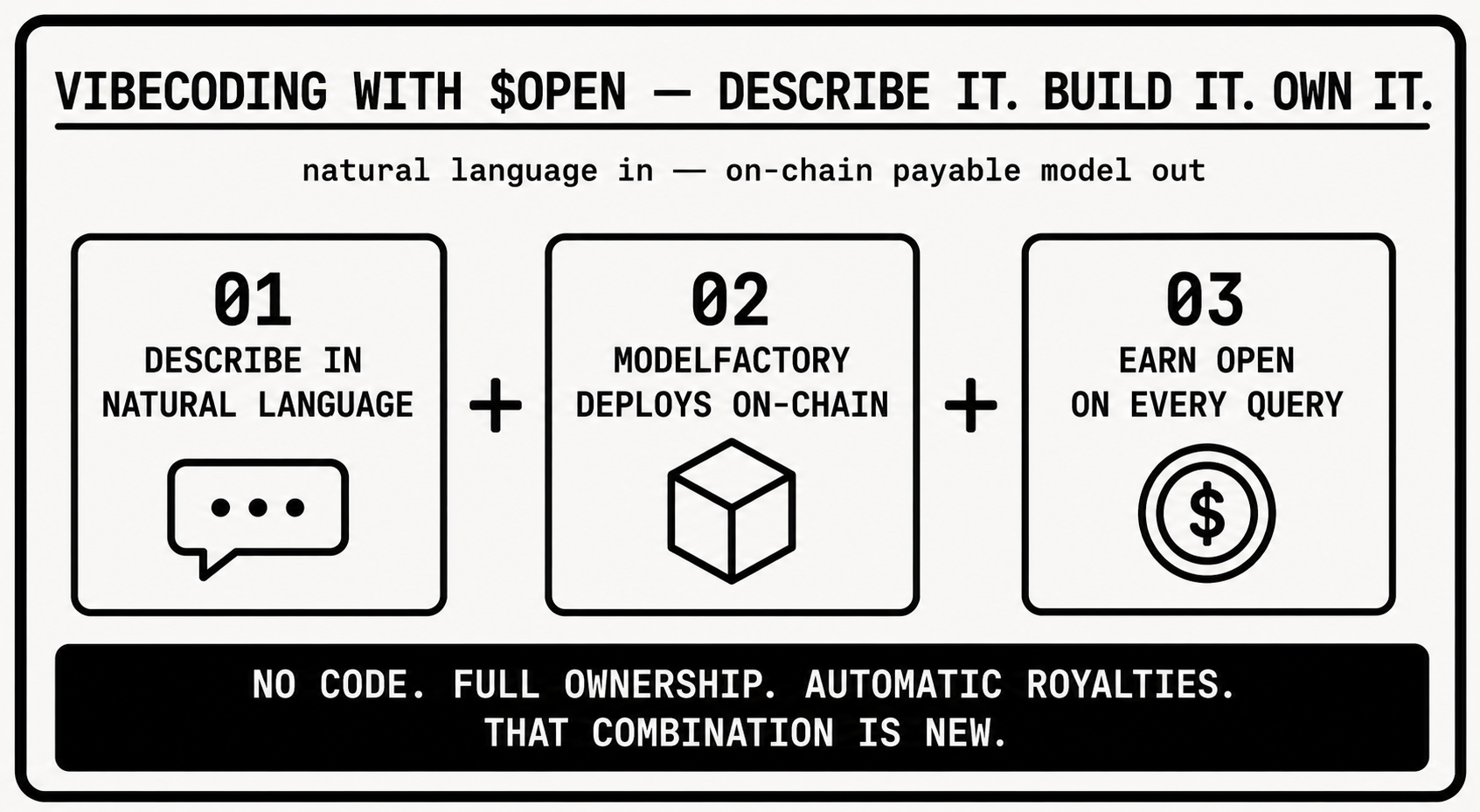
what changed my mind was a specific detail. this wasn't a simplified interface sitting on top of a generic model. openledger's vibecoding approach connects natural language input directly to ModelFactory the same tool that deploys Specialized Language Models on chain with automatic OPEN token royalties. the output isn't a prototype. it's a live, payable, on-chain model. that distinction is what made me sit down and actually map out what this means. [PE]
the setup is this. ModelFactory is openledger's no code and low code model development environment. a developer or someone who has never written a line of code describes what they want to build in natural language. the system handles model architecture training configuration, and deployment. once live the model is published on-chain as a Payable AI Model a smart contract that automatically distributes OPEN tokens to the builder every time the model gets queried. the vibecoding framing is about removing the technical barrier between having an idea for a specialized model and actually having that model earning on-chain. [TA]
what this actually changes for who can build ai
what makes this structurally different from other no-code ai tools is the endpoint. when you build something with most no-code platforms, you get a hosted model that the platform controls pricing, availability revenue share all of it. when you build through openledger's ModelFactory, the model is deployed on-chain as a smart contract. the developer owns the model. the payment logic is in the contract. the platform cannot change the terms after deployment because the terms are the contract. [TA]
the part that genuinely surprised me is the range of what becomes buildable when the technical barrier drops this low. i had assumed useful specialized models required deep domain expertise in machine learning to actually construct that having subject matter knowledge wasn't enough, you also needed to know how to translate that knowledge into training architecture. vibecoding with openledger separates those two things. a legal researcher who understands contract language deeply but has never trained a model can now build a contract analysis SLM. a medical professional who knows clinical terminology can build a terminology classifier. the knowledge and the building capability no longer have to live in the same person. [PE]
why specialized language models matter more than general ones here
what i kept thinking about while going through this is why OpenLedger's infrastructure is specifically optimized for Specialized Language Models rather than large general-purpose ones. the answer is in the economics. a general purpose model requires massive compute massive training data and competes directly with systems that have billion dollar infrastructure behind them. a specialized model purpose built for a specific domain with curated, verified data requires less compute performs better on its target task, and serves a user base that the general models handle poorly. vibecoding makes the construction of these specialized models accessible to the people who actually have the domain knowledge to build them well. [TA]
what i'm not fully clear on yet is how much the natural language input actually controls the model architecture versus how much is handled automatically by the system. when i describe what i want to build, is the system making significant architectural decisions on my behalf that i can't see or adjust? or is the natural language layer genuinely transparent about what it's producing? i went looking for documentation on what happens between the natural language input and the deployed model and that middle layer is not detailed publicly yet. for someone building a model they intend to stake their reputation on, that opacity is something to think about. [PE]
what they've gotten right is the access equation. removing the technical barrier between domain knowledge and model deployment is the correct problem to solve. the on-chain ownership model means the person who builds the model keeps control of it. the automatic royalty structure means building something useful has immediate economic return. that combination is genuinely new. [PC]
still not sure how much architectural control the builder actually has versus how much the system decides automatically that is the part i want to understand better before forming a complete view 🤔