
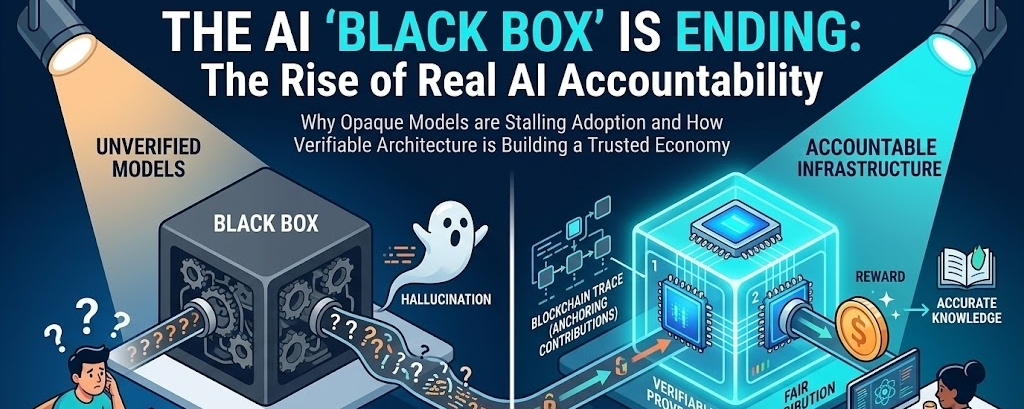
While walking on the soft grass of my beautiful garden I was continuously thinking about the research work I’ve spent the last week going down a rabbit hole, trying to understand what actually happens behind the scenes of our favorite AI models. We’ve all used these tools, but have you noticed that it’s all "magic" and zero accountability? You ask a question, you get an answer, but you have no idea who provided the data, how it was verified, or if the model is just hallucinating.

That’s why my research into @OpenLedger has been so eye-opening. We are finally moving away from the "Black Box" era of AI and into a world of verifiable, enforceable accountability.
Here is what I’ve realized from my research work:
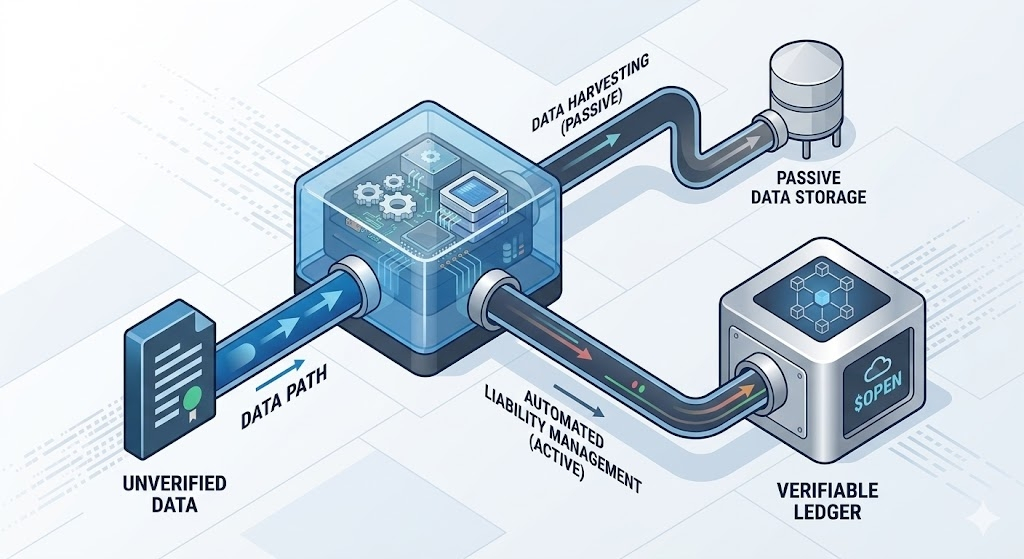
The Problem which I found is that Current AI infrastructure is broken because it lacks a "memory layer." Without a way to trace every inference back to its data input, we are essentially building the future on top of shifting sand.
The Solution which is best fit in that OpenLedger is changing the game by building an AI-native contributor economy. It’s not just about the code; it’s about creating an audit trail for every single interaction.
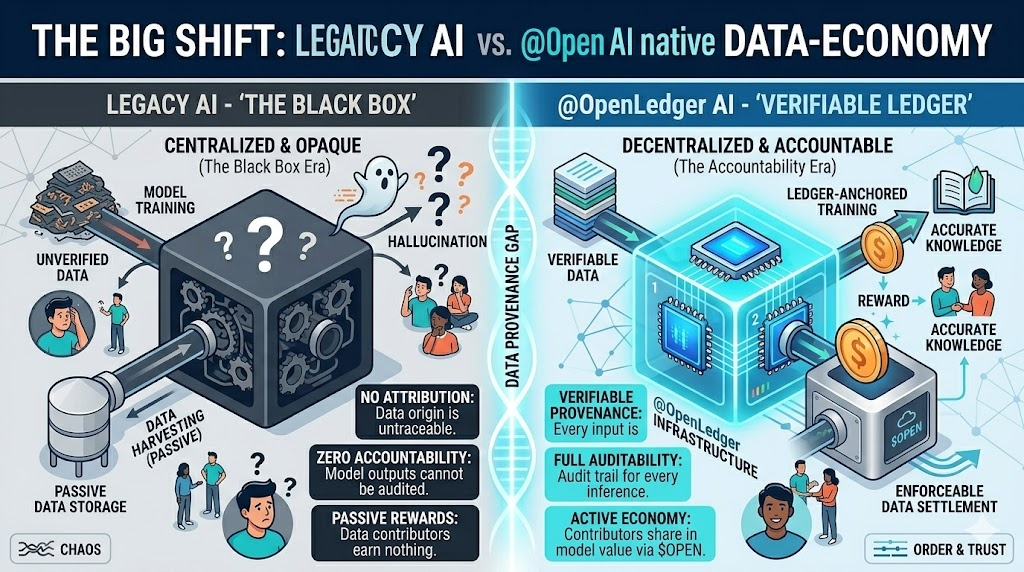
Why $OPEN Matters : In my point of view by using the $OPEN token to handle attribution and rewards, we finally have a system where contributors are treated as partners, not just data points for a giant, opaque machine. OpenLedger is proving that trust can be coded directly into the infrastructure. #OpenLedger
Beyond the technical shift, we have to look at the institutional reality. Large corporations and financial entities are inherently risk-averse; they will never integrate AI into their core operations as long as the output remains an un-auditable "black box." By providing a transparent, immutable ledger for AI data, @OpenLedger is effectively building the "compliance layer" that institutions have been waiting for. This isn't just a project for developers; it is the fundamental bridge that will bring trillions of dollars of enterprise data into the decentralized AI ecosystem.
Finally, consider the long-term economic shift. For years, the "data harvesting" model has rewarded only the gatekeepers of centralized platforms. With this new architecture, we are moving toward a system where every creator and data contributor has a verifiable, claimable stake in the value they create. When every contribution is anchored, the value of the network grows alongside the accuracy of the models. We are witnessing the birth of a fair economy where the reward is finally proportional to the real-world utility provided.
As a participant in this space, the discomforting question we have to ask ourselves is: Are we ready for a world where AI is not just "smart," but fully accountable?
I believe the answer is yes. We are trading the "freedom" of unchecked development for the resilience of hard, verifiable settlement. Once institutions realize they can audit the intent and origin of every AI output, the "trust me" era of tech will officially be over.
What do you think? Is the move toward enforceable accountability the missing piece for mass adoption? Let’s discuss below and follow for further updates. #OpenLedger