
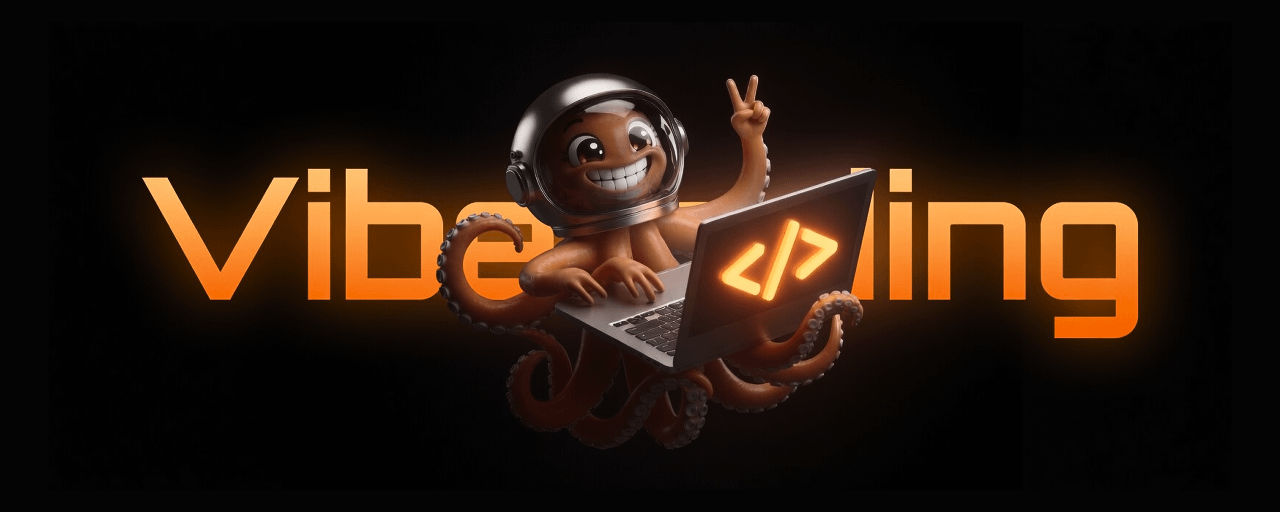
Artificial intelligence is changing how software gets built. Tasks that once required large engineering teams can now be accelerated through AI-assisted workflows, automated code generation, and intelligent development tools.
In Web3, this shift is creating a new style of building often described as “vibecoding” — a more creative, collaborative approach where humans and AI work together to rapidly prototype, experiment, and launch applications.
Instead of replacing developers, vibecoding focuses on enhancing creativity and reducing technical friction. Builders can move faster, test ideas quicker, and spend more time designing products instead of managing repetitive development tasks.
@OpenLedger focus on AI-native infrastructure aligns closely with this growing movement toward human-AI co-creation in Web3. $OPEN
What Is Vibecoding?
Vibecoding is a modern development mindset centered around fluid collaboration between humans and AI systems.
Rather than writing every component manually, developers increasingly use AI tools to:
Generate code snippets
Debug applications
Create smart contract logic
Build interfaces faster
Automate repetitive workflows
Prototype ideas rapidly
The goal is not fully autonomous development. Instead, it is about improving speed, experimentation, and creative iteration.
This approach is especially attractive in Web3, where developers often work across complex systems involving smart contracts, APIs, cloud infrastructure, decentralized storage, and cross-chain integrations.
AI-assisted workflows can dramatically reduce the operational burden of building decentralized applications.
Why Human-AI Co-Creation Matters
Web3 moves quickly. New protocols, frameworks, and ecosystems emerge constantly, creating pressure for developers to ship faster and adapt rapidly.
Human-AI collaboration helps solve this problem by allowing builders to focus more on:
Product design
User experience
Ecosystem strategy
Creative experimentation
While AI handles repetitive or time-consuming development tasks.
This creates a more efficient development cycle where ideas can move from concept to prototype much faster than traditional workflows.
As AI tools improve, vibecoding could become a core part of how future decentralized applications are built.
The Rise of AI-Native Web3 Development
The next generation of Web3 applications may not simply integrate AI features. Many projects are now building AI-native systems from the ground up.
These applications may include:
Autonomous AI agents
Intelligent trading systems
AI-powered governance tools
Decentralized data coordination
Automated creator platforms
Machine-driven financial applications
Building these systems requires infrastructure that supports rapid experimentation and modular deployment.
OpenLedger’s ecosystem direction reflects the broader shift toward AI-native development environments where builders can combine AI systems and decentralized infrastructure more efficiently.
Why Infrastructure Still Matters
Even with advanced AI tools, infrastructure remains one of the most important layers in Web3 development.
AI-native applications often require:
Cloud coordination
Real-time data pipelines
Smart contract execution
Cross-chain communication
Scalable deployment systems
Without developer-friendly infrastructure, innovation slows down.
Platforms focused on modular AI infrastructure can help reduce friction and allow creators to focus more on building useful applications instead of managing backend complexity.
This is one reason why projects exploring AI-assisted Web3 development are gaining increasing attention.
Vibecoding Could Expand Web3 Accessibility
One of the most important impacts of AI-assisted development may be accessibility.
Historically, building in Web3 required specialized technical knowledge. Smart contracts, blockchain infrastructure, and decentralized systems created high barriers for new developers.
AI-assisted workflows could lower these barriers by helping creators:
Learn faster
Build prototypes more easily
Test ideas without large teams
Launch products with fewer resources
This could bring more designers, creators, founders, and independent builders into the Web3 ecosystem.
As development becomes more collaborative between humans and AI, innovation may accelerate across decentralized technology.
Final Thoughts
Vibecoding represents more than just a trend. It reflects a broader shift toward human-AI collaboration as a core part of software development.
In Web3, where experimentation and rapid iteration are critical, AI-assisted workflows could significantly improve how decentralized applications are designed and deployed.
OpenLedger’s focus on AI-native infrastructure aligns with this evolving landscape by supporting environments where intelligent systems and human creativity can work together more efficiently.
As AI tools continue improving, human-AI co-creation may become one of the defining characteristics of the next generation of Web3 innovation.