

Okay, first thing first… when you look at systems like this, the first reaction is usually: “damn, too many rules.” 😂
Everything feels controlled, restricted, almost robotic.
But the deeper I looked into @OpenLedger docs, the more it started feeling less like chaos control and more like an attempt to build intentional structure.
Honestly, the simplest way I’d describe it is this:
OpenLedger isn’t just an AI or data platform… it’s experimenting with the idea that data itself can become an earned asset.
And this is where things get interesting.
The Datanets contribution layer is probably the first thing that catches attention. Text, images, audio — everything is separated. No random mixing. At first that sounds anti-Web3 because we’re all used to “permissionless everything” vibes. But here they’re basically saying:
“Cool… but can we keep the noise down for five minutes?” 😭

Even the upload limits — 10MB daily cap, 20 files max — sound tiny until you realize the goal isn’t stopping contributors, it’s stopping spam. Because unlimited contribution usually turns into unlimited garbage real quick.
And the leaderboard system?
That part surprised me.
Normally people think: “spam more uploads = higher rank.”
Not here. Acceptance rate matters more than quantity.
Meaning the system cares more about useful data than farming points for dopamine. Harsh? Maybe. Fair? Honestly yes.
What’s funny is rejected files don’t even hurt your rank. That’s actually a healthy design choice because it encourages experimentation instead of making contributors scared to try.
Then comes the serious part: ModelFactory.
This is where the whole vibe shifts.
They’re trying to turn LLM fine-tuning from a “terminal-warrior-only activity” into a visual workflow. Learning rates, epochs, batch sizes — adjustable through GUI instead of feeling like you’re defusing a bomb inside Linux 😭
And underneath the beginner-friendly surface, there’s a bigger idea:
making AI development more accessible without completely losing structure.
LoRA and QLoRA support also makes sense because full fine-tuning is insanely expensive now. So instead of forcing heavyweight setups, they’re leaning into lightweight adaptation.
The train → test → interact → refine loop is probably one of the smarter parts here. It makes model training feel continuous instead of “train once and pray for the best.”
Support for DeepSeek, Mistral, Qwen, LLaMA, BLOOM, GPT-2, ChatGLM and others also feels intentional. It’s not just “throw every model in.” It’s ecosystem coverage. Wide support = wider experimentation space.


And honestly, the whole system gives me one funny mental image 😂
It feels like a super disciplined kitchen where nobody can randomly throw ingredients into the pot. But once the food is ready, everyone gets to taste it and judge it.
Meaning vibes alone won’t save you here.
The most underrated part though might be the Agent Instructions system. Dynamic answers through GitBook URLs basically turn documentation into a queryable knowledge layer instead of static pages nobody reads after day one.
Overall, OpenLedger feels stuck — in a good way — between two opposite forces:
decentralization + open contribution
vs
strict validation + controlled structure
Balancing both is hard. Really hard.
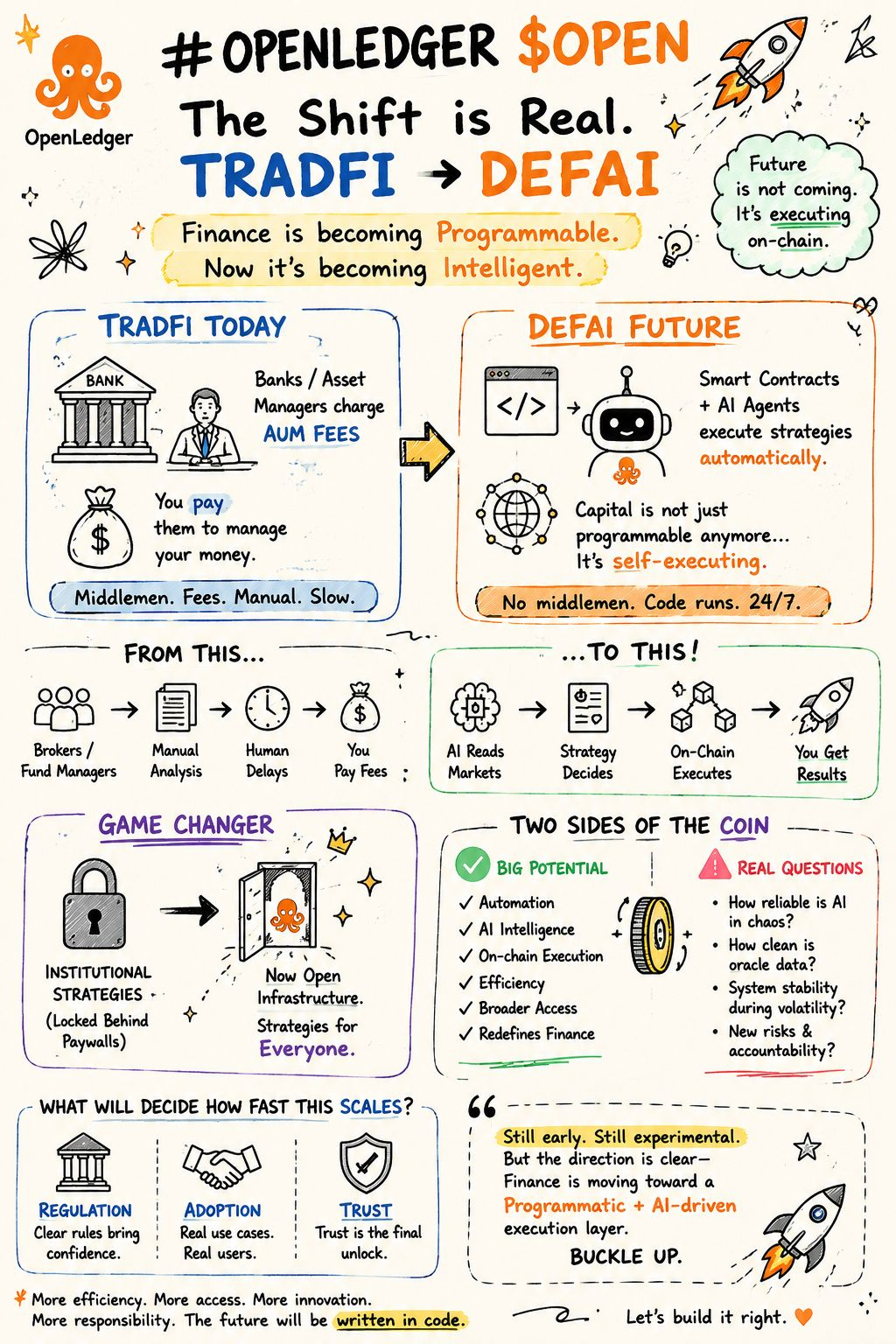
But if they actually pull it off, this could become more than just another AI narrative project. It could become a real attempt at building a functioning data economy instead of an attention farm.
The big question though still remains:
Will data actually become a future asset… or are we just rebranding the same old validation problem with shinier AI packaging? 👀
No idea yet.
But as an experimentation layer?
Definitely not something to ignore 🚀