
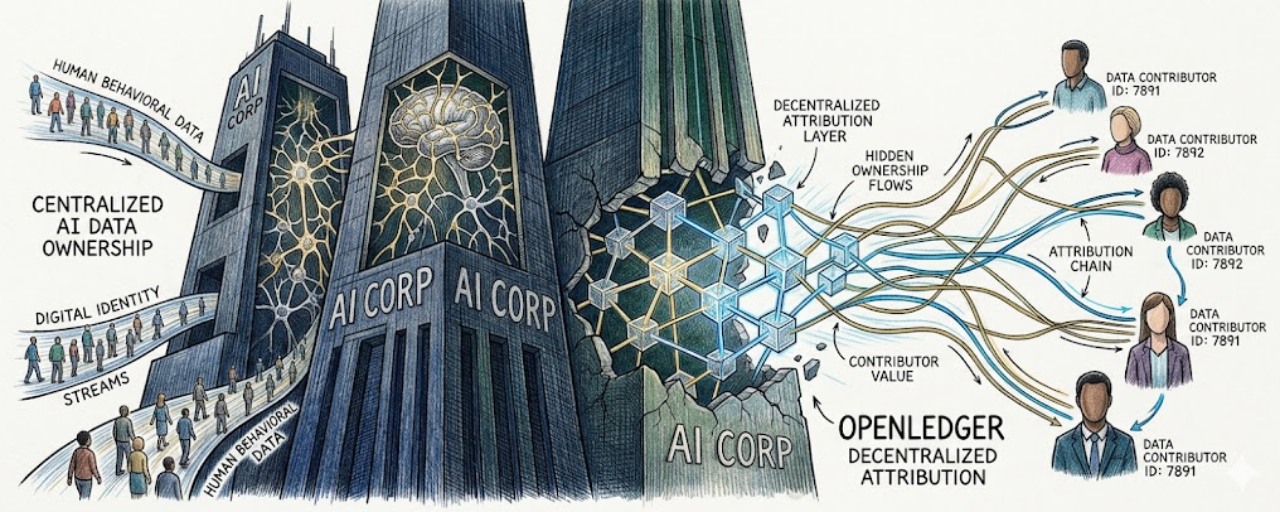

Lately I keep noticing something weird in the AI market.
Everyone celebrating how powerful AI is becoming while almost nobody talks about where all that intelligence actually comes from.
The models get smarter.
The companies become more valuable.
The valuations keep exploding.
Meanwhile the people generating the data signals behind those systems mostly stay invisible. That disconnect honestly feels bigger every week now especially with how aggressive the AI narrative has become across crypto and tech recently.
Every app suddenly wants your behavior.
Every platform wants your interactions.
Every AI system wants more training data.
And most people still giving it away almost for free.
That’s probably why @OpenLedger started standing out to me.
At first I thought $OPEN was just another AI blockchain trying to benefit from market hype because lets be honest... the #AI sector getting crowded fast rn.
But the deeper narrative around data ownership feels much more important than people realize.
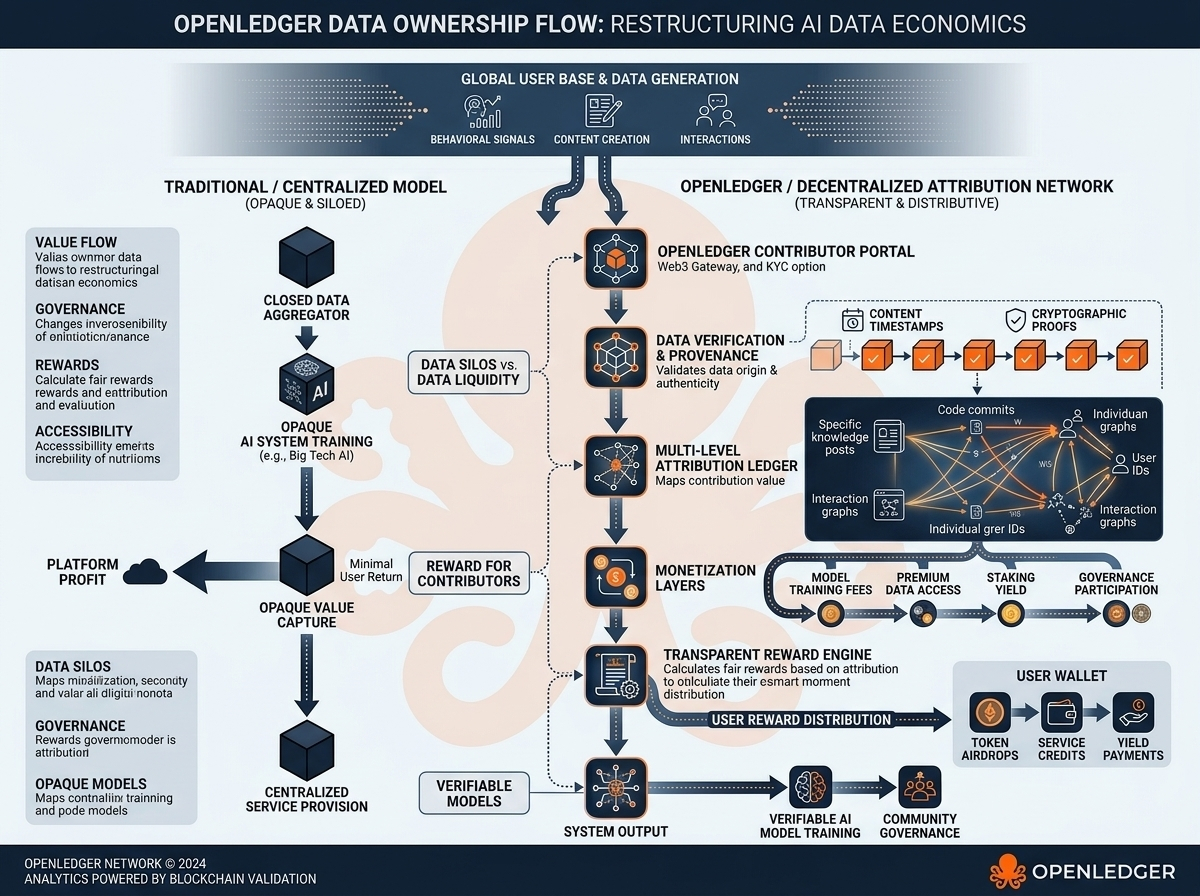
#OpenLedger seems to be exploring a future where data itself stops being a hidden resource controlled by centralized systems and starts becoming something economically attributable instead.
That changes the relationship between users and AI completely.
Right now most people interact with AI systems without thinking about ownership at all. You post online interact with apps train recommendation systems and generate behavioral signals constantly but once that information enters the pipeline you basically lose visibility over it forever.
The companies keep the models.
The companies monetize the outputs.
The companies capture the upside.
Users mostly remain passive fuel for the system.
And honestly I dont think that model survives forever once AI becomes even more integrated into everyday life.
Especially now while AI companies are competing aggressively for data dominance. The market behavior alone already tells the story. Infrastructure spending keeps rising data demand keeps accelerating and every major platform wants larger proprietary ecosystems because whoever controls the best data probably controls the strongest AI systems too.
That creates a pretty uncomfortable future if you think about it long enough.
Because eventually human behavior itself becomes one of the most valuable assets on earth.
OpenLedger’s whole attribution narrative seems built around challenging that structure.
The idea that datasets contributions and AI interactions could eventually become transparent and economically measurable feels kinda radical compared to how current AI systems operate.
But it also raises some questions that people probably arent discussing enough yet.
What happens when every digital interaction starts carrying economic value.
Do people still behave naturally online once contribution becomes financially measurable.
Or do we slowly turn the internet into an even bigger incentive machine than social media already became.
That part genuinely concerns me a little.
We already saw how engagement algorithms changed online behavior over the past decade. People optimized themselves for visibility likes outrage and attention because platforms rewarded those signals economically.
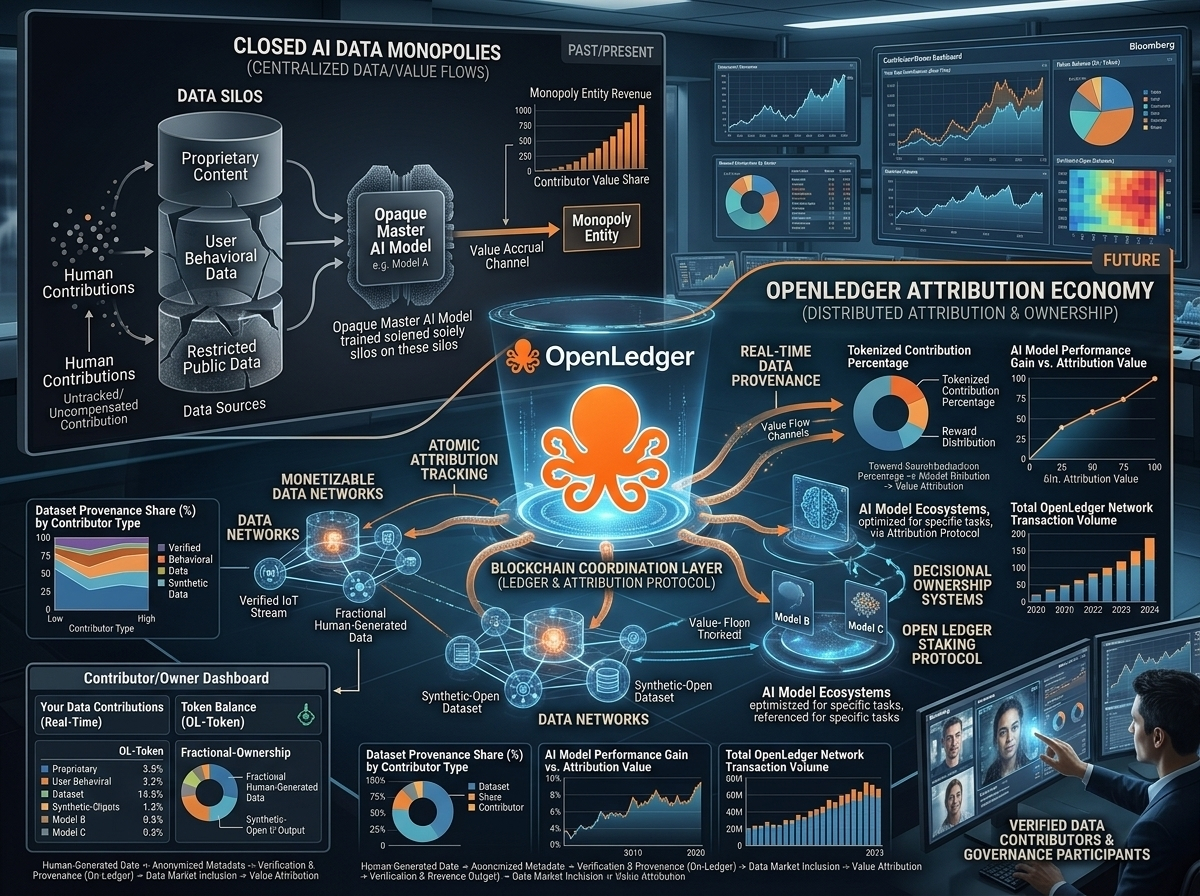
Now imagine AI attribution systems layered on top of that.
Every dataset every interaction every niche insight potentially becomes monetizable.
Sounds bullish.
Also sounds slightly dystopian tbh.
Still I cant fully dismiss the OPEN thesis either because the current system already feels broken in alot of ways.
A handful of companies are absorbing massive amounts of human generated intelligence while contributors rarely share in the upside. The value extraction imbalance keeps growing and most people barely notice it happening in real time.
That is probably why the AI ownership conversation matters so much now.
Not because blockchain suddenly fixes everything overnight.
But because the market is slowly realizing AI economies need better transparency around contribution ownership and value flow eventually.
Maybe OpenLedger becomes part of that shift.
Maybe centralized platforms simply remain too dominant and efficient for open attribution systems to compete properly.
Not fully sure yet.
But I do think the relationship between AI and data ownership is about to become one of the biggest debates in tech over the next few years and projects like $OPEN are forcing people to confront questions the market mostly ignored until now.