
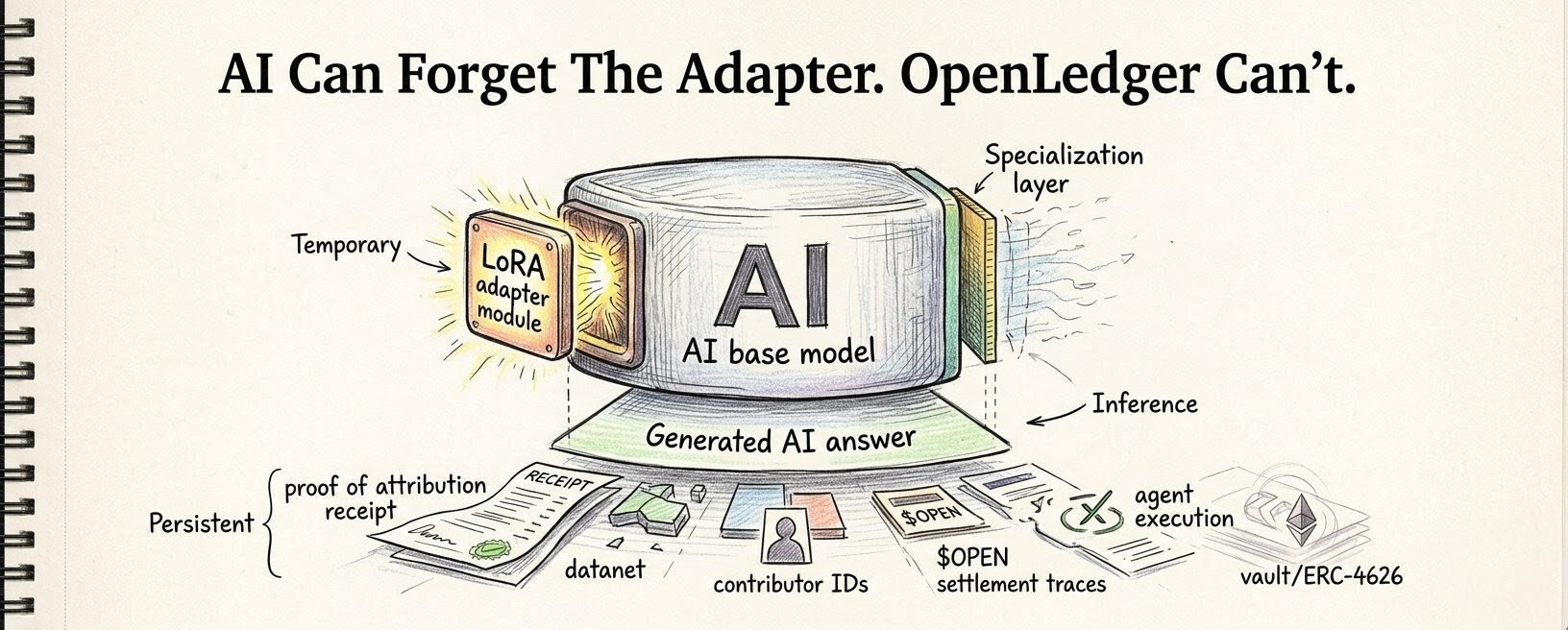

i keep staring at ModelFactory inside OpenLedger ( @OpenLedger ) and something feels… off. not broken, just misnamed maybe, because every time people describe it, it sounds like a builder. like you bring data, press a few buttons, something trains, something deploys, and now there’s a model sitting there ready to be used. clean story. almost too clean.
but the longer i sit with OpenLedger, the less it feels like building anything. it feels closer to staging… like something preparing candidates for an inference path they may never actually enter.
because what actually happens after a model is “built”? does it ever get pulled into a real inference execution? does any agent configured through OctoClaw actually trigger that path when a query hits, or does it just sit there with perfect lineage, perfectly attributable, and still never touched by a payable inference? or worse… does it just wait?
that part doesn’t get talked about enough. everyone likes the moment of creation, nobody likes the silence after nothing executes, and i keep wondering what that silence actually means inside a system like this.
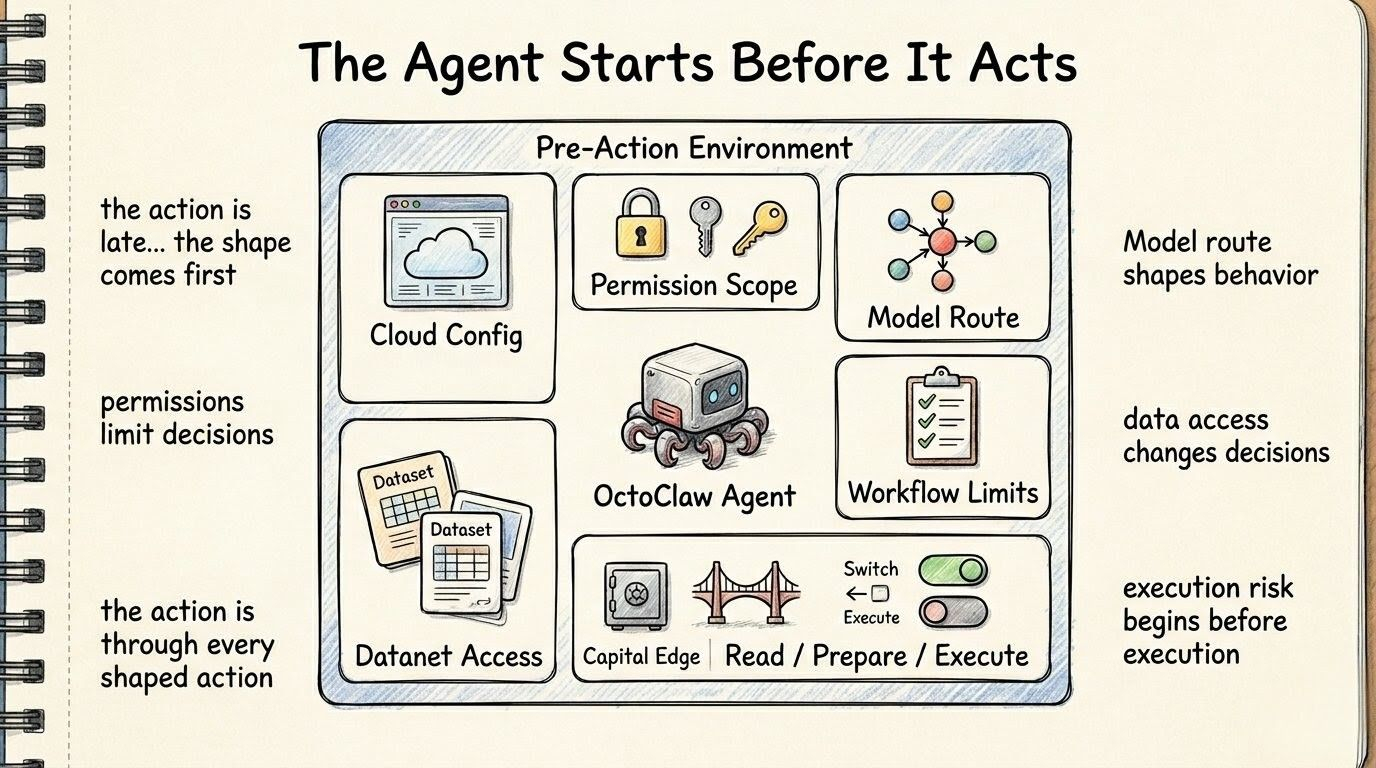
and OpenLedger is not a system where existence triggers value. it never behaved like that. Datanets don’t earn because they exist, models don’t earn because they were deployed, even adapters don’t matter just because they loaded once. nothing activates until inference actually executes, until a query routes through it, an agent triggers the path, and OpenLedger ($OPEN ) actually moves along that execution.
so what exactly is ModelFactory doing here… is it building intelligence, or just placing objects into the attribution graph where they might become callable later? callable by who, under what conditions, and when?
because those are very different roles.
“existence is cheap… execution is expensive.”
that line keeps sitting there, and the more i think about it, the more ModelFactory stops feeling like a creator tool and starts feeling like an upstream gate. not deciding outcomes directly, but shaping what is even available when an inference path forms under real demand.
you can push a dataset into a Datanet, pass it through ModelFactory, produce something that looks complete… clean Proof of Attribution, structured lineage, everything in place… and still nothing connects. no agent triggers it, no query routes into it, no payable inference ever activates attribution on it.
so where does it live then? inside the openLedger system, but outside execution, not dead… just not happening. that gap is strange. not failure exactly, more like never entering the economic loop, and i keep circling the question… is that still “part of the system,” or just recorded potential?
because the system doesn’t need to reject anything for that to happen. it just never gets routed into an inference that executes.
if you actually follow one real inference inside OpenLedger, it doesn’t randomly pick a model. it forms a path… Datanet-weighted signal, available model surface, adapter compatibility through OpenLoRA, agent permissions through OctoClaw, cost constraints, maybe prior execution traces. and inside that formation, most models never align with a live query.
not blocked, just never intersecting with execution. not executed because the path never formed, which is very different from being wrong.
and that difference matters more than people think, because what does “unused” really mean here… absence, or just misalignment that never resolved?
because now OpenLedger ModelFactory doesn’t feel like a place where intelligence becomes real. it feels like a place where intelligence becomes eligible for execution, but only if an inference path actually forms and gets triggered. eligible, not guaranteed.
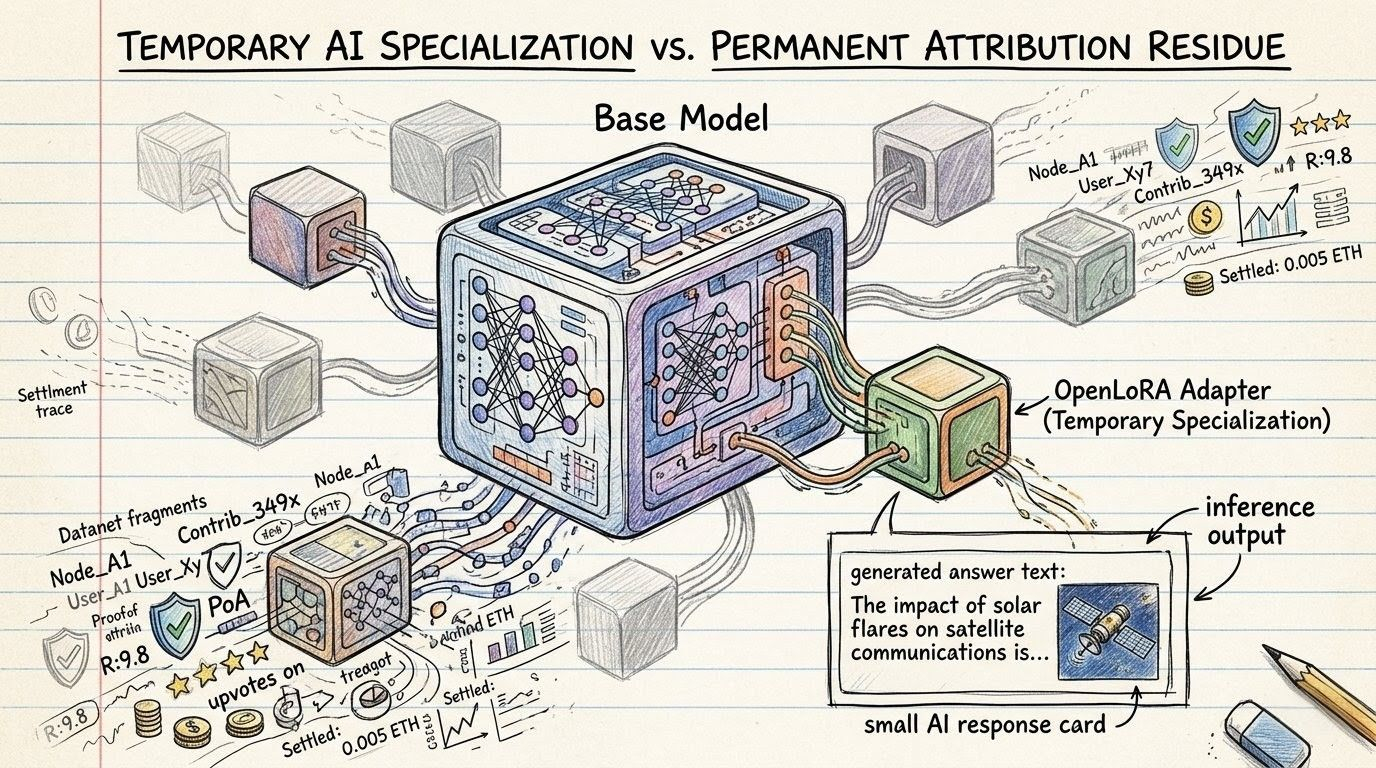
so what determines that moment? is it the Datanet signal being strong enough when a query arrives, or the way the model fits into OpenLoRA paths when specialization is needed mid-inference? maybe it’s OctoClaw constraints deciding which models an agent can even see, or cost surfaces shaping which path is viable when OpenLedger is about to be spent. maybe it’s prior execution traces reinforcing certain routes, or maybe it’s just alignment… one moment where a real query, real data, and a reachable model surface finally collide.
and if it’s alignment… how often does that actually happen?
because if two models sit side by side with similar lineage, similar quality, similar domain coverage, the OpenLedger system still won’t treat them equally. one gets pulled into early inference executions, starts accumulating attribution traces, becomes easier to route toward again. the other stays technically valid, but never intersects with a payable inference.
so what did ModelFactory actually produce there… two models, or one that entered the execution graph and one that never did?
and if that’s true, then ModelFactory is not neutral. it feeds into a routing environment where execution reinforces itself, where paths that get used become easier to form again because past execution leaves traces the openLedger system can follow.
because OpenLedger doesn’t reward what exists. it rewards what gets executed and leaves an attribution trail that can be referenced again, and everything collapses into that moment… inference. not the build, not the deploy, not the lineage, but the moment a query routes through a model, an agent triggers it, attribution activates, and value actually flows.
“value only wakes up under pressure.”
and that makes me think about scale. how many models could accumulate here over time? thousands, maybe more. each fully attributable, each tied to Datanets, each technically callable… but only a fraction ever entering real agent execution.
so what are the rest? not deleted, not invalid, just never activated. and how long can something stay like that before it effectively disappears without being removed?
because OpenLedger doesn’t need to hide them for that to happen. it just doesn’t route execution through them. no execution means no attribution activation, no attribution activation means no economic presence, and without economic presence there’s nothing to reinforce future routing.
which is uncomfortable in a system built around traceability, because everything is recorded, but not everything participates in value flow.
“traceable doesn’t mean executable.”
that one lands heavier the longer you sit with it.
and it loops back to OpenLedger ModelFactory again, because if you think you’re building something that will naturally become part of the system, you’re missing what happens after deployment. ModelFactory gives you presence inside the attribution graph, but it doesn’t give you an inference path, and that path only forms later… somewhere between agent permissions, Datanet signal, routing behavior, and real demand.
and what if it never forms? does the system remember you, or just your absence?
that layer is harder to see. not hidden on purpose, just formed dynamically when queries actually hit the openLedger system, which means builders are operating in partial visibility. you can see your data, your model, your attribution lineage, but you can’t fully see whether a real query will ever route through it and move value.
you don’t control which agents will call it, how often it becomes part of execution, or whether OpenLedger ever flows through your path. so what are you actually doing?
not just building intelligence, you’re placing something into a system and waiting to see if it ever becomes part of a live inference.
“available is not the same as executable.”
and that shift changes everything, because OpenLedger doesn’t give equal weight to everything that exists. it lets weight emerge from execution… from paths that actually get used, from attribution that activates, from flows where value moves and leaves traces behind.
which means most things won’t activate.
and ModelFactory sits right before that divide. it lets you construct something that can enter the system, but doesn’t decide whether the openLedger system will ever execute through it, and that’s where the question changes.
not just can you build…
but will anything ever need this?
on openLedger ModelFactory looks like a creation tool, but behaves more like an entry point into the execution graph. you don’t just build here, you expose something to routing, and after that control fades because execution depends on too many variables… Datanet signal, adapter fit, agent permissions, prior traces, cost, timing of real queries.
so ModelFactory sits at that edge. clear input, uncertain execution.
and maybe that’s the real shift. AI here is not just about better models, it’s about whether those models ever get executed under real demand. OpenLedger doesn’t hide that, it just lets the system decide through execution, and once you notice it, the whole architecture reads differently.
ModelFactory is not where intelligence becomes real. it’s where intelligence becomes eligible for inference, and after that it either gets executed, leaves an attribution trail, reinforces future routing, and enters the economy… or it stays perfectly intact, perfectly attributable, and completely outside of value flow.