

I remember watching $OPEN Announce the ERC-4626 integration and thinking it was a rebranding exercise DeFi yield with an AI sticker on top. Every cycle has its version of this. In 2021 it was algorithmic Anything. Then it was automated strategies. Now it is AI agents managing your vault. I skimmed the announcement filed it under noise and moved on. Felt like another protocol dressing up a yield aggregator in language that would age badly once the narrative rotated. I'd seen Yearn. I'd seen the Convex plays. The idea that OpenLedger was doing something structurally different didn't land on the first read and honestly that's on me for not going deeper before forming an opinion.
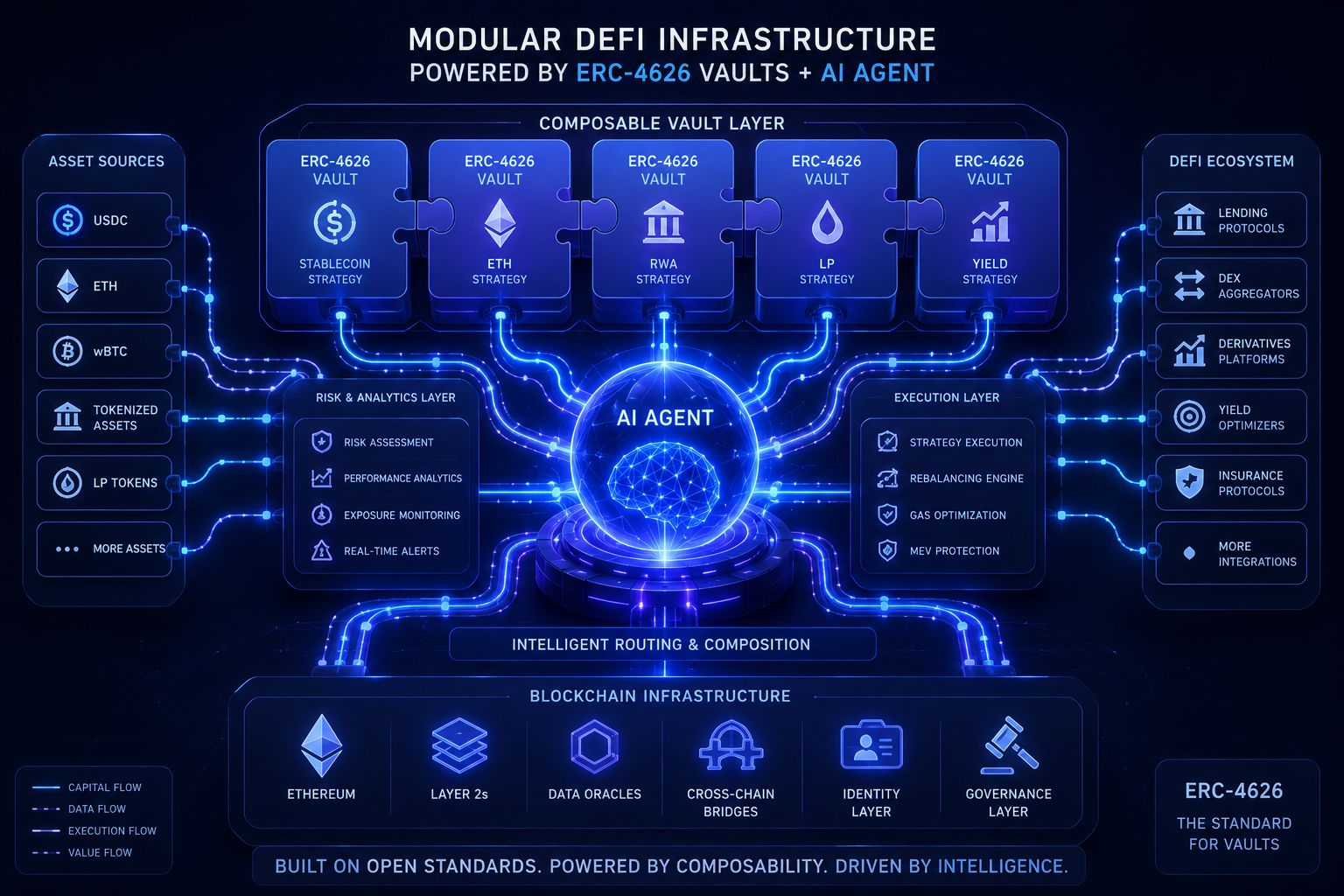
But over time I noticed something that reframed the whole thing. It is not that $OPEN built an AI wrapper over a standard vault it is that they inverted where the management logic lives. In a traditional ERC-4626 vault the yield strategy is baked into the smart contract at deployment. Fixed rules fixed parameters. The contract does exactly what it was coded to do until someone rewrites it. What OpenLedger built is different in a structural sense: the vault management layer is an AI agent operating on chain analyzing conditions and adjusting allocations without manual intervention. The vault is not running a script. It is running live. That distinction sounds subtle until you think about what it means for retail access. I'd assumed sophisticated yield management was gated hedge funds with quant desks protocols with full time engineers maintaining strategy contracts, institutional players with the overhead to actually monitor and update positions. The ERC-4626 standard combined with an on-chain AI agent means a retail deposit gets routed through the same management intelligence regardless of size. The protocol does not have a minimum threshold for the smart layer. And because the vaults are ERC-4626 compliant they plug directly into the existing DeFi ecosystem aggregators wallets other protocols without custom adapters. TVL in compliant vaults crossed $30 billion across chains by April 2026 because the standard eliminated integration friction. OpenLedger's vaults inherit that composability automatically. That is not a feature announcement. That's infrastructure positioning, and it's the kind of thing that gets underpriced early because it does not make for a punchy tweet.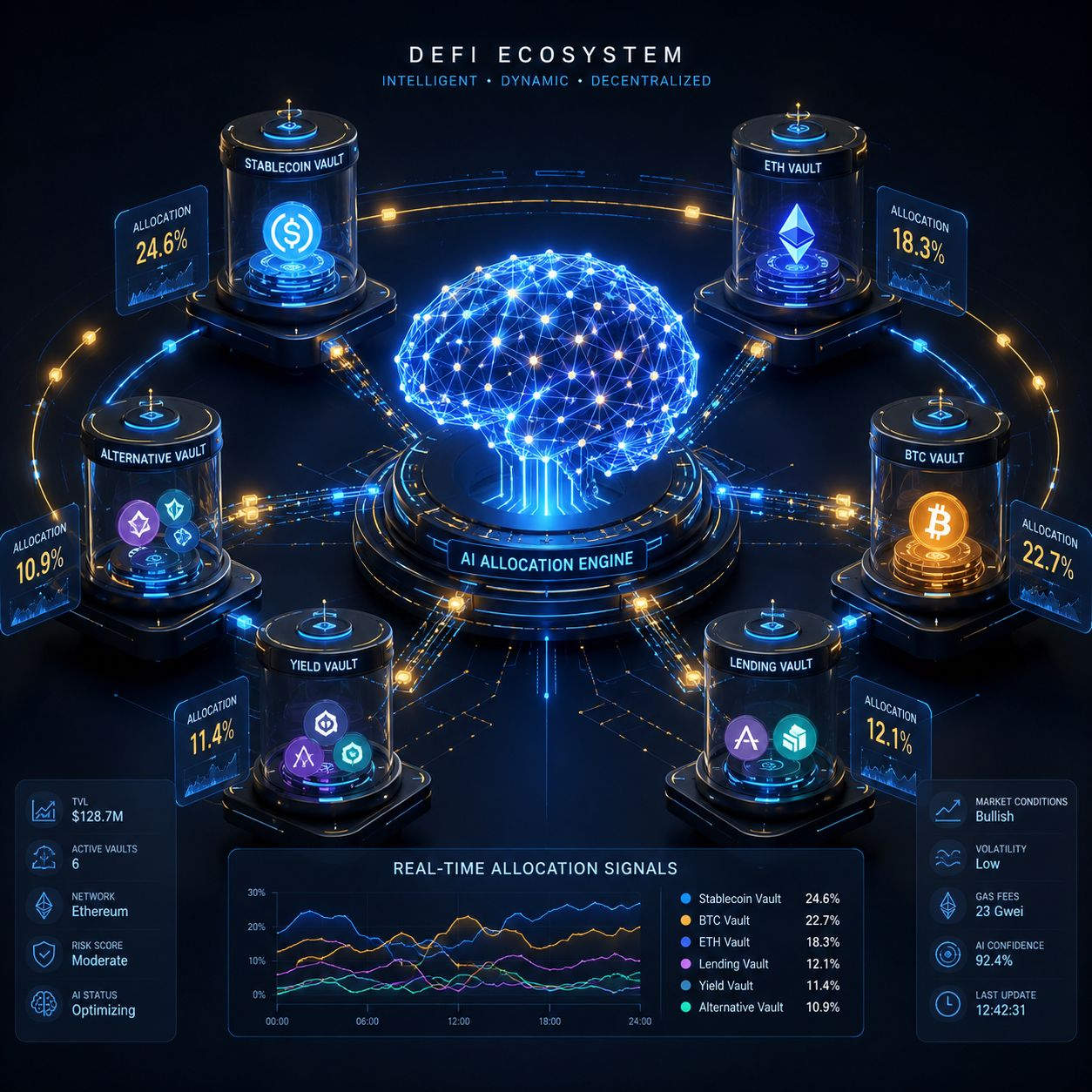
From a market view the risk is located exactly where the architecture is least documented. The composability is real. The automation is real. What isn't documented at the level that matters is the decision methodology inside the vault what signals the AI agent actually weighs, how it behaves under drawdown conditions, what the risk floor looks like when the market moves against the strategy. I went through the technical docs twice and the strategy layer is described in broad strokes. Not in the specific methodology that would let you model what you're trusting when real capital is at stake. That gap is the fragility point. If the agent's logic stays opaque as TVL scales and a stress scenario hits, the protocol doesn't get the benefit of the doubt it gets the liquidation cascade narrative. Composability cuts both ways. A vault that plugs into everything means contagion moves fast if the risk parameters turn out to be poorly calibrated. The architecture direction is correct. The documentation depth isn't there yet and for anyone thinking about meaningful size that matters more than the APY headline.

So I watch documentation cadence and on-chain transparency not token price, not yield numbers, not partnership announcements. The binary question I'm sitting with is this: are the developers publishing the actual decision logic the agent runs on the signals, the risk parameters the drawdown handling or are they shipping vault aesthetics and describing it as AI managed yield? One of those is a protocol worth watching closely as capital rotates into AI-native infrastructure plays. The other is a narrative that works until it doesn't, and then becomes an example in someone else's thread about what to avoid next cycle. The architecture gives $open a real foundation. Whether they build the transparency layer on top of it before the market starts asking the hard questions that is the only thing I am tracking right now.
