
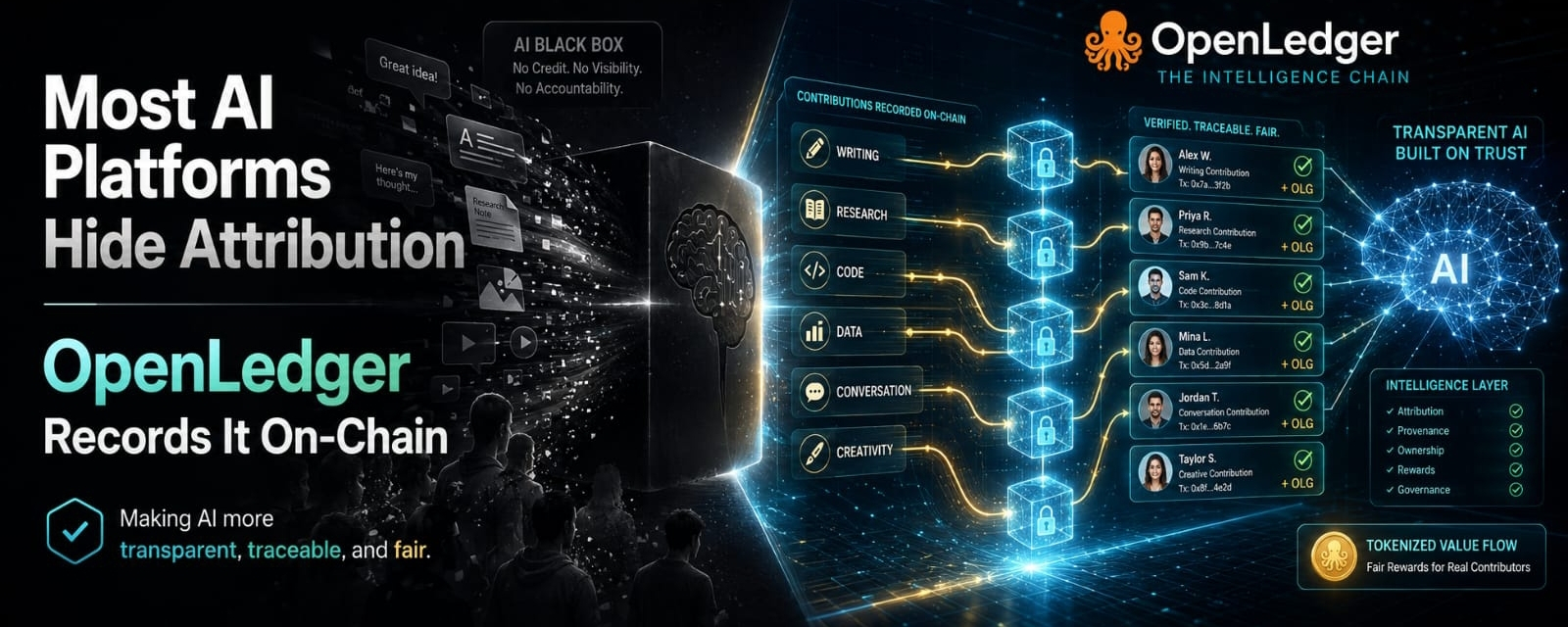
I saw someone ask a question yesterday that honestly stayed in my head longer than I expected.
If AI is learning from millions of people, why do only a few companies end up capturing most of the value from it?
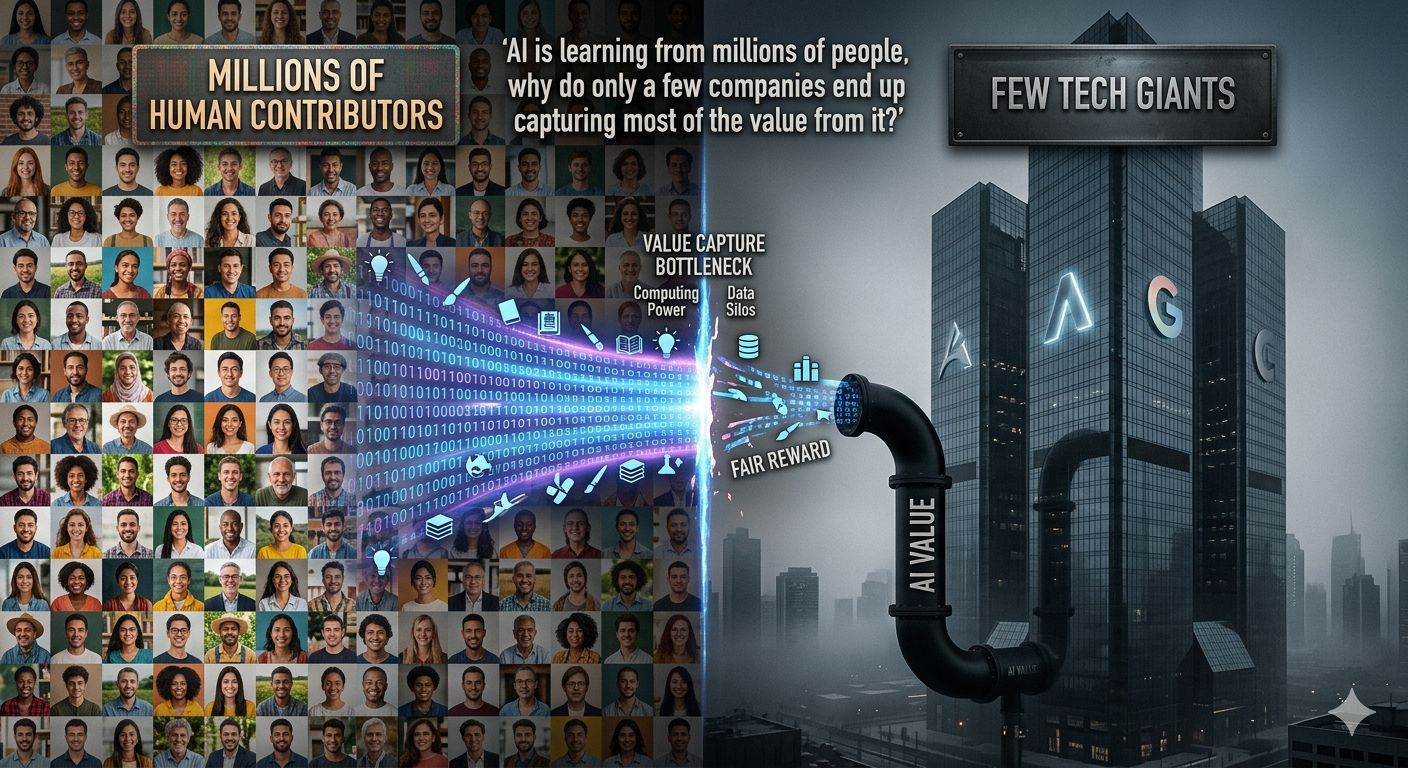
At first, it sounds like one of those simple internet questions. But the more I thought about it, the heavier it started feeling. Because whether we notice it or not, most of us are already contributing to AI every single day. We post thoughts, write answers, share research, build communities, explain ideas, create content, correct mistakes, and leave behind patterns that machines can learn from. All of that becomes part of the digital intelligence layer. But once that knowledge is absorbed into a model, the original contributor usually disappears from the story.
That part has always felt uncomfortable to me.
There is no clear proof. No ownership trail. No proper attribution. No simple way to say this person, this community, this dataset, or this source helped shape the intelligence behind a model. Everything gets swallowed by centralized systems, and by the time the final AI product appears, the human contribution behind it is almost invisible.
That is why OpenLedger started standing out to me in a different way from many AI projects in crypto.
Most projects talk about faster AI, smarter agents, cheaper compute, or better automation. Those things matter, but they do not touch the deeper question. OpenLedger feels interesting because it is trying to make contribution itself visible on-chain. Not just the final AI output. Not just the model. But the intelligence trail behind it.
And once you look at AI from that angle, the conversation changes.
Data is not just random material floating around the internet. Data is labor. Human conversations are labor. Research is labor. Creativity is labor. Opinions, corrections, patterns, explanations, and knowledge all carry value. AI systems become powerful because millions of people have added small pieces of intelligence over time. But the current structure mostly rewards the companies that collect and control that intelligence, not the people who helped create it.
That imbalance is becoming harder to ignore.
I think OpenLedger is building around one of the biggest problems AI will face in the future: how do you prove where intelligence came from?

Right now, that question may still sound early. But once AI becomes deeply connected to search, finance, trading, content, automation, development, agents, enterprise systems, and even governance, verified origin of data could become extremely important. People will not only care about whether an AI system works. They will care about whether it can prove its sources, its contribution history, and the economic rights connected to the intelligence it uses.
That is where OpenLedger’s idea feels powerful to me.
It is not only trying to make AI more advanced. It is trying to make AI more accountable, more transparent, more traceable, and possibly more fair. That difference matters. Because most AI systems today still feel like black boxes. Data goes in. Models improve. Companies grow. Revenue gets created. But the contribution layer underneath remains hidden.
OpenLedger seems to challenge that structure by bringing attribution and contribution records on-chain.
And maybe the emotional side of this matters too. People do not want to feel like invisible fuel for platforms forever. The internet has already trained users to create value for free while platforms capture most of the upside. AI could make that imbalance even bigger unless there is a way to recognize where value actually comes from.
That is why I think on-chain attribution is not just a technical idea. It is a new economic conversation.
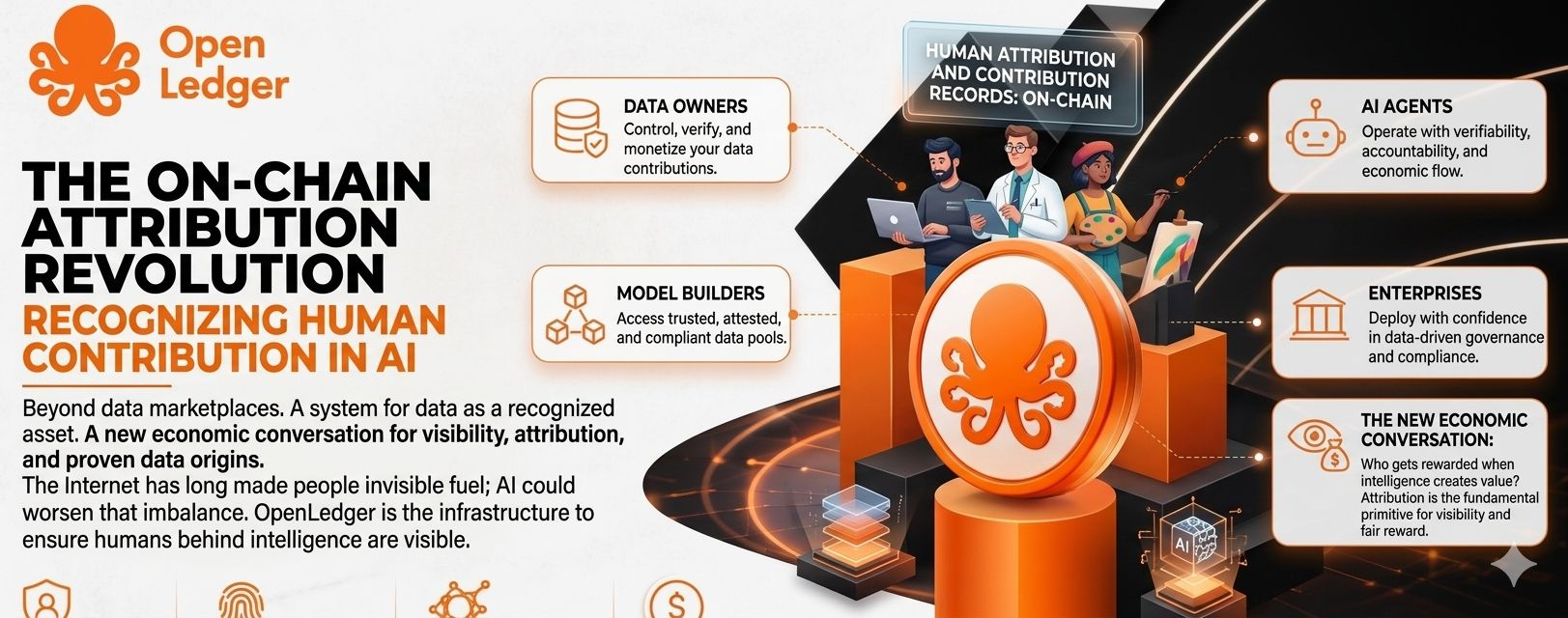
In the future, people may ask very different questions about AI. Not only how smart is this model, but who contributed to it? Who owns the intelligence behind it? Who gets rewarded when that intelligence creates value? Can the system prove its origins? Can contributors be seen instead of erased?
That is where OpenLedger feels early.
Not just early in hype. Early in architecture.
To me, it feels less like a normal AI token narrative and more like infrastructure for a future where data becomes a recognized economic asset. And if that future becomes real, attribution may become one of the most important primitives in the AI economy.
Because maybe the next phase of AI will not only be about building smarter machines.
Maybe it will be about making sure the humans behind that intelligence are finally visible.
