
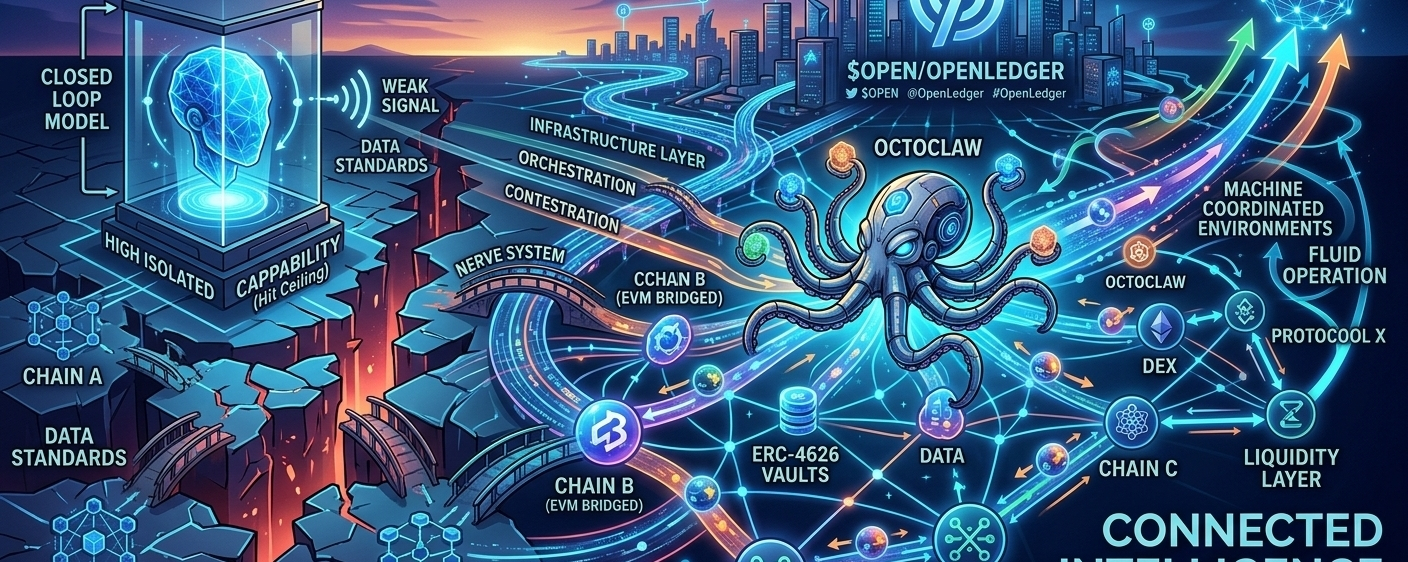


i’ve been looking at vibecoding inside OpenLedger for the last few hours and i dont think the interesting part is the code generation itself
it’s the compression of decision-making layers happening underneath it @OpenLedger
because traditional development exposes complexity directly. you see infrastructure choices, model routing, API structure, execution logic. even if abstraction exists, the builder still remains close enough to the stack to understand where decisions are being made.
vibecoding changes that relationship completely.
instead of constructing systems explicitly, developers begin operating through intent translation. you describe outcomes, constraints, behaviors…$OPEN and the system fills in increasingly large portions of the operational path automatically.
which means a lot of architecture stops being maually designed and starts being inferred.
that sounds productive at first. and honestly it is.
but once OpenLedger connects that flow to live agents, DataNets, attribution tracking, and cross-chain execution through the EVM layer, the abstraction becomes much more consequential than a simple productivity upgrade.
because hidden decisions inside generated workflows now carry economic weight.
an inferred model call can trigger attribution events. an automatically selected data source can redirect contributor rewards. an optimization shortcut generated for latency reasons can reshape which DataNets receive usage visibility over time.
the system quietly starts making infrastructure-level choices on behalf of the developer.
and that creates a strange inversion.
normally developers shape the behavior of platforms. here, the platform increasingly shapes the behavior of developers by deciding which execution patterns feel frictionless enough to become default.
Octoclaw makes this even more noticeable because agents compress retrieval, inference, execution, and settlement into a single operational surface. what used to be multiple explicit engineering steps now starts feeling like conversational orchestration.
and conversational orchestration tends to hide complexity behind fluency.
that is the part i cant stop thinking about.
because once development becomes fluid enough, people stop interrogating intermediate layers. they trust the abstraction. and trusted abstractions quietly become invisible governance systems over time.
so the real question might not be whether vibecoding makes building easier
it might be whether systems like OpenLedger eventually become so effective at abstracting AI-native infrastructure that developers stop noticing how much architectural influence the underlying orchestration layer is exerting on the applications they create 🤔 #OpenLedger