
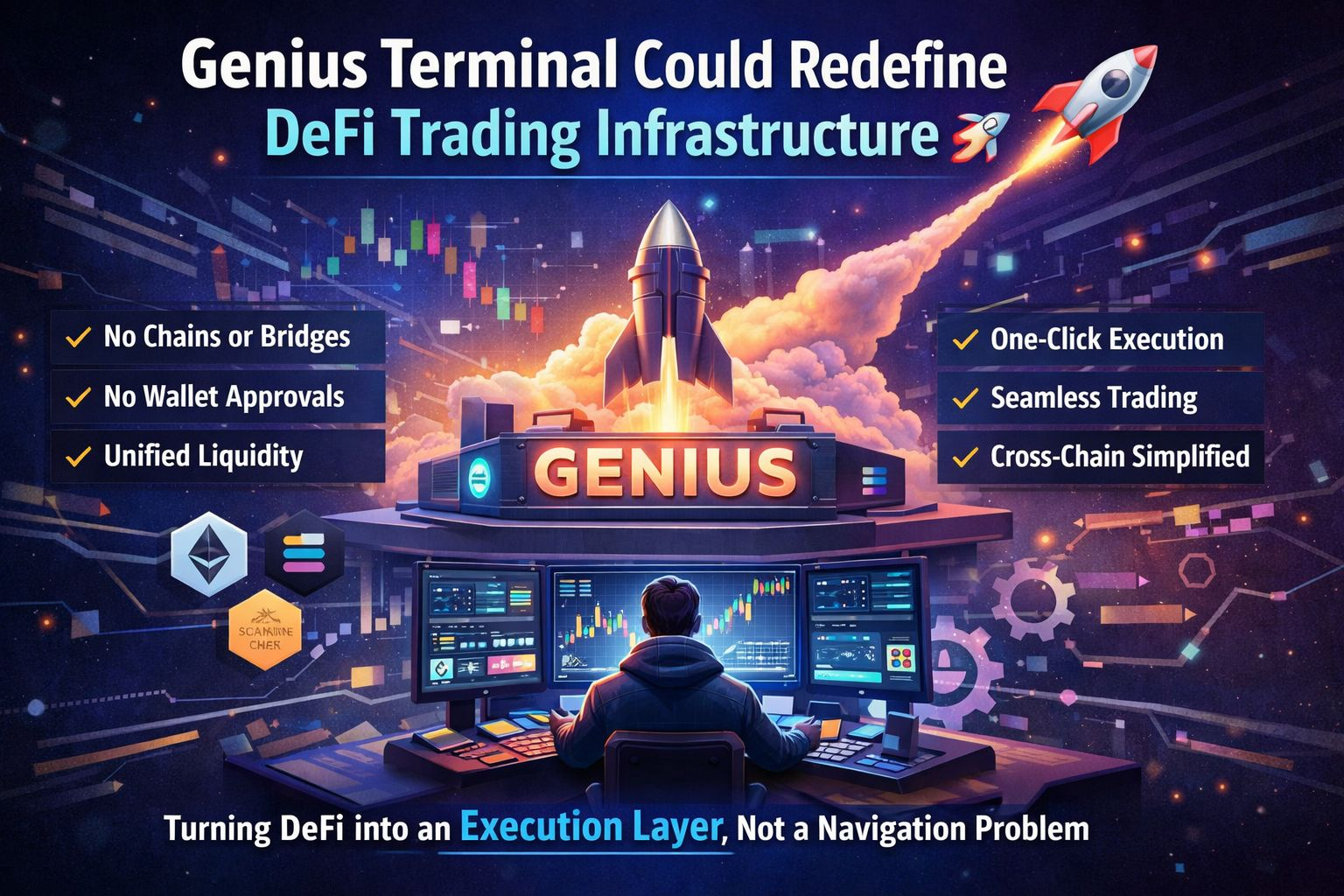
Most trading terminals still force users to deal with chains, bridges, wallet connections, token approvals, and fragmented liquidity. This is the old infrastructure model of DeFi — powerful, but often too complex for average users. Instead of focusing on trading opportunities, users spend time managing technical processes, which slows execution and increases friction.
What makes Genius Terminal interesting is its attempt to turn DeFi into an execution layer rather than a navigation problem. The goal is not just to create a cleaner UI, but to remove operational complexity from the user experience. Traders should not need to think about which chain to use, where liquidity sits, or how to bridge assets manually. The platform aims to handle those processes in the background so users can focus purely on positioning and strategy.
This approach could become very important for the future of decentralized trading. Just like Web2 platforms simplified complex internet infrastructure behind simple interfaces, the next generation of DeFi products may succeed by hiding blockchain complexity from the end user.
If Genius Terminal succeeds with this model, projects like $GENIUS could gain value not only as applications, but as core trading infrastructure. Instead of value flowing only to standalone DApps, it may shift toward platforms that aggregate liquidity, optimize execution, and provide seamless cross-chain trading experiences.
Markets often recognize infrastructure shifts late. At first, people focus on hype or interface design, but the real long-term value usually comes from systems that reduce friction, save time, and improve execution efficiency. If DeFi adoption continues to grow, simplified infrastructure could become one of the most important sectors in the space.
#GENIUS #DeFi #Crypto #Blockchain #Web3 #Trading #CryptoTrading #Altcoins #DEX #CrossChain #OnChain #BinanceSquare