
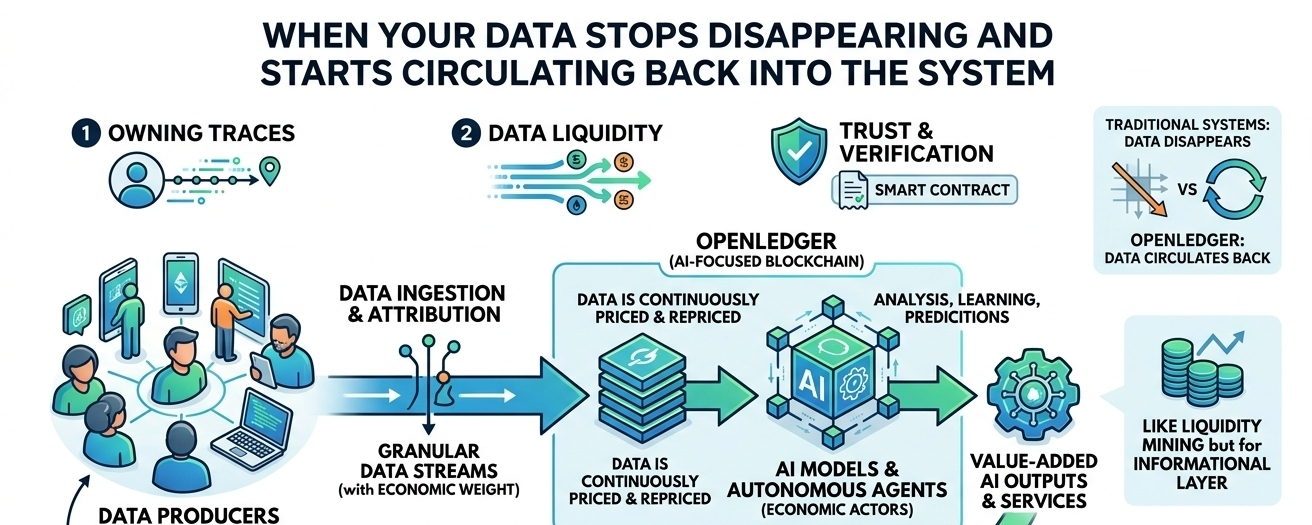

I still remember the first time I tried to trace where my onchain data actually goes after I interact with a protocol. It was a simple swap nothing unusual but I kept asking myself who benefits from the traces I leave behind. Fees are visible sure but the value of behavior the patterns the data feels like it disappears into something I never really see again
That question stayed longer than I expected. Because in crypto we talk a lot about ownership but rarely about ownership of data itself in a meaningful way. We own wallets we own keys but do we really own the information our activity generates. I am not fully sure where the boundary sits anymore
OpenLedger as an idea sits right in that uncomfortable gap. An AI focused blockchain trying to make data models and agents something that can be monetized more directly. Not just stored or analyzed but treated as economic units on their own
At first I thought this sounded like another abstraction layer added on top of an already complex system. But the more I read into it the more I wondered if complexity is not the problem but the lack of clear value flow between participants and their data
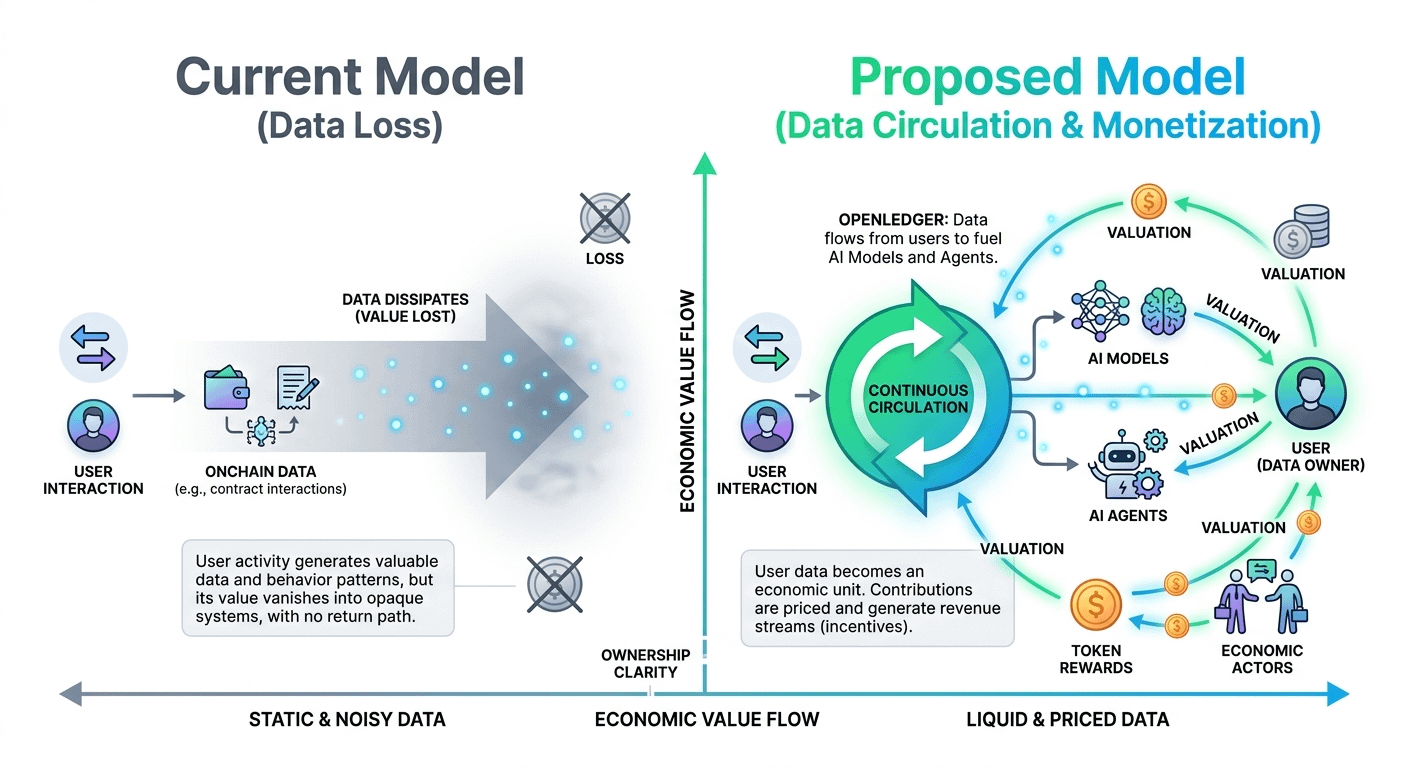
There is something strange about how AI systems today consume massive amounts of data without a transparent return path to the source. Maybe I am overthinking it but it feels similar to early DeFi before liquidity incentives were clearly structured. Everyone contributed but not everyone understood what they were earning or losing in return
If data becomes liquid in the way OpenLedger suggests then models and agents stop being static tools and start behaving more like participants. That idea feels both logical and slightly unsettling at the same time. I am not entirely sure how that would change user behavior in practice
I keep thinking about smaller developers or even individual users. In a system like this their data contributions could theoretically become part of a monetized layer. But then I wonder how granular that can really be before it becomes noise instead of value
There is also the question of trust. If agents are economic actors in a system then who verifies their output and ensures the value exchange is fair. I do not have a clear answer here and maybe no one fully does yet
What stands out to me is not the promise of AI or blockchain separately but the attempt to bind them into a single feedback loop where data is not just consumed but continuously priced and repriced as it flows through systems
I remember when early liquidity mining changed how people thought about participation in protocols. It was not just usage anymore it was contribution. OpenLedger feels like it is trying to extend that logic into the informational layer but I keep wondering if data behaves the same way liquidity does
Maybe I am wrong but I feel like we are still early in understanding what it means to assign economic weight to something as fluid as behavior. Not all data is equal and not all models interpret value the same way which adds another layer of uncertainty
Still there is something compelling about the direction. Even if it is not fully clear yet how it scales or who captures most of the value there is an honest attempt here to rethink the invisible layer beneath AI systems and make it accountable in an economic sense
I do not know where OpenLedger will land in the larger stack of AI and blockchain infrastructure. But I find myself returning to the same question after reading about it what does it really mean to own the traces we leave behind and are we ready for those traces to start paying back in return
