
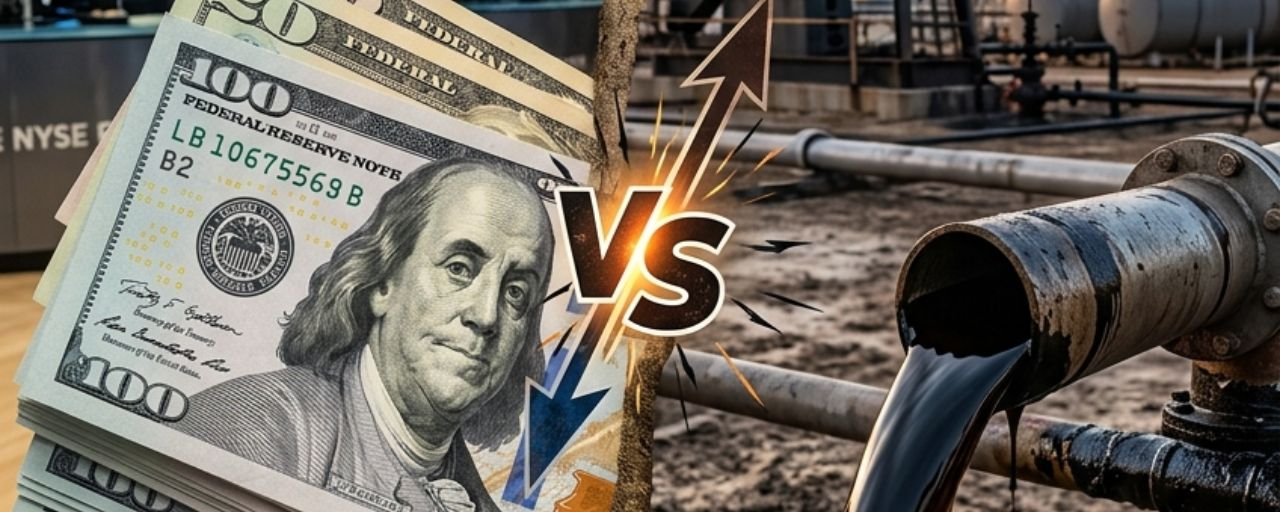
Imagine a financial seesaw where the two heaviest players on the planet are constantly trying to tip each other over.
On one side: The US Dollar, the undisputed king of global trade. On the other: Crude Oil, the black gold that fuels the modern world.
For decades, the rule of thumb was simple: When the Dollar goes up, Oil crashes. When the Dollar tanks, Oil skyrockets.
But recently? The game has changed. The seesaw is breaking, and sometimes, both giants are surging at the very same time. Here is the chaotic, high-stakes relationship between USD and Oil—and why it dictates the price of everything you buy.
The Blood Knot: Why They Are Locked in Combat
The fundamental reason these two are tied together comes down to one word: The Petrodollar.
No matter where oil is drilled—whether in Saudi Arabia, Norway, or Brazil—it is bought and sold globally in US Dollars. This creates a brutal economic tug-of-war:
The Foreign Currency Squeeze: When the US Dollar gets strong, it acts like a premium tax on the rest of the world. A country using Euros or Yen suddenly has to exchange way more of their currency just to buy a single barrel of oil. Demand plummets, and oil prices are forced down.
The Investor Flip-Flop: Wall Street treats the Dollar and Oil like rival sports teams. When the Federal Reserve jacks up interest rates, cash floods into safe, high-yielding US bonds, causing investors to dump risky commodities like oil.
Plot Twist: Why the Old Rules are Breaking
If you look at the markets today, you will occasionally see the Dollar and Oil climbing the mountain hand-in-hand. Why? Because the global energy map was rewritten.
1. The US Became an Oil Empire
The US used to be just a massive consumer. When oil prices spiked, America bled cash, and the Dollar dropped. Today, the US is a dominant global oil producer. Now, high oil prices can actually inject billions into the US economy, boosting the dollar.
2. The "Fear Premium"
When geopolitical chaos erupts or trade routes are threatened, normal economics go out the window. Panic triggers a double-whammy:
Oil spikes because the world is terrified of a supply shortage.
The Dollar spikes because global investors freeze in fear and run to the ultimate financial safe-haven—the greenback.
The Cheat Sheet: Who Wins the Tug-of-War?
When the US Dollar is... What happens to Oil? The Real-World Result 💪 Flexing (Strong) 📉 It drops. Great for US consumers at the pump; brutal for international buyers. 📉 Slumping (Weak) 💪 It surges. Gas prices rise; global manufacturing gets cheaper. ⚡ In a Global Crisis 📈 Both surge. A recipe for global inflation.
The Dollar-Oil relationship isn't just a chart for Wall Street traders to stare at—it is the hidden engine driving the cost of your groceries, your plane tickets, and the fuel in your tank.