


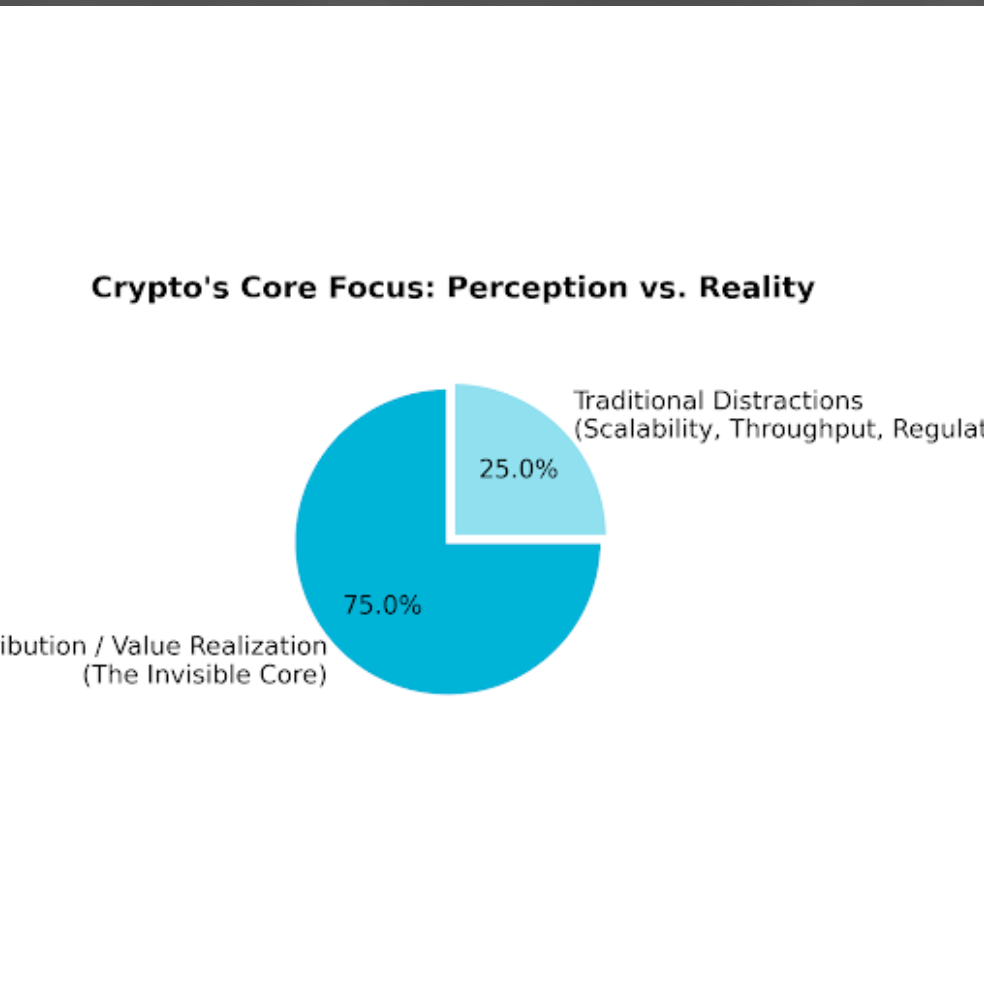
For a long time, I have thought that crypto’s deepest problem was never scalability, throughput, or even regulation. I think the real problem has always been attribution. The question of who actually creates value, who captures it, and who quietly disappears beneath the surface while protocols transform invisible labor into financial abstraction.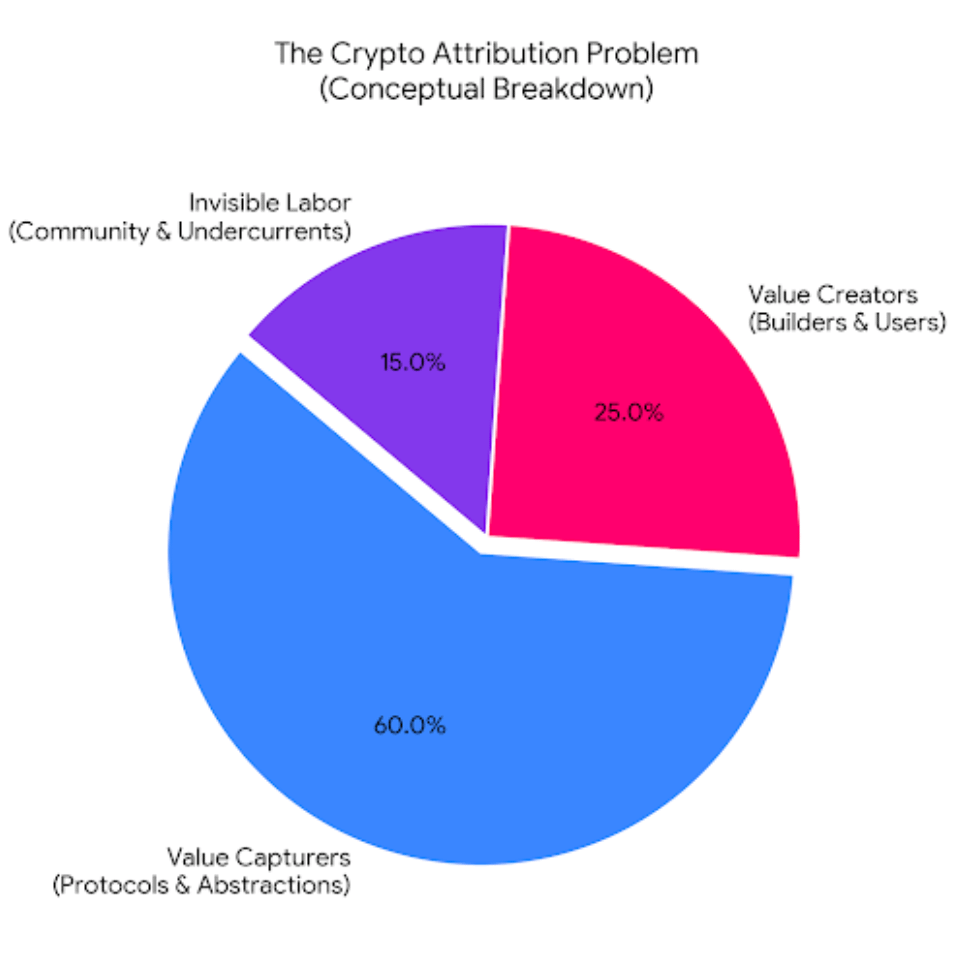
Every cycle seems to rediscover the same pattern in a slightly different costume. A new architecture appears. A new coordination layer. A new promise about ownership, incentives, and redistribution. Then, slowly, the language around it becomes more important than the thing itself. Activity starts masquerading as usefulness. Participation becomes confused with contribution. And eventually the market begins rewarding visibility long before it rewards durability.
I have seen this before.
The more time I spend around crypto, the more sensitive I become to the gap between appearance and structural reality. Entire ecosystems can look alive while producing very little that survives outside speculative momentum. Dashboards become crowded. Metrics become inflated. Communities become theatrical. Yet underneath all that movement, the unresolved questions remain almost untouched: who owns the underlying data, who benefits from the intelligence generated on top of it, and who absorbs the cost when these systems fail to sustain themselves once attention moves elsewhere.
That is partly why OpenLedger caught my attention.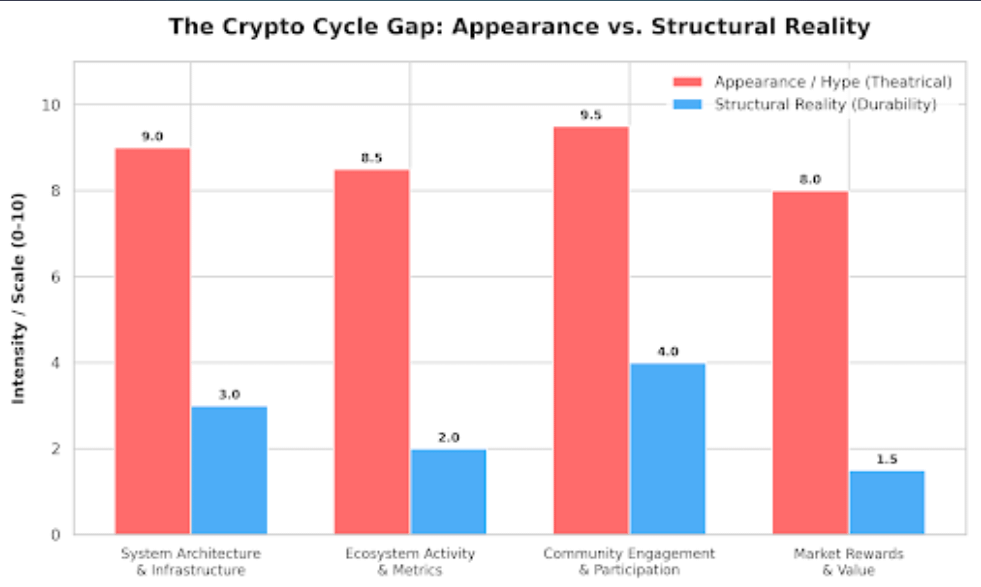
Not because I think it has solved anything. I do not fully trust it. But because it seems to be orbiting a real problem rather than inventing an artificial one.
What interests me is the way OpenLedger frames AI infrastructure less as a spectacle of intelligence and more as a marketplace of extraction. That distinction matters to me. Most conversations around AI still feel strangely detached from the economics underneath them, as if models emerge from nowhere, trained by nobody, sustained by no hidden labor, consuming no asymmetrical resource flows. But from my view, modern AI systems are built on layered forms of invisible contribution: datasets gathered without attribution, human refinement flattened into generalized output, and computational coordination controlled by increasingly centralized actors.
Crypto likes to talk about ownership. AI likes to talk about capability. Very few systems seriously address the relationship between the two.
I keep coming back to that tension.
OpenLedger’s premise — monetizing data, models, and agents through an AI-native blockchain structure — sounds compelling at first glance because it acknowledges that intelligence itself may become an economic surface area. Not merely software, but an asset class built from interaction, refinement, context, and continuous contribution. In theory, that creates a framework where value attribution becomes programmable instead of opaque.
But theory has always been crypto’s most abundant resource.
What I find myself questioning is whether blockchain coordination actually improves these systems or merely financializes them earlier. That distinction feels increasingly important. Crypto has a habit of taking unresolved technological problems and wrapping them inside liquid incentive systems before the underlying coordination issues are mature enough to sustain the pressure. The result is often the same: speculation arrives faster than utility, and narratives scale faster than infrastructure.
I respect the attempt more than I trust the outcome.
Because underneath OpenLedger’s ideas sits a problem I think the entire industry still struggles to confront honestly: liquidity changes behavior. Once contribution becomes monetizable, people stop interacting naturally with systems and begin optimizing against incentives instead. Data quality degrades. Attribution becomes strategic. Participation turns performative. What initially looked like decentralized collaboration slowly mutates into industrialized extraction.
I have watched this happen repeatedly across crypto.
The early language is always idealistic. Coordination. Empowerment. Community ownership. But over time, systems tend to drift toward whichever behavior the incentives reward most aggressively, even if that behavior quietly undermines the original purpose of the network itself.
That does not mean the vision is wrong. Only fragile.
And fragility is something I think the crypto industry still understates because it prefers narratives that feel inevitable. OpenLedger exists in a space where multiple unstable systems overlap simultaneously: AI economics, data ownership, decentralized coordination, attribution markets, and tokenized incentives. Each of those domains already contains unresolved contradictions on its own. Combining them does not automatically neutralize those contradictions. Sometimes it amplifies them.
Still, I cannot dismiss the underlying instinct behind the project.
Because the current AI landscape already feels structurally imbalanced. A small number of actors accumulate disproportionate leverage from globally distributed inputs. Human contribution becomes abstracted into generalized intelligence while the economic upside concentrates upward. In that environment, I understand why projects like OpenLedger emerge. They are trying to rebuild visibility around contribution itself. They are attempting to transform hidden participation into measurable ownership.
At least conceptually.
Whether that survives contact with real markets is another question entirely.
The more I sit with it, the more I think projects like this reveal something psychologically important about the current moment in crypto. The industry no longer fully believes infrastructure alone is enough. Blockchains by themselves stopped feeling revolutionary years ago. Now the search has shifted toward relevance — toward systems that attach themselves to domains where unresolved economic tension already exists.
AI is one of those domains.
Not because it is fashionable. Fashion disappears quickly. But because attribution inside AI genuinely remains unsettled. The ownership layer is still blurry. The value distribution layer is still blurry. The governance layer is still blurry. And whenever ambiguity exists at scale, crypto tends to arrive with mechanisms attempting to formalize it.
Sometimes productively. Sometimes parasitically.
I do not yet know where OpenLedger falls on that spectrum.
What I do know is that I have become increasingly skeptical of polished certainty in this industry. The projects that interest me most now are usually the ones that acknowledge complexity rather than flatten it into slogans. Systems that recognize how difficult coordination becomes once real economic incentives enter the picture. Systems that understand participation is not the same thing as usefulness, and liquidity is not the same thing as sustainability.
From my view, OpenLedger feels less like a finished answer and more like an experiment orbiting an unresolved truth.
And maybe that is enough reason to pay attention.
Carefully.