
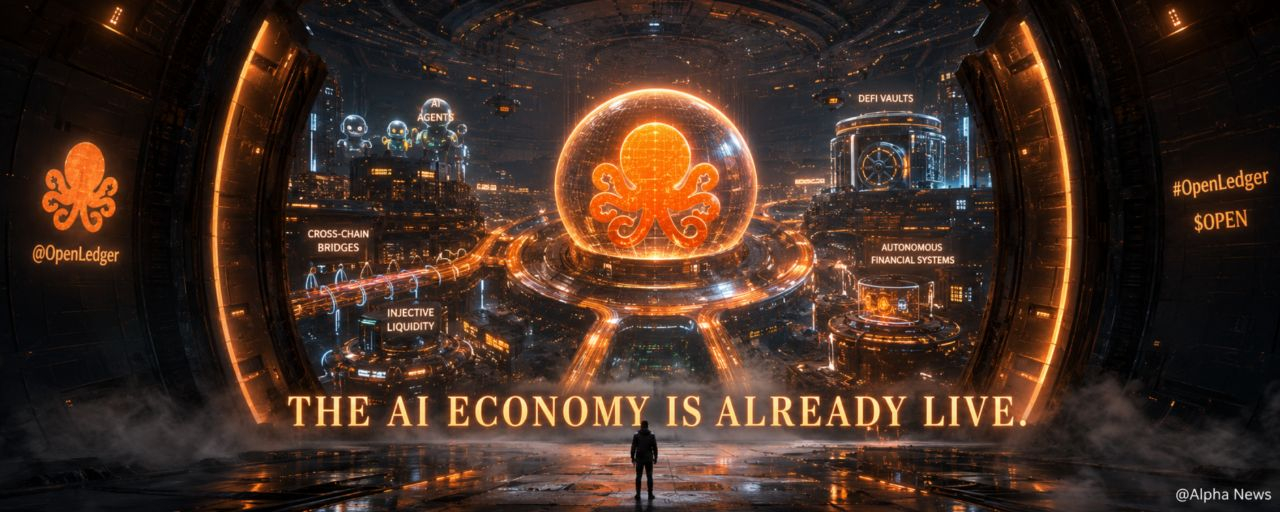
I spent some time digging deeper into the @OpenLedger ecosystem and the $OPEN token, and I uncovered something that most people seem to be completely missing. Instead of just hyping up AI chatbots or pumping out new models, OpenLedger is quietly laying down the decentralized infrastructure for AI a nexus where AI Agents, data, and finance actually intersect.
DeFi Network Integration (EVM Bridge, Injective): In 2026, OpenLedger integrated an EVM bridge and established a core link with the Injective Network. To put it simply: AI Agents on OpenLedger can now directly interact with any asset or DeFi protocol across Ethereum and Injective. No more isolated sandboxes liquidity from everywhere is flowing straight into the system. As a result, every automated trading decision made by these agents is backed by real, deep liquidity, making them significantly more efficient.
ERC-4626 Standard for AI Yield: OpenLedger is one of the very first projects to implement the ERC-4626 standard (tokenized vaults) for capital managed entirely by AI. This means you can deposit funds into a vault on OpenLedger, and an AI Agent will automatically allocate it to optimize yield.
For instance, I ran a small test with 1,000 USDC, which generated around ~67 USDC in yield per month. This interest alone is more than enough to cover the agent's gas and inference fees without ever touching the principal capital. This is the ultimate turning point: AI Agents, which used to be nothing but "money burning tools," have officially transformed into "yield generating engines." AI is no longer a cost center; it’s a profitable economic model.

Proof of Attribution Rewarding Real Contribution: Another fascinating aspect of OpenLedger is its tokenomics, which allocates 61.7% of the total token supply to reward data, model, and agent contributors. Every single contribution (data pipelines, code, task execution) is verifiably tracked onchain and fairly compensated in $OPEN. Once people realize that "every piece of data I provide holds actual economic value," community behavior shifts completely. They stop hunting for short term airdrops and start actively building for the long haul.
I call this whole setup a Silent AI Economy.
The underlying tech stack Octoclaw, EVM bridge, ERC-4626, Vibecoding aren't just isolated gimmicks; they are tightly woven together into an ecosystem where autonomous agents can seamlessly execute transactions and continuously adapt based on live market feedback. Instead of chasing flashy "AI + Crypto" marketing narratives, OpenLedger focuses heavily on stripping away transactional friction and deeply embedding these agents into the financial layer.
Of course, every component will face a massive reality check once the token unlock schedule kicks in. But if the network’s foundation is robust enough manifested through growing active addresses, rising staking ratios, and accelerating token burns the market will easily absorb that sell pressure.
Right now, the smart move isn't staring at the price chart. It’s tracking real world network activity: onchain transactions, active AI agents, the frequency of token burns, and the total $OPEN staked. These are the metrics that scream actual demand, not speculation.
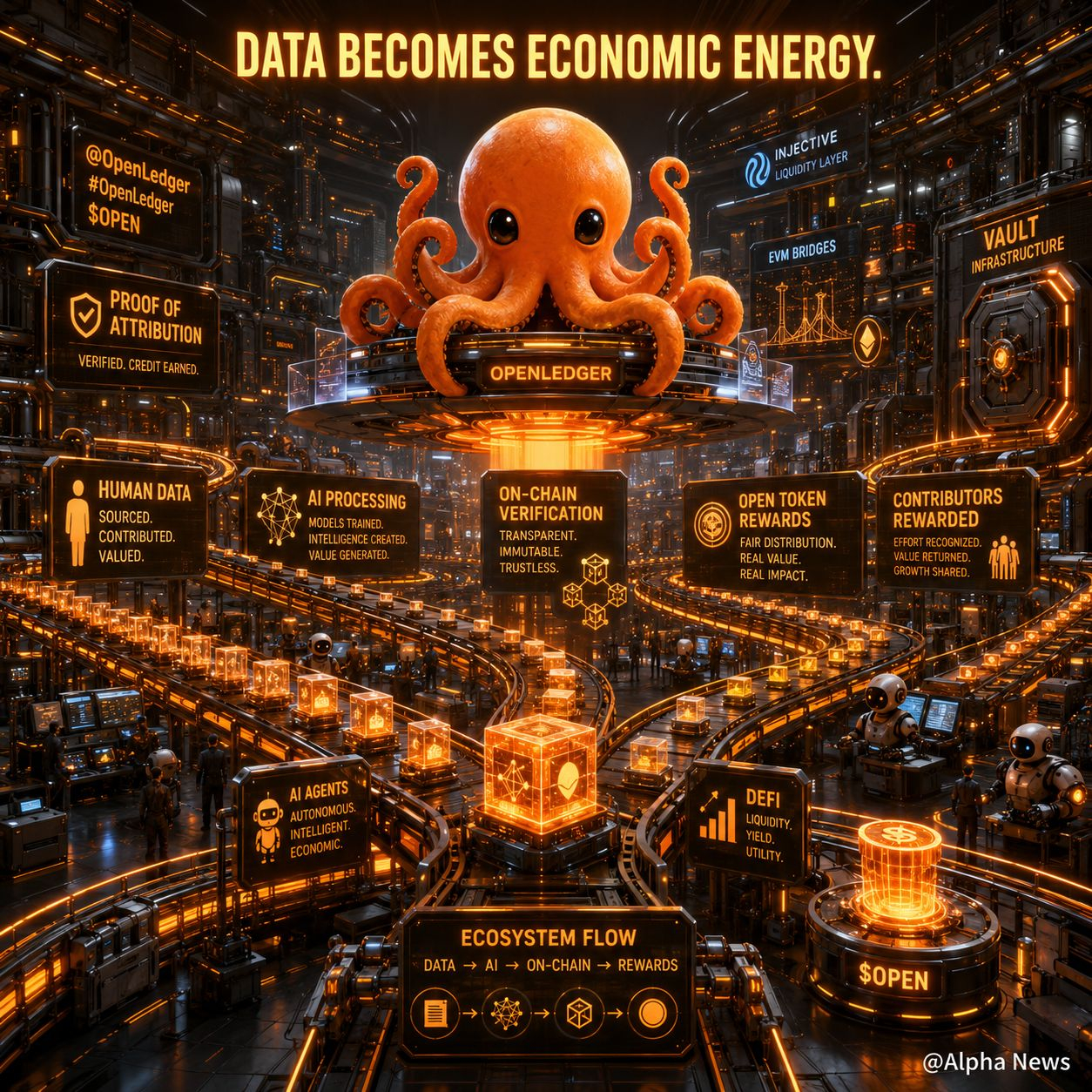
The Bottom Line: OpenLedger gives me the distinct feeling that instead of competing in the crowded "Who is the biggest AI project" race, they are building the foundation for a much deeper question: "When AI inevitably integrates into financial life, what will its infrastructure look like?" @OpenLedger might not steal the spotlight overnight, but looking at the bigger picture, they are the critical building blocks creating a sustainable economic reality for AI.
What do you guys think? Should the long term value of an AI project be measured by its raw tech specs, or by the actual economy and rewards it builds for its community? Let's discuss below! 👇

Note: This is a personal perspective and does not constitute financial advice.