
I focus less on hype now, mostly because hype has a way of making everything sound important before time gets the chance to disagree. I’ve been here long enough to know how quickly confidence can spread in crypto. A few strong narratives, a wave of optimism, people repeating the same certainty back to each other, and suddenly it feels like questioning anything becomes unfashionable.
Then time passes.
It always does.
And what felt inevitable starts looking fragile.
That shift changed the way I pay attention to projects. I don’t really chase excitement anymore. I think I got tired of watching stories move faster than reality. These days, I’m slower. More observant. Maybe more skeptical than I used to be, but not in a cynical way. Just careful.
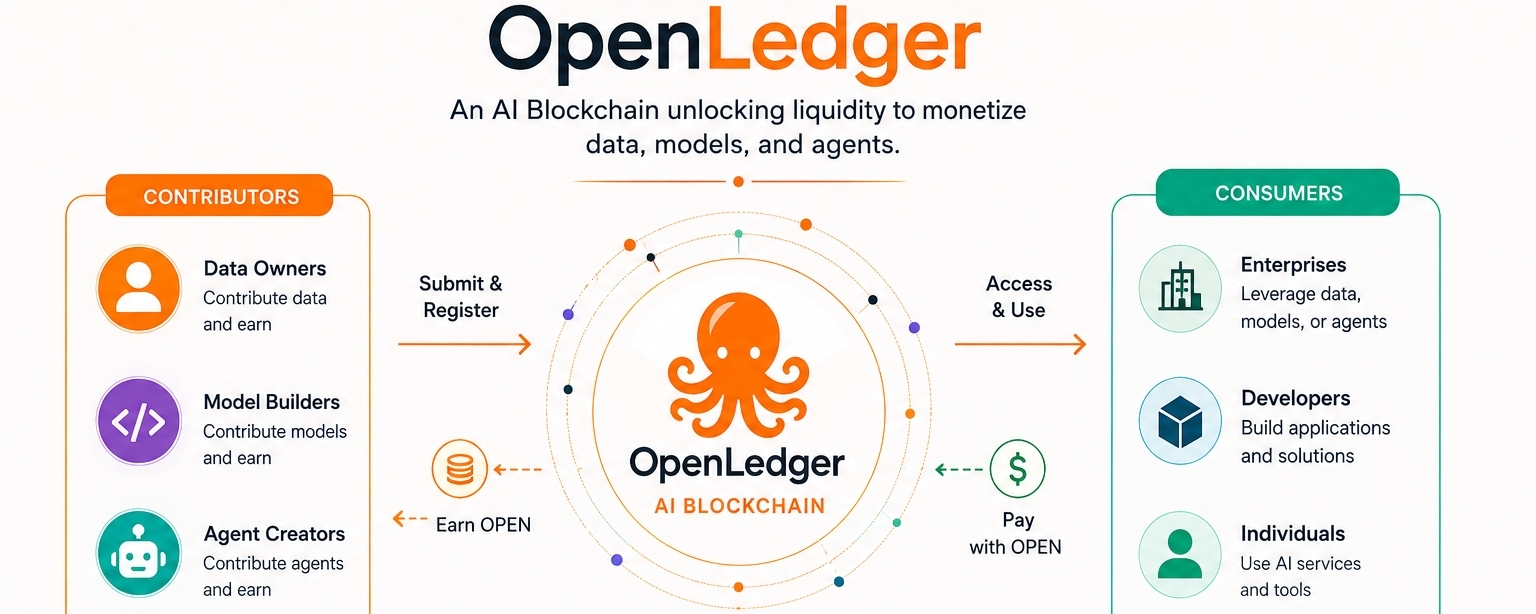
That’s partly why I keep finding myself thinking about OpenLedger.
Not obsessively. Not with conviction. Just in that quiet way certain ideas sit in your mind longer than expected.
AI is everywhere now. You almost can’t escape the conversation. Every week there’s another announcement, another breakthrough, another reminder that things are changing faster than most people can process. And honestly, I understand why people feel excited. There’s something fascinating about watching technology move this quickly.
But I’ve also noticed something else.
The faster things move, the easier it becomes to ignore what’s quietly being traded underneath the surface.
Data has become strangely invisible. We produce it constantly without really feeling it leave us. Every habit, every preference, every interaction—small fragments of ourselves absorbed into systems most people barely think about. Somewhere along the way, contribution stopped feeling personal, even though its value only became bigger.
That tension keeps pulling me back to projects like OpenLedger.
Not because I think they’ve solved something impossible. I’m careful with belief now. Crypto teaches caution if you stay long enough. But because the question underneath feels real to me.
Who actually benefits from the intelligence being built?
I don’t mean theoretically. I mean practically.
If models grow smarter through participation, if systems improve through contribution, then eventually people begin asking whether contribution should mean something beyond passive extraction. It feels like one of those uncomfortable questions that gets harder to ignore over time.
Still, I’ve learned not to confuse meaningful questions with guaranteed outcomes.
That’s where my hesitation usually lives.
A good idea can fail quietly. I’ve watched it happen too many times. Sometimes because timing was wrong. Sometimes because users didn’t care enough. Sometimes because markets rewarded something louder, easier, more emotionally addictive.
People say they want fairness, ownership, transparency. But behavior rarely follows ideals in perfect ways. Convenience wins more often than people admit. Attention drifts quickly. Retention becomes harder once incentives slow down.
And crypto, maybe more than anything else, reveals who people are when excitement fades.
That’s why I find myself paying attention to atmosphere more now.
You can feel when something has genuine curiosity around it versus forced enthusiasm. You can sense when people are staying because something resonates versus staying because everyone else is still looking at it. That difference matters, even if it’s difficult to explain.
When I look at OpenLedger, I’m less interested in dramatic predictions and more interested in quiet signals.
Will people still care six months from now?
Will participation feel meaningful once the novelty wears off?
Will contributors feel connected to what they’re helping create, or will it slowly become another system people interact with passively before moving on?
I don’t know.
And honestly, I think not knowing has become an important part of how I survive this market.
There was a time when I wanted certainty from everything. I wanted confidence. Clear outcomes. Strong opinions. Crypto slowly pulled that out of me. Too many perfect stories collapsed. Too many promises dissolved into silence. After a while, certainty starts feeling suspicious.
Curiosity feels healthier.
That’s probably the best way to explain where I am with OpenLedger.
Curious.
Quietly interested.
But careful.
Because the space around AI feels important, maybe even unavoidable, and the conversation around ownership feels bigger than one project. At the same time, markets have a habit of turning meaningful ideas into temporary trends before moving on to the next thing people suddenly pretend will change everything.
So I keep watching.
Not because I’m convinced.
Mostly because every now and then, something survives the noise long enough to become more than a story people briefly repeated to each other.
And I guess I’m still waiting to see which kind of thing this becomes.