
Right now, most conversations around AI still feel quite surface-level.
Most people see it as a productivity upgrade—faster responses, better automation, smarter assistants, and easier content generation. All of this is useful, but the thinking behind it still feels relatively lightweight.
However, the direction visible in ecosystems like @OpenLedger seems to go far beyond this framing.
When you start looking at concepts like trading agents, execution environments, coordination layers, and continuous operational flow, the nature of the system changes completely. These are not systems designed for occasional use or isolated interactions. They are built to run continuously—where markets, liquidity, and data conditions are constantly shifting, and the system is expected to adapt in real time.
In such an environment, reliability is no longer a simple feature.
It becomes a structural requirement. Downtime is not just an inconvenience; coordination failures, inconsistent execution, and weak attribution logic become issues that can directly impact the survival of the system itself.
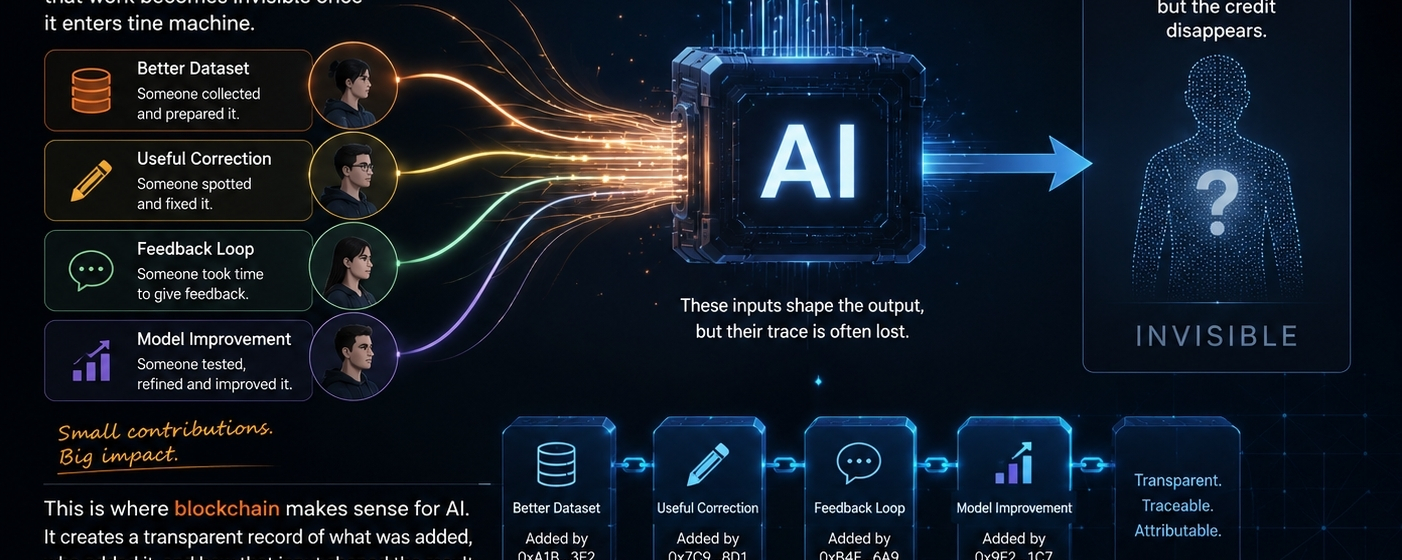
That is why $OPEN feels increasingly meaningful over time. It is not just about adding AI into crypto, but about a shift where AI gradually moves away from being a visible interface layer and becomes part of the execution layer itself—operating underneath the surface rather than on top of it.
And what makes #OpenLedger particularly interesting is that this transition has already started quietly, while most of the market still views AI mainly as an improvement to chat systems.