

There’s one thing I’ve started noticing quite a lot recently when reading about AI projects in crypto.
Most people are still comparing them in a very familiar way:
which model is stronger
which AI answers better
which agent trades faster.
I used to look at the market that way too.
That’s why Bittensor became so interesting in the early stages. It made AI feel more like an open market rather than a closed product of big tech companies. That idea was truly powerful, and to this day, I still think Bittensor is one of the most important narratives in AI crypto.
But the deeper I read into OpenLedger, the more I get the feeling they are looking at the problem from a slightly different angle.
It’s not exactly about making AI smarter.
It’s about what happens when AI starts creating real value on-chain on its own.
I realized this quite by accident after trying to let OctoClaw run a small workflow overnight. The next morning, I opened my wallet and saw a few transactions had been executed while I was still asleep. Not a demo, not a backtest, but real transactions sitting right there on the explorer.
The feeling at that moment was quite strange because for years, I’ve been used to AI just standing by as a layer of "support." It analyzes, it suggests, and then ultimately, humans are still the ones manually executing everything.
But that feeling of watching an agent interact with on-chain financial infrastructure on its own, while I was no longer directly sitting in front of the screen, made me start thinking differently.
Maybe the most important thing for AI in the next few years won’t be about which model is smarter anymore.
But rather, which system can control how value is created and distributed among humans, data, and AI agents.
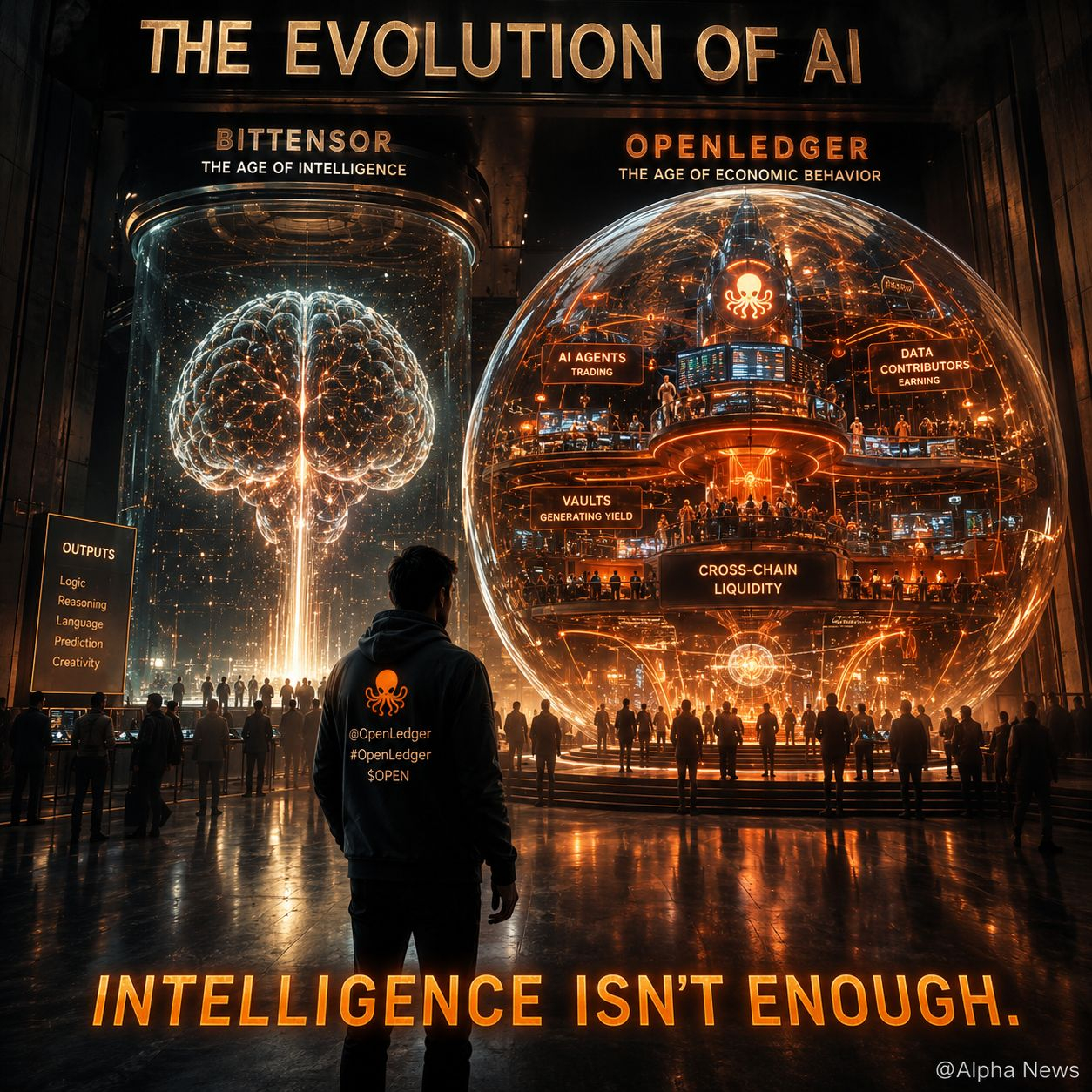
That was when I started to understand why OpenLedger talks so much about attribution and economic coordination rather than just talking about intelligence.
Because when AI starts to:
trade
manage liquidity
process data
optimize treasuries
run workflows autonomously
then the biggest question will no longer be "is the AI smart?" anymore.
Instead, it will be:
who owns the economic output of that entire system.
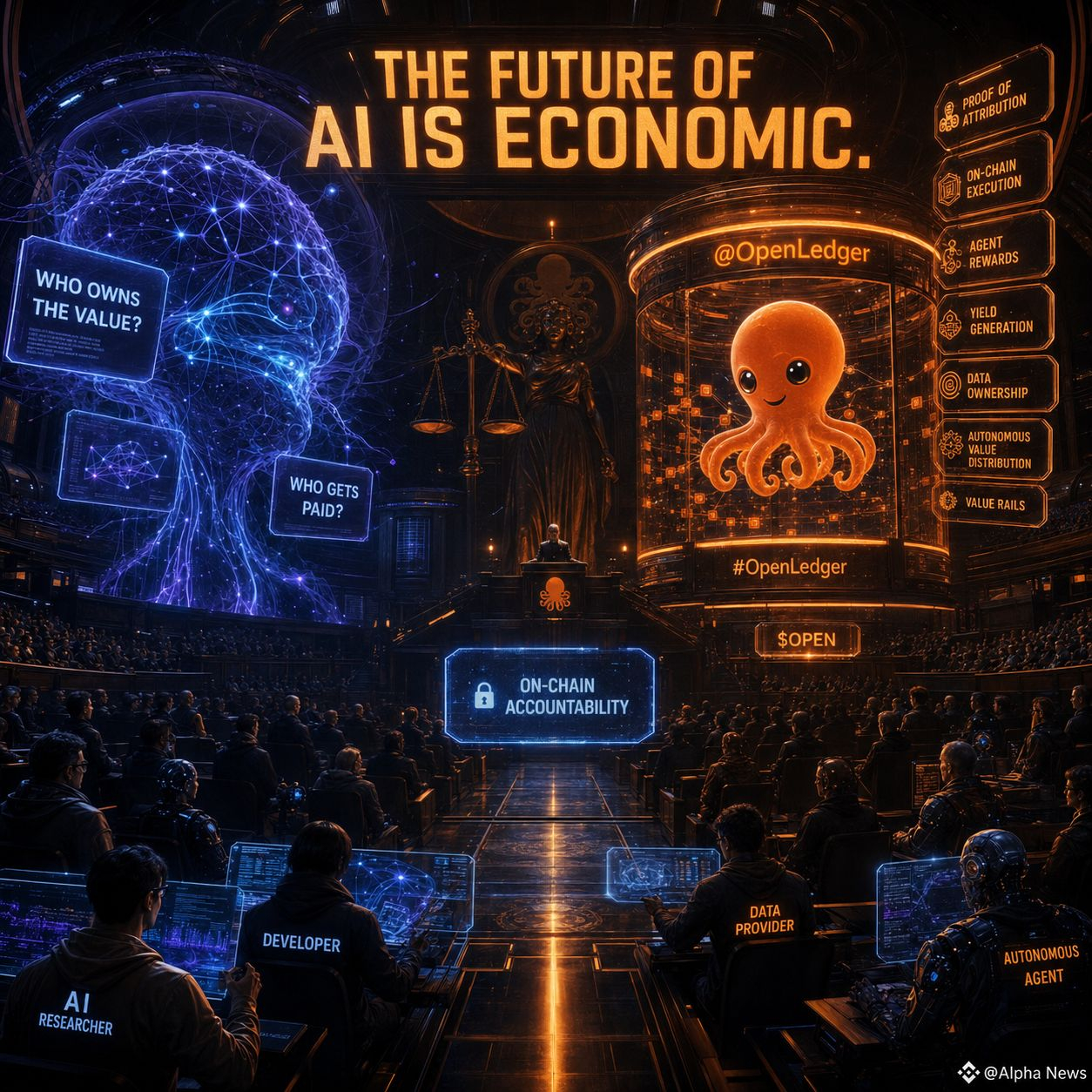
I’m still not sure if the market is looking far enough ahead to care about this right now. Maybe most of the capital at the moment is still just chasing the generic AI narrative like every previous cycle.
But the longer I watch the market, the more I see that the biggest changes usually start from questions that sound quite small in the early stages.
And my feeling right now is that OpenLedger is trying to ask a question that most of the AI crypto market hasn't really thought about yet.
