
The Data Oil Era Is Dead. We Just Haven’t Really Admitted It Yet
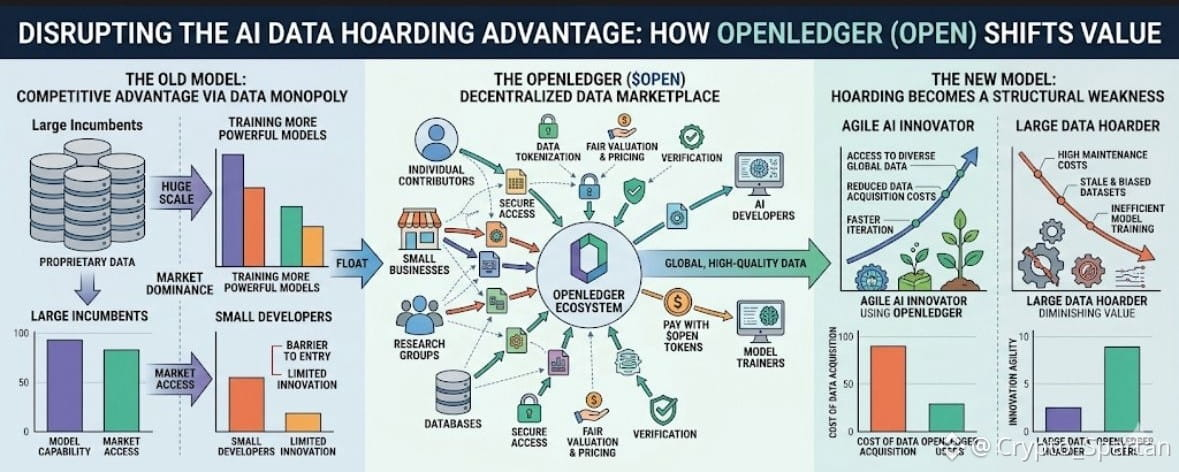
I remember when everywhere you looked people were saying it: “Data is the new oil.”
Conferences, startup pitches, investor meetings, even random coffee chats. It was like a rule everyone agreed on.
The idea was simple. If you had more data, you had more power. Better AI models. Better ads. Better predictions. Basically, whoever controls data wins.
And for a while… yeah, it kind of made sense.
But now things feel different. Like something is slowly shifting, but nobody really says it out loud.
Something doesn’t feel the same anymore
AI today is moving crazy fast. Everyone talks about bigger models, more GPUs, faster inference, trillion parameter systems… all that stuff.
But at the same time, a weird problem is showing up underneath all of it:
Nobody really knows where half of this “intelligence” is actually coming from anymore.
And even worse… nobody knows who is responsible when it goes wrong.
That sounds small at first. Until real money or real life decisions are involved.
Like, if an AI recommends a movie wrong, nobody cares.
But if it affects loans, insurance, medical stuff, trading, or legal decisions… then it becomes serious real quick.
At that point, questions start popping up:
* Where did this answer come from?
* What data shaped it?
* Can we even trust it?
And honestly, most systems can’t really answer that clearly.
The hidden machine behind AI
The Data Oil Era Is Dead. We Just Haven’t Really Admitted It Yet
I remember when everywhere you looked people were saying it: “Data is the new oil.”
Conferences, startup pitches, investor meetings, even random coffee chats. It was like a rule everyone agreed on.
The idea was simple. If you had more data, you had more power. Better AI models. Better ads. Better predictions. Basically, whoever controls data wins.
And for a while… yeah, it kind of made sense.
But now things feel different. Like something is slowly shifting, but nobody really says it out loud.
Something doesn’t feel the same anymore
AI today is moving crazy fast. Everyone talks about bigger models, more GPUs, faster inference, trillion parameter systems… all that stuff.
But at the same time, a weird problem is showing up underneath all of it:
Nobody really knows where half of this “intelligence” is actually coming from anymore.
And even worse… nobody knows who is responsible when it goes wrong.
That sounds small at first. Until real money or real life decisions are involved.
Like, if an AI recommends a movie wrong, nobody cares.
But if it affects loans, insurance, medical stuff, trading, or legal decisions… then it becomes serious real quick.
At that point, questions start popping up:
* Where did this answer come from?
* What data shaped it?
* Can we even trust it?
And honestly, most systems can’t really answer that clearly.
The hidden machine behind AI
Right now AI feels like a big black box.
Data goes in.
Models get trained.
Outputs come out.
And the people who actually created that knowledge writers, researchers, experts, etc basically disappear in the process. Their work gets absorbed, mixed, and turned into model weights.
The system remembers everything… but forgets who it came from.
And that “forgetting” part is what might become a big problem later.
Because it looks fine… until it isn’t.
We already see signs:
* lawsuits about training data
* copyright issues
* companies worrying about compliance
* AI training on AI content, slowly lowering quality without people noticing
It’s kinda like old finance systems before regulation got strict. Everything looked efficient… until transparency became necessary.
Not because it was “nice” but because it became required to survive.
AI might be heading the same way.
Attribution might become the real thing
This is where ideas like OpenLedger start to make sense.
Not just “decentralized AI” or hype words like that. That phrase is honestly overused now.
The more interesting idea is something simpler:
Attribution.
Basically tracking where the intelligence actually comes from.
Not just the final output, but the path behind it.
So instead of data being used once and forgotten, contributions stay visible. People who helped shape the knowledge can still be recognized, maybe even rewarded over time.
That changes the whole system.
Because right now AI rewards collecting more data, storing more stuff, hiding more complexity.
But attribution systems push something different:
quality, trust, and traceable contributions.
And that’s a totally different mindset.
But it’s not that easy tho
Of course, this sounds nice on paper. But in real life, it gets messy fast.
If you try to track contributions:
* people will try to game it
* low-quality data will flood the system
* bots and farms will appear
* reputation systems can get manipulated
We’ve literally seen this in crypto and other incentive systems before.
Also, not every company even wants transparency.
Some want control more than anything else. And transparency and control don’t always go together.
That tension is real.
Enterprises will force the change
But here’s the thing.
Big institutions don’t care about hype. They care about risk.
Hospitals, banks, legal systems… they can’t just trust black-box AI forever. At some point they will ask:
* Can you prove where this decision came from?
* Can you audit it?
* Can you explain it properly if something goes wrong?
And once that becomes a legal or financial issue, transparency stops being optional.
It becomes required.
The real shift happening
So maybe the real change isn’t just better AI models.
Maybe it’s this:
The future won’t just care about what AI says…
it will care about whether you can prove where it came from.
That’s a very different direction than the “data is oil” mindset.
Because oil was about ownership and extraction.
But this new phase feels more like:
proof, traceability, and trust.
Final thought
The “data is oil” era sounded powerful, but it’s starting to feel outdated now.
We’re moving into something else… even if people haven’t fully accepted it yet.
Not just who has the most data.
But who can actually show where their intelligence came from… and stand behind it when it matters.Right now AI feels like a big black box.
Data goes in.
Models get trained.
Outputs come out.
And the people who actually created that knowledge writers, researchers, experts, etc basically disappear in the process. Their work gets absorbed, mixed, and turned into model weights.
The system remembers everything… but forgets who it came from.
And that “forgetting” part is what might become a big problem later.
Because it looks fine… until it isn’t.
We already see signs:
* lawsuits about training data
* copyright issues
* companies worrying about compliance
* AI training on AI content, slowly lowering quality without people noticing
It’s kinda like old finance systems before regulation got strict. Everything looked efficient… until transparency became necessary.
Not because it was “nice” but because it became required to survive.
AI might be heading the same way.
Attribution might become the real thing
This is where ideas like OpenLedger start to make sense.
Not just “decentralized AI” or hype words like that. That phrase is honestly overused now.
The more interesting idea is something simpler:
Attribution.
Basically tracking where the intelligence actually comes from.
Not just the final output, but the path behind it.
So instead of data being used once and forgotten, contributions stay visible. People who helped shape the knowledge can still be recognized, maybe even rewarded over time.
That changes the whole system.
Because right now AI rewards collecting more data, storing more stuff, hiding more complexity.
But attribution systems push something different:
quality, trust, and traceable contributions.
And that’s a totally different mindset.
But it’s not that easy tho
Of course, this sounds nice on paper. But in real life, it gets messy fast.
If you try to track contributions:
* people will try to game it
* low-quality data will flood the system
* bots and farms will appear
* reputation systems can get manipulated
We’ve literally seen this in crypto and other incentive systems before.
Also, not every company even wants transparency.
Some want control more than anything else. And transparency and control don’t always go together.
That tension is real.
Enterprises will force the change
But here’s the thing.
Big institutions don’t care about hype. They care about risk.
Hospitals, banks, legal systems… they can’t just trust black-box AI forever. At some point they will ask:
* Can you prove where this decision came from?
* Can you audit it?
* Can you explain it properly if something goes wrong?
And once that becomes a legal or financial issue, transparency stops being optional.
It becomes required.
The real shift happening
So maybe the real change isn’t just better AI models.
Maybe it’s this:
The future won’t just care about what AI says…
it will care about whether you can prove where it came from.
That’s a very different direction than the “data is oil” mindset.
Because oil was about ownership and extraction.
But this new phase feels more like:
proof, traceability, and trust.
The “data is oil” era sounded powerful, but it’s starting to feel outdated now.
We’re moving into something else… even if people haven’t fully accepted it yet.
Not just who has the most data.
But who can actually show where their intelligence came from… and stand behind it when it matters.
