
I've been watching the AI-crypto space closely, and it's become one of the most crowded and ambitious corners of blockchain. Everyone wants a piece of the next big narrative. Among the newer entrants, OpenLedger (OPEN) stands out with its focused approach. But how does it really compare to the established players? Let's break it down honestly.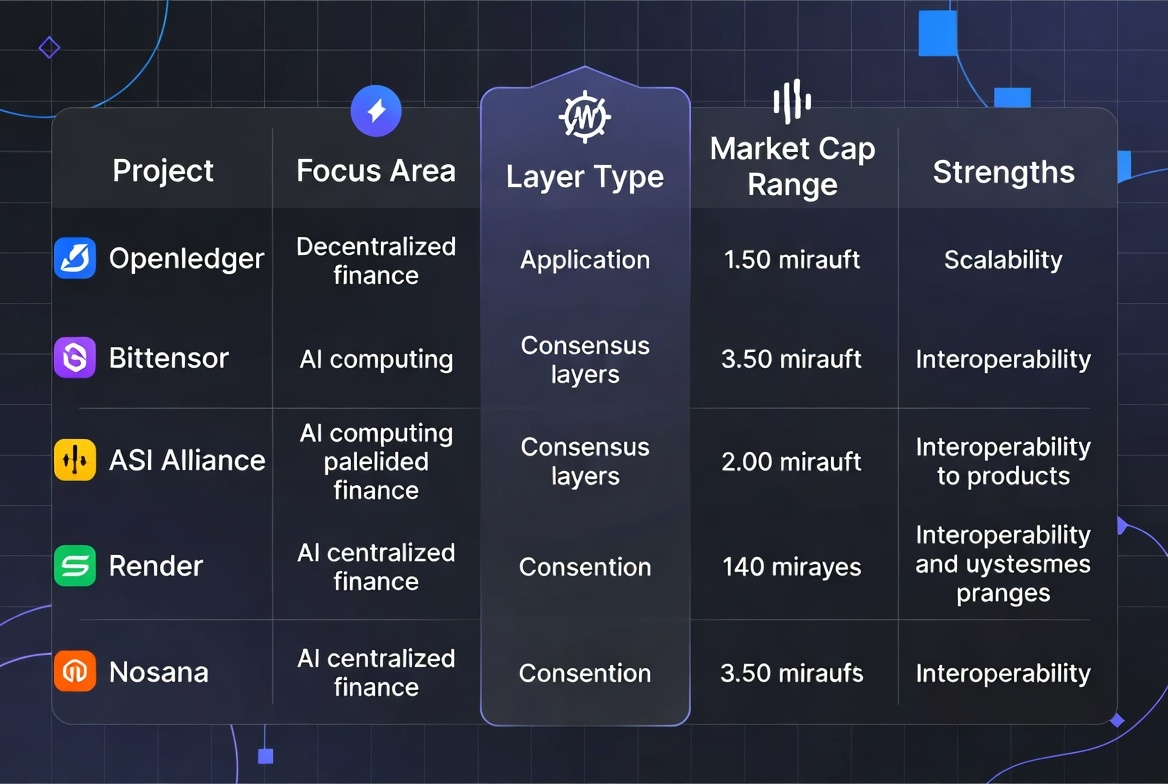
What Makes OpenLedger Different
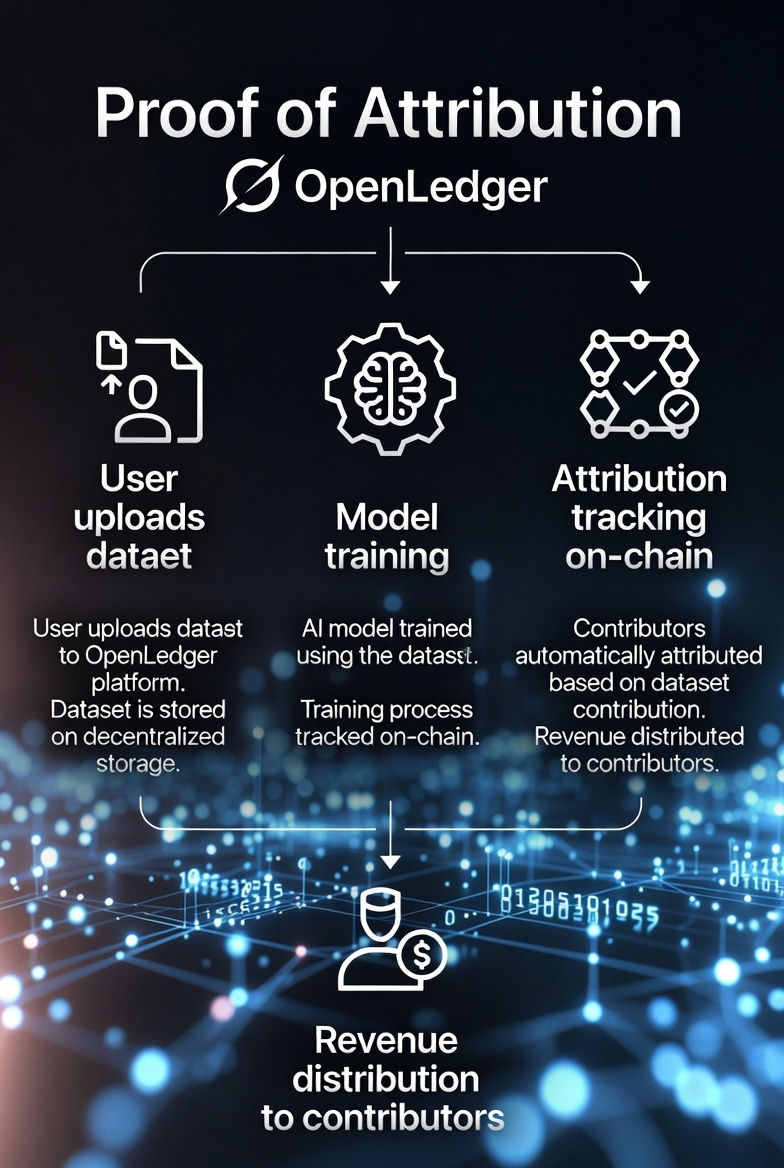
OpenLedger is built as an Ethereum Layer 2 using the OP Stack. Its core idea feels genuinely useful: it tracks exactly who contributed data or training effort to a model through something they call Proof of Attribution. When that model earns money, the original contributors get paid fairly.
This “Payable AI” concept tries to solve one of the biggest headaches in AI today — the total lack of transparency and compensation for people whose data fuels these systems. You can tokenize models and datasets, then monetize them directly on-chain. It’s a thoughtful attempt at bringing real ownership into AI.
That said, the project is still relatively young. Its market cap hovers in the $35–55 million range, which shows promise but also reveals it hasn’t yet broken into the top tier.
Visualizing the Core Idea:
The Heavyweights: Bittensor and ASI
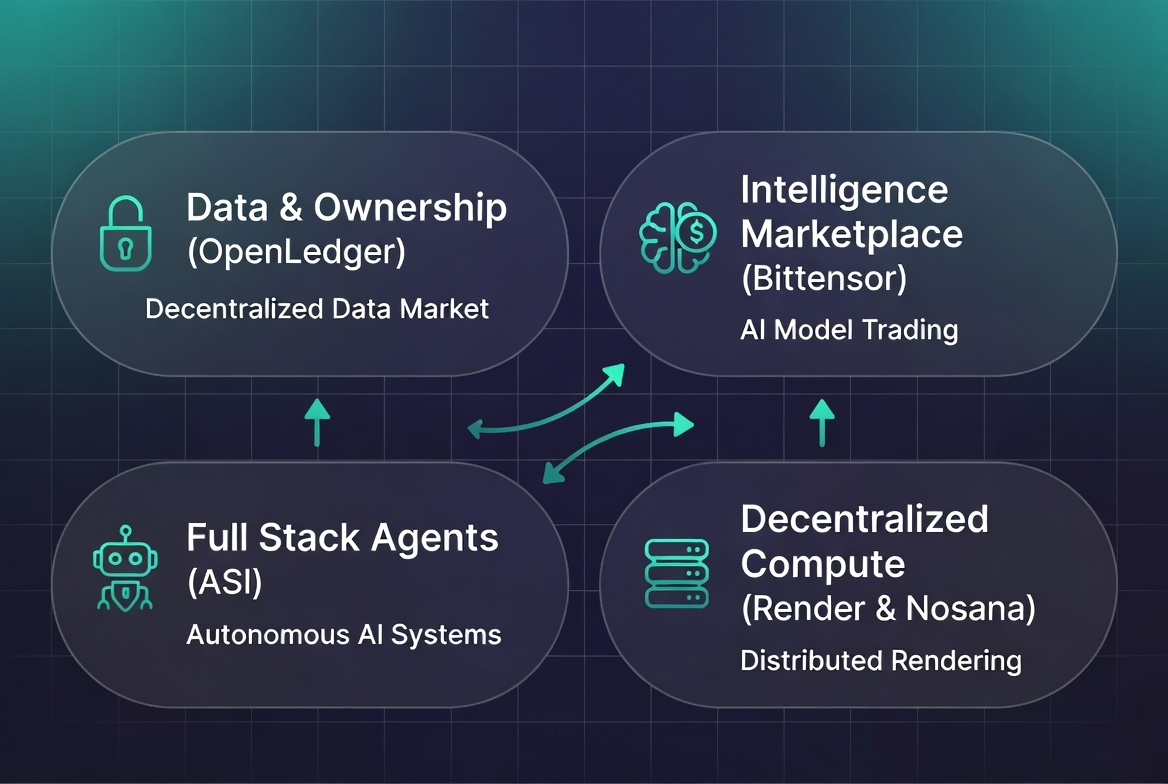
If OpenLedger feels like a precise specialist, Bittensor (TAO) plays the role of the aggressive generalist. It runs its own Layer 1 with a subnet system where AI models literally compete against each other. The incentives are brutal but effective — the most useful models earn the most. TAO has real usage, bigger scale, and a market cap well over $2 billion. It’s messy and complex, but it has momentum that OpenLedger currently lacks.
Then there’s the Artificial Superintelligence Alliance (ASI) — the merger of Fetch.ai, SingularityNET, and Ocean Protocol. This project swings for the fences, covering autonomous agents, data marketplaces, and AI services all at once. The vision is exciting, though the integration process has created some growing pains. OpenLedger looks narrower and more surgical by comparison, which could be its strength if the market eventually values clarity over breadth.
Compute Projects vs Data Layer
Projects like Render and Nosana operate in a different lane entirely. They focus on the hardware problem — renting decentralized GPUs for training and inference. In a world starving for compute power, they solve a very real bottleneck. OpenLedger doesn’t try to compete here. Instead, it builds on top, assuming the compute exists elsewhere. In many ways, these projects complement each other rather than compete.
Final Thoughts
OpenLedger brings a refreshing focus on fair data attribution and model ownership at a time when most AI systems still scrape content without permission or payment. Its Ethereum compatibility makes it easier for developers to jump in. However, it still faces stiff competition and needs to grow its ecosystem significantly to stay relevant.
Whether it succeeds will depend on execution over the next year. The AI-blockchain space rewards both bold generalists and sharp specialists — OpenLedger is clearly betting on the latter.
What do you think — does the data ownership angle feel more important to you than raw compute or agent capabilities? I’d love to hear your take.