When I first looked at Open Ledger Token, the easy reading was that it was only trying to reward work that had been ignored before. I think that is too simple. My thesis is that the more important idea is not reward first, but record first, because work cannot be valued fairly if it disappears before anyone can prove it mattered.
That changes the way I read the phrase quiet ledger. On the surface, a system produces an answer, a workflow improves, or a useful output appears. Underneath, there may be small corrections, data signals, agent actions, narrow inputs, and repeated contributor effort that shaped the result without ever becoming visible.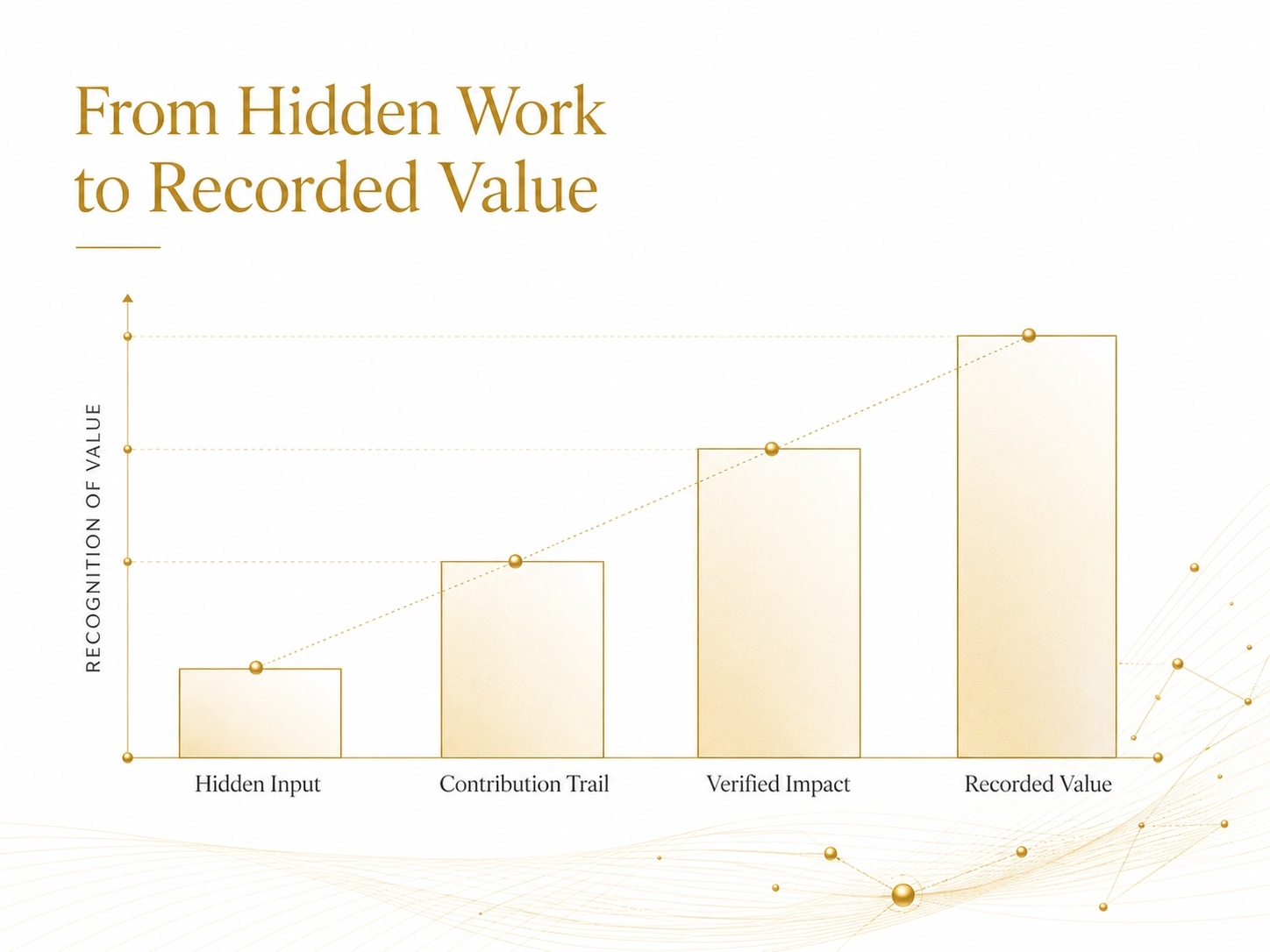
This is where Open Ledger Token becomes structurally interesting to me. It points toward a system where contribution is not treated like background noise after the final output arrives. The token only makes sense if the ledger can connect useful work to an outcome in a way that feels earned, predictable, and hard to fake.
That creates another problem. Counting work is easier than judging work. A person can submit activity, a system can log events, and a market can react to the appearance of productivity, but none of that proves the contribution actually changed the result. If Open Ledger Token is going to matter, the pressure sits exactly there.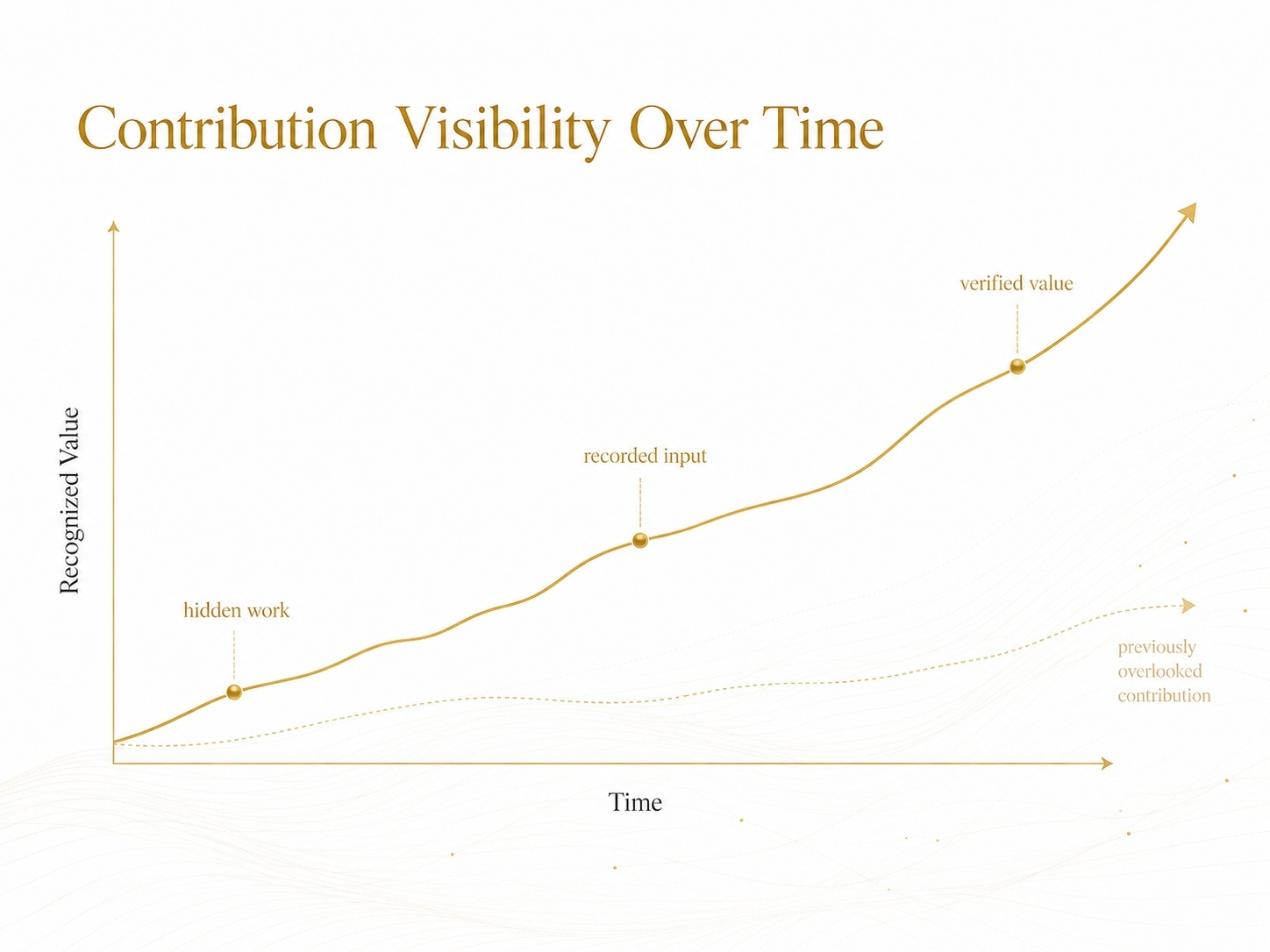
Understanding that helps explain why this is not just a creator economy story. The older internet often rewarded the visible edge: the post, the platform, the final interface, the finished answer. The middle layer was harder to price because it was messy, shared, and difficult to attribute cleanly. Open Ledger Token is really pointing at that middle.
The counterargument is fair. Not every quiet action deserves a claim on value, and not every contribution can be measured without creating new games around the measurement itself. A ledger can become crowded. A reward system can attract shallow participation. A token can float above the real system if usefulness is not verified underneath.
But that weakness is also the main test. The strongest version of @OpenLedger Token is not a louder market symbol. It is a stricter memory system for work that used to vanish before it could build reputation, pricing power, or trust.
The broader shift is quiet but important. Digital systems are moving from valuing only finished outputs toward asking who helped make those outputs reliable in the first place. If this holds, the next layer of value may not come from making contribution louder.
It may come from making useful work harder to erase.