The behavior around AI narratives in crypto has started changing. Price action is still volatile, but participation feels different now. Instead of constantly chasing the next quick opportunity, more people inside OpenLedger seem focused on staying involved, contributing consistently, and building long-term positions within the network.
That shift says a lot.
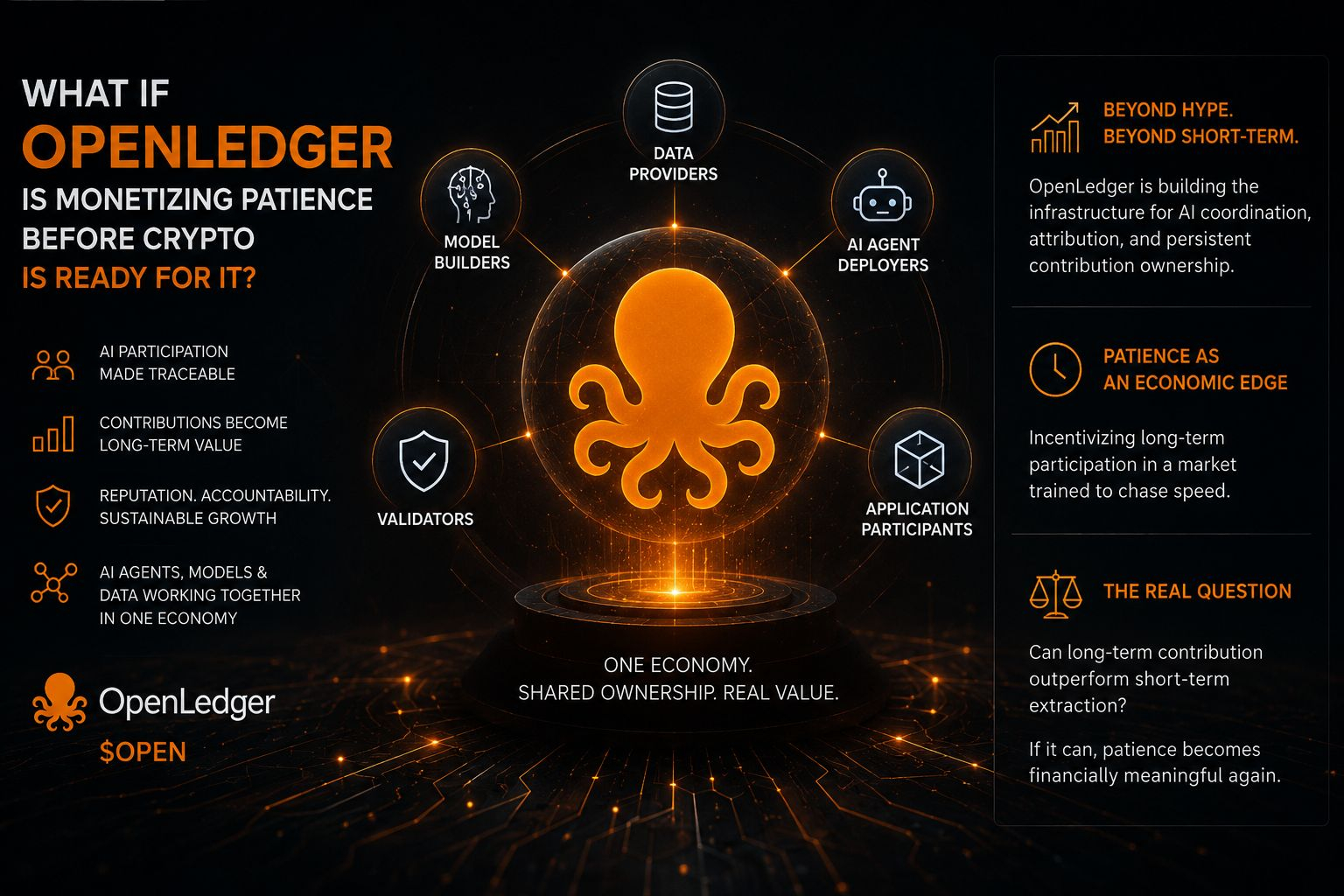
Most AI projects still revolve around models and hype cycles, but OpenLedger appears to focus more on coordination, contribution, and shared ownership. Rather than treating AI as a simple add-on to crypto, the network is structured so contributors, validators, developers, and AI agents all operate inside the same incentive system.
The interesting part is that participation itself becomes valuable.
Contributors are not only generating outputs; they may also keep ongoing exposure to the systems they help improve. That creates a very different model from traditional AI platforms where user data disappears into centralized pipelines without meaningful ownership.
But this also creates a difficult challenge.
Crypto markets are still dominated by short-term thinking. Once rewards are introduced, people naturally optimize for extraction instead of usefulness. Farming behavior, low-quality contributions, and speculative capital can easily weaken open incentive systems if the structure is not strong enough.
OpenLedger seems designed with this risk in mind through reputation systems, accountability layers, and participation tracking. Still, the bigger question remains unanswered:
Can long-term contribution become more rewarding than fast speculation?
If AI economies continue expanding, coordination, attribution, and persistent contribution history could become extremely valuable assets. OpenLedger feels positioned directly within that transition.
Right now, it almost feels like infrastructure arriving before user behavior is fully ready for it.
Maybe that becomes its advantage. Or maybe crypto still values speed more than patience.