
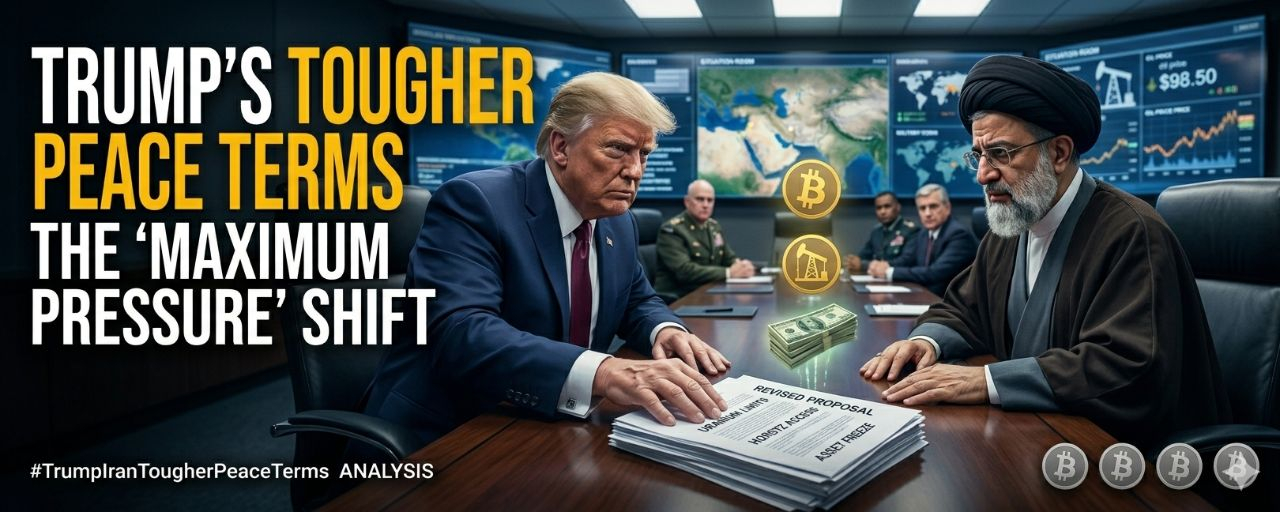
Will tougher terms finalize a historic peace deal, or push the Middle East back into active conflict? A pivotal moment is unfolding in the White House Situation Room.
The breaking story under #TrumpIranTougherPeaceTerms marks a major shift in the ongoing 2026 Iran war. Following a high-level Situation Room meeting, US President Donald Trump rejected a tentative 60-day ceasefire extension, sending a heavily amended, stricter peace framework back to Tehran. The sudden pivot is designed to ramp up diplomatic pressure on Iranian Supreme Leader Mojtaba Khamenei.
The primary sticking point driving the revisions involves the unfreezing of billions of dollars in Iranian assets. Trump has voiced strict opposition to early capital relief, drawing parallels to his long-standing criticisms of the 2015 Obama-era nuclear agreement. Instead, the revised memorandum demands immediate, rigid concessions regarding Iran's highly enriched uranium stockpiles and an unconditional re-opening of the vital Strait of Hormuz shipping corridor.
Diplomatic responses are moving slowly due to secure routing through Pakistani intermediaries. Hard-line factions in both Washington and Tehran remain deeply skeptical of any mutual compromise. While US officials expect a definitive response within days, Trump has explicitly warned that the US military is fully prepared to resume offensive operations if the upgraded terms are rejected.
Key Tokens Impacted by Geopolitical Volatility
$BTC (Bitcoin): Serving as a global hedge and liquidity proxy during regional war escalations.
$OIL (Crude Proxy/Commodity): Directly tied to the shipping status and blockade of the Strait of Hormuz.
$USDT (Tether): Driving regional capital flight and dollar-pegged stability amid Middle East friction.
$GOLD (PAXG/Tokenized Gold): Moving sharply alongside safe-haven assets as ceasefire talks stall.