
i keep thinking one of the more unsettling things inside @OpenLedger is that progress itself might create instability.
not failure first.
progress.
that sounds backwards maybe, but the more i sit with this stack the less i trust the idea that every improvement automatically helps the whole machine. sometimes one part gets sharper while the rest are still catching up, and that does not feel like clean advancement to me. it feels like one route maturing faster than the rest of the attribution economy built to hold it. and what is that, really, if not a stress signal arriving early.
that is the part i can’t shake.
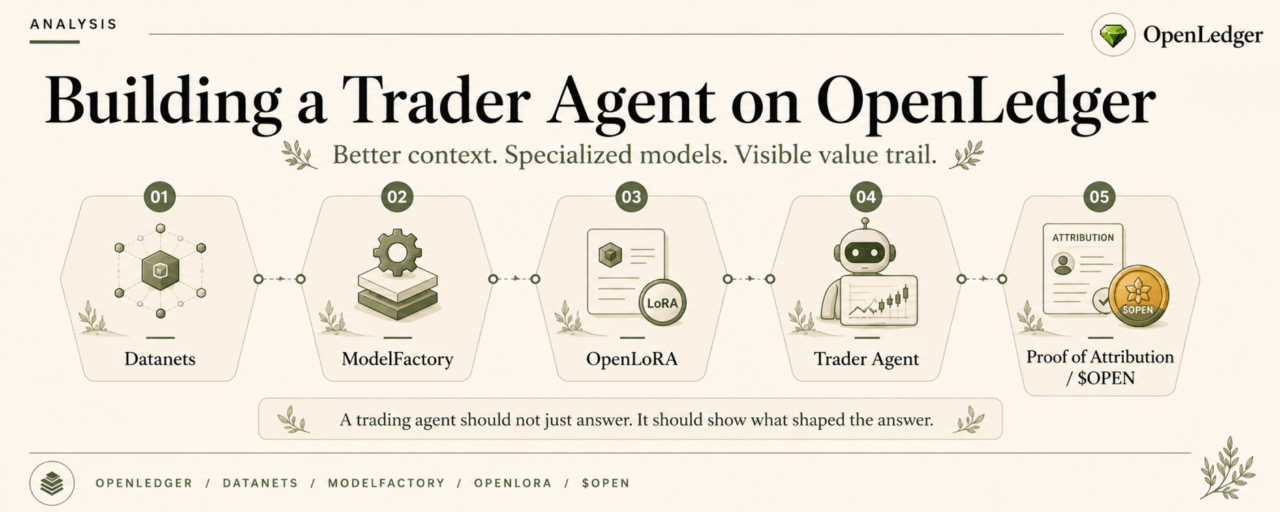
because people keep describing systems like this like they evolve in one clean motion. Datanets get better, model routes get better through ModelFactory, OpenLoRA gets sharper, OctoClaw keeps execution aligned, Proof of Attribution captures it, OpenLedger settles around it, done. everything rising together. one stack, one direction, one maturity curve.
but why would that be true.
why would a Datanet, a model route, a specialization layer, an execution surface, and a reward path all mature at the same speed.
i don’t buy that.
and once i stop buying that, OpenLedger starts looking less like a smooth architecture diagram and more like a place where uneven improvement could become its own kind of risk.
“a system can destabilize by getting stronger unevenly.”
that feels close to the real thing.
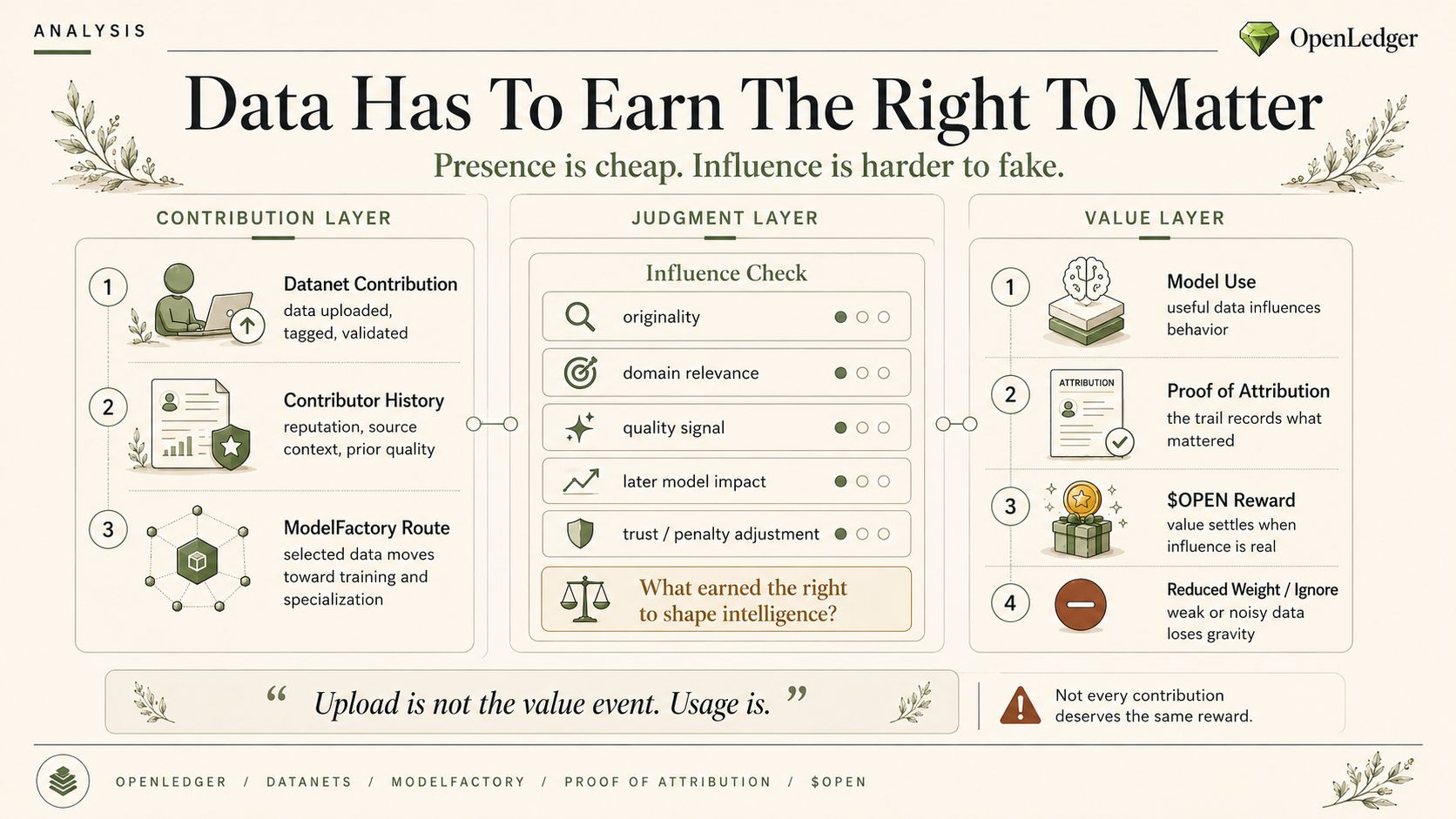
because think about what happens if Datanets improve first. better curation, better structure, tighter domain focus, cleaner signal, more useful input, maybe stronger provenance discipline too. that sounds great, obviously. but what if Proof of Attribution is still not equally mature in how it handles all the downstream consequences of that improvement? what if the network gets better at producing valuable influence before it gets equally good at measuring, splitting, and defending the value claims around that influence.
then improvement at the data layer doesn’t just help the network.
it creates pressure on payout legitimacy.
it creates pressure on reward-routing legitimacy.
it creates pressure on whether $OPEN settlement still looks defensible once stronger Datanet influence starts entering live inference paths faster than the explanation layer can keep up.
and suddenly progress is not symmetrical anymore. it becomes a burden transfer.
a better Datanet can end up exposing weaker PoA confidence. that is very OpenLedger to me. not just “layer mismatch” in the abstract. actual upstream signal becoming stronger than the attribution economy downstream can comfortably defend. and if that happens, what exactly improved there. the network, or the pressure on the network.
same thing if OpenLoRA sharpens faster than the rest.
people usually hear OpenLoRA and stop at efficiency. cheaper specialization, more narrow behavior, more task-shaped routes, less waste, fine. but if specialization becomes cheap faster than attribution becomes precise, then the network gets better at producing narrow, economically meaningful behavior before it gets equally good at proving exactly how that behavior should be credited.
what happens then.
more modular intelligence. more temporary behavior. more adapter-conditioned outputs. more narrow influence events reaching live inference paths.
but not necessarily the same increase in clarity around who should get paid, which adapter path actually mattered, what the causal path really was, or whether the reward split is still trustworthy enough to hold social legitimacy.
that is not a small problem.
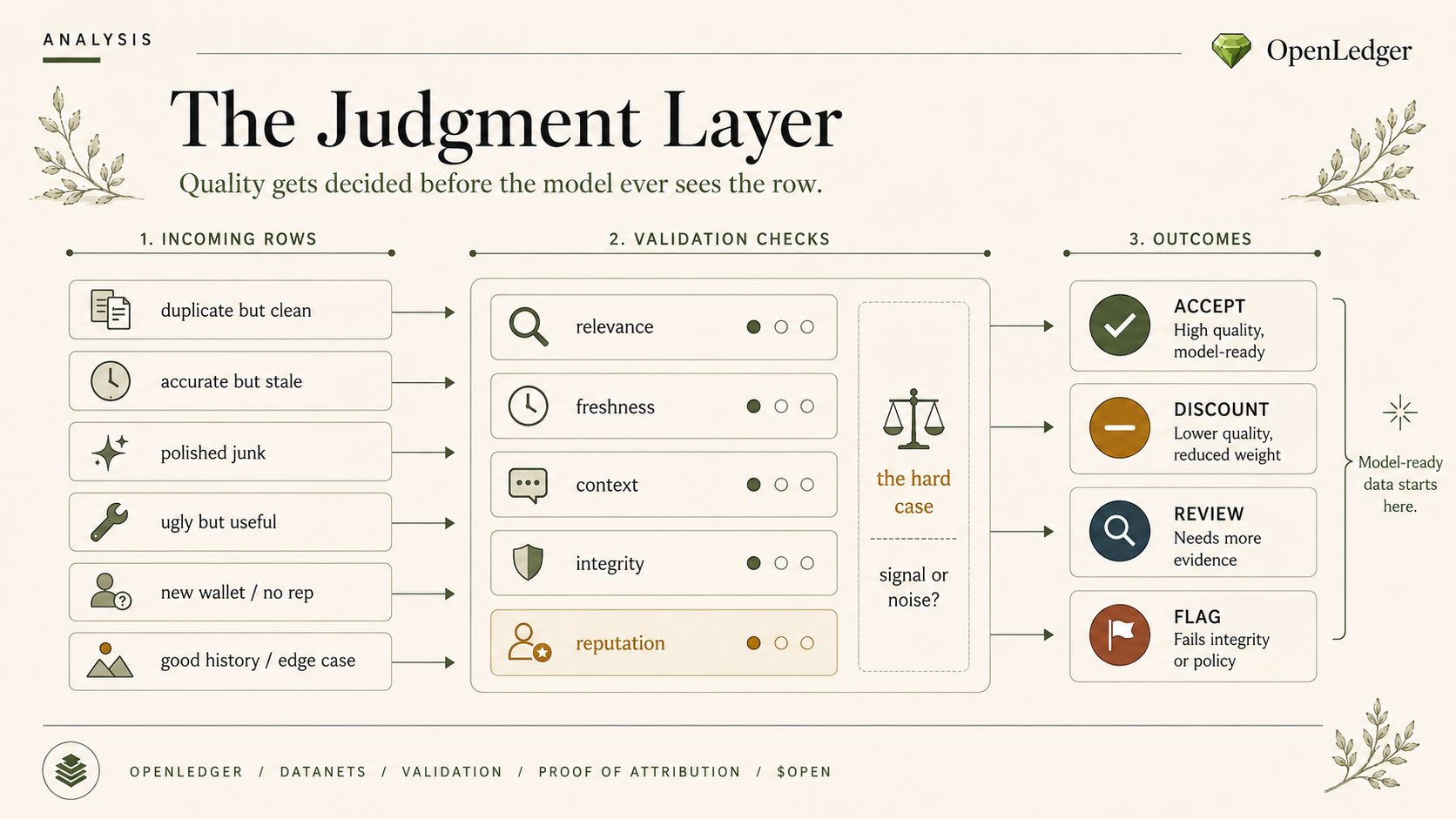
because once specialization outruns attribution precision, the system starts generating more value than PoA can explain cleanly enough to keep reward logic convincing.
“output can mature faster than explanation.”
and that is dangerous in a network that wants to build an economy around explanation.
not just because people get confused.
because OpenLedger settlement eventually has to sit on top of that confusion and pretend it is coherent enough to carry value anyway. maybe that is the uglier part. not uncertainty existing, but value being asked to move through uncertainty before the stack has earned that confidence.
then there’s the agent side, which honestly might be the least stable part if it matures too fast.
OctoClaw gets more usable, cloud config gets easier, routes get cleaner, execution context becomes more legible, agents stop feeling decorative and start feeling deployable. everybody claps because the stack finally looks alive.
but what if agent execution matures faster than social tolerance for what agent execution should be allowed to touch.
or faster than the standards for what counts as safe enough attribution around machine-triggered consequence.
or faster than the governance reflexes needed to decide where the line even is.
that is where the whole thing gets weird for me.
because then “improvement” on the agent side may actually just mean the network is reaching its ethical and financial tension points before its restraint logic is equally mature. is that still progress in the clean sense people want to hear. or just exposure arriving earlier than the language needed to defend it.
and in the real world that happens all the time. systems get capability first and norms second. scale first and control later. efficiency first and institutional tolerance after that, maybe. OpenLedger does not get some magical exemption from that pattern just because the architecture is cleaner than normal AI systems.
if anything maybe the opposite.
because a cleaner stack can accelerate mismatch faster.
Datanets cleaner. models easier to deploy through ModelFactory. specialization cheaper through OpenLoRA. agents more executable through OctoClaw. capital surfaces more legible. PoA under pressure to keep the whole thing accountable. OpenLedger expected to settle around all of it like economic truth is keeping pace.
but what if it isn’t.
what if the settlement language gets asked to validate a stack whose internal maturity levels are still out of sync.
that feels like a much more real concern than simple failure.
simple failure is easy to understand. something breaks, everyone points, everyone complains, you patch it.
uneven progress is harder because it can still look like success from the outside.
the dashboards improve. the routes multiply. the outputs sharpen. the integrations get cleaner. the network looks “more real”.
and underneath that, a different kind of debt starts growing.
not just technical debt. not just security debt.
attribution debt. reward-legitimacy debt. execution-governance debt.
that phrase keeps coming back to me.
because that is what uneven progress creates in systems like this. layers that now have to pretend they belong to the same maturity era when they actually don’t.
a sharper Datanet can expose weaker payout legitimacy.
a sharper OpenLoRA layer can expose weaker attribution precision.
a sharper ModelFactory layer can expose weaker trust filters around what gets deployed too fast.
a sharper agent layer can expose weaker governance tolerance.
a cleaner capital interface can expose weaker execution restraint.
a more legible PoA claim can expose weaker social consensus around what the claim even means economically.
that is not one bug.
that is not just timing.
that is a cross-layer attribution lag turning into a settlement-confidence problem.
“coherence can become overdue.”
and i think OpenLedger is exactly the kind of project where people may underestimate that because the stack is so narratively coherent. it sounds coherent. data, models, specialization, attribution, execution, settlement. beautiful sequence. but sequence is not the same as synchronized maturity.
those are different things.
and i think a lot of crypto people, ai people too honestly, get hypnotized by sequence. if the architecture story flows, they start assuming the growth path flows too.
why?
why would it?
why would the layer that gets better at generating signal mature at the same speed as the layer that proves signal mattered well enough for OpenLedger to settle around it without dispute.
why would the layer that gets better at acting mature at the same speed as the layer that decides what actions should be normal.
why would the layer that gets better at touching capital mature at the same speed as the layer that can still defend that contact publicly.
that’s where i start feeling like the real instability in OpenLedger might come from its successes arriving in the wrong order.
not because any one piece is bad.
because one piece can become too ready before the others know how to metabolize that readiness.
“the stack may get coherent on paper before it gets coherent in time.”
that line feels horrible and true.
and it changes how i read the whole system.
Datanets stop looking like just data quality infrastructure. now they also look like pressure engines if their influence grows faster than compensation legitimacy grows with them.
OpenLoRA stops looking like just compute efficiency. now it also looks like a multiplier on PoA burden if narrow behavior becomes cheaper faster than causal explanation becomes robust.
ModelFactory stops looking like just deployment convenience. now it also looks like acceleration pressure, because making creation easier changes the speed at which the rest of the system has to keep up and changes how fast attribution and trust logic get stress-tested.
and that part matters more than people admit. ModelFactory is not neutral convenience if it speeds model-route creation faster than the network can maintain trust around what those routes deserve once they start producing attributable outputs. faster creation for what. faster pressure on whom. that is the question hiding inside the convenience layer.
OctoClaw stops looking like just agent tooling. now it looks like a place where capability can become socially and financially serious before the rest of the stack finishes deciding what serious should mean.
even OpenLedger starts reading differently to me under that light.
because the token is not just there as reward language or gas language or governance language. it becomes the economic surface where these maturity mismatches stop being abstract. once the system routes value, disagreement gets sharper. once value settles, weak alignment gets exposed faster. people tolerate conceptual ambiguity much longer than they tolerate money moving through ambiguity.
that is just reality.
and that means the token layer does not politely wait for coherence. it pressures coherence.
it pressures attribution coherence.
it pressures payout coherence.
it pressures whether the stack can still defend its own value splits once more capable layers start producing more economically meaningful outputs than the rest of the system can explain with confidence.
that might be the ugliest OpenLedger-specific part of all this.
OpenLedger does not politely sit there while the rest of the architecture catches up. once reward-routing becomes real, once settlement becomes visible, once contributors start reading the split as economic truth, every maturity gap gets sharper. maybe that is when the architecture stops sounding elegant and starts sounding answerable.
which is maybe why i keep circling back to the same thought.
OpenLedger may not face its hardest moments when something fails outright.
it may face them when one layer gets undeniably better and the rest are forced to reveal whether they were ever ready for that improvement.
that’s a much scarier test.
because failure can be patched.
misaligned maturity is harder. it makes every improvement feel like a question.
is the rest of the stack ready for this.
does this capability arrive with enough attribution precision.
does this execution surface arrive with enough governance clarity.
does this capital adjacency arrive with enough restraint.
does this reward path arrive with enough legitimacy to survive contact with the improved layer.
and if the answer keeps being “not yet,” then progress itself starts acting like a destabilizer.
not permanently maybe.
not fatally maybe.
but really.
and i think that is a much more honest way to read OpenLedger than the cleaner “everything is coming together” story people like to tell.
because yes, it is coming together.
but coming together is not the same as arriving together.
that distinction matters a lot more than it sounds like it should.
especially in a stack trying to turn data into attributable intelligence, intelligence into execution, and execution into economic consequence without letting the whole thing collapse into either black-box theater or incentive confusion.
so yeah, maybe the real risk is not that OpenLedger stalls.
maybe the real risk is that one layer gets too good before the others have learned how to live with that improvement.
and if that’s true, then the question is no longer just whether the architecture works.
it’s whether the architecture can survive its own uneven progress.