
i keep thinking maybe people are still naming the wrong thing when they talk about value inside @OpenLedger
they keep reaching for the model first
the model did this
the model answered that
the model got smarter
the model should get credited
the model should get paid
and yeah okay, that sounds normal because AI has trained everyone to think in singular objects. one model, one output, one intelligence-shaped box sitting there doing the important part. even when people admit there’s data underneath, infra underneath, fine-tuning underneath, they still talk like the model is the final adult in the room
but the more i sit with OpenLedger the less i think that holds
because what actually matters here when something valuable happens
is it really the model alone
or is it the route that made the model matter for that one live moment
that is where my head keeps going lately. not the model as a stable object. the route as the real economic event
and those are not the same thing at all
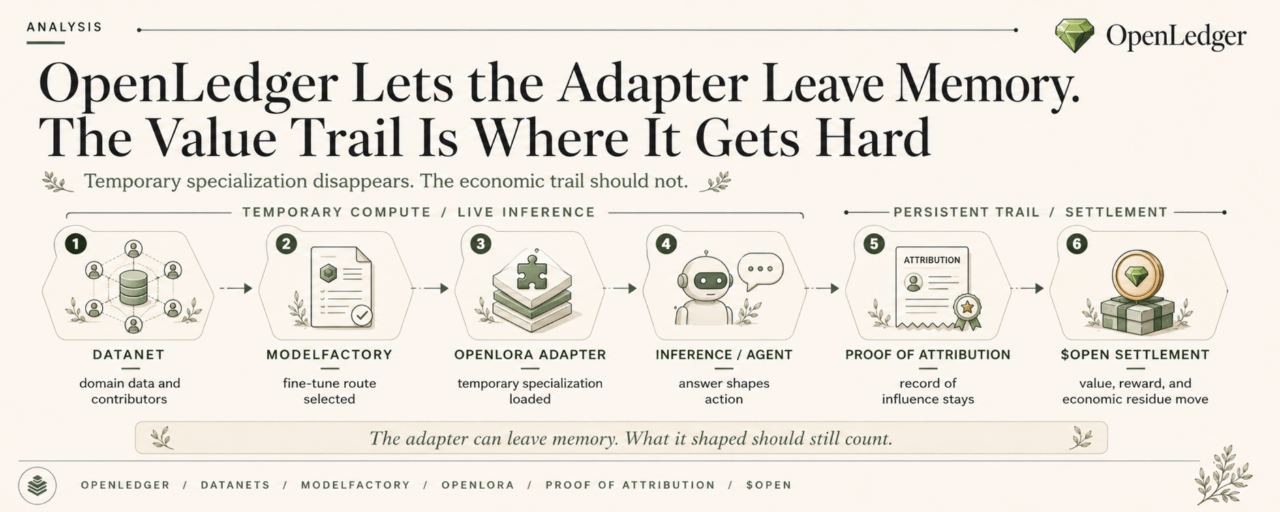
because inside OpenLedger, nothing really arrives alone. a Datanet exists before the answer. ModelFactory exists before the answer. OpenLoRA exists before the answer. maybe OctoClaw exists before the answer too if the thing keeps moving and starts behaving like execution instead of just output. Proof of Attribution definitely exists waiting for the answer. OpenLedger is somewhere farther down the line waiting for value to stop sounding theoretical and start needing distribution
so when the output finally appears, what exactly are we looking at
a model speaking
or a route briefly holding together long enough to produce something the network can actually price
“the output is where the route becomes visible.”
that line keeps sticking to me
because a model by itself still feels too broad in OpenLedger. too blunt. too easy. the model is there, sure. but did the model matter alone? or did it matter because one query hit, one slice of Datanet signal became relevant, one deployment path through ModelFactory had already made that behavior available, one OpenLoRA specialization maybe bent the route toward something narrower, one attribution path became reconstructable, one live event became eligible for payment
that is already not “the model” in any simple sense
that is assembly
and i think OpenLedger is one of those systems where assembly might be the real economic object, not any single component inside it
which honestly makes the whole thing feel stranger than people let on
because if the route is the thing that matters, then value is no longer sitting in assets the way people are used to imagining. not just in data alone. not just in model alone. not just in adapter alone. not just in agent alone. value might be living in the temporary composition that formed when those parts got selected together under pressure
that’s a much less comfortable object to think about
less solid
less brandable too, probably
but maybe more true
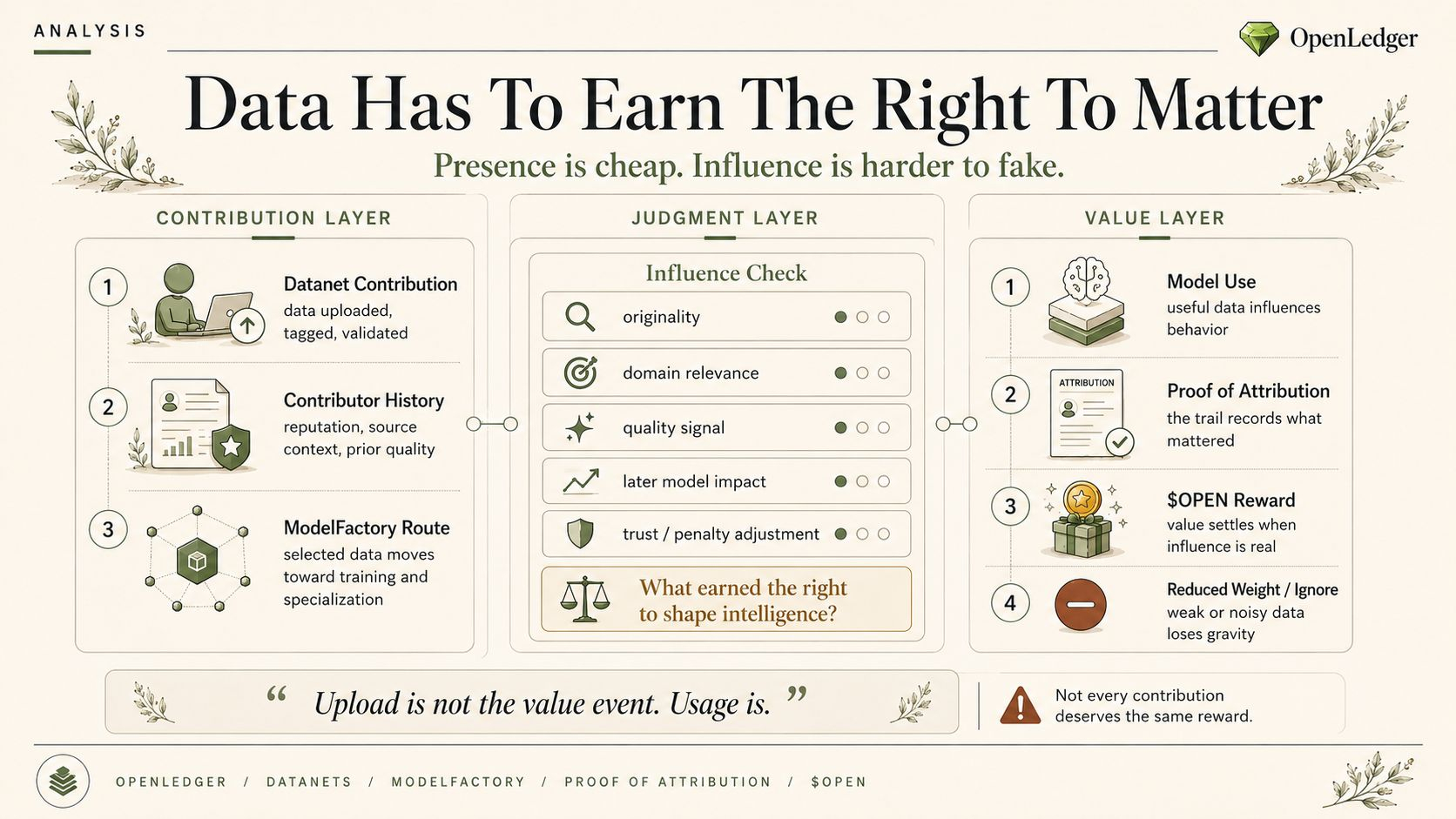
because think about what Proof of Attribution is actually being asked to do. it is not being asked to applaud the existence of a model in the abstract. it is being asked to reconstruct contribution across a path. who mattered here. what influenced this output. what source entered the chain of consequence. who deserves some share once this thing becomes economically real
that is route logic, not model worship
and maybe that sounds obvious, but i really don’t think people have absorbed what that means yet. because if attribution is route-native, then value might also be route-native. the network is not just monetizing intelligence like one big mystical blob. it is monetizing selected composition
that feels a lot harsher to me
because now a model can exist and still not be the important part. a Datanet can exist and still not be the important part. OpenLoRA can exist and still not be the important part. even an agent framework can exist and still not be the important part. the thing that becomes valuable is the path that actually held together when a real request forced the stack to stop being possibility and become choice
“choice is where components stop being inventory.”
that’s maybe the cleaner way to say it
and OpenLedger keeps dragging me back to that because this whole architecture is built around not letting invisible contribution stay invisible forever. okay fine. but the second you commit to that, you are also admitting something uglier: contribution only becomes economically meaningful when the network can point to the actual path where it mattered
not where it could have mattered
not where it maybe should have mattered in some moral or theoretical sense
where it did
that changes everything
because now the model is too large a word for the event
the route feels closer
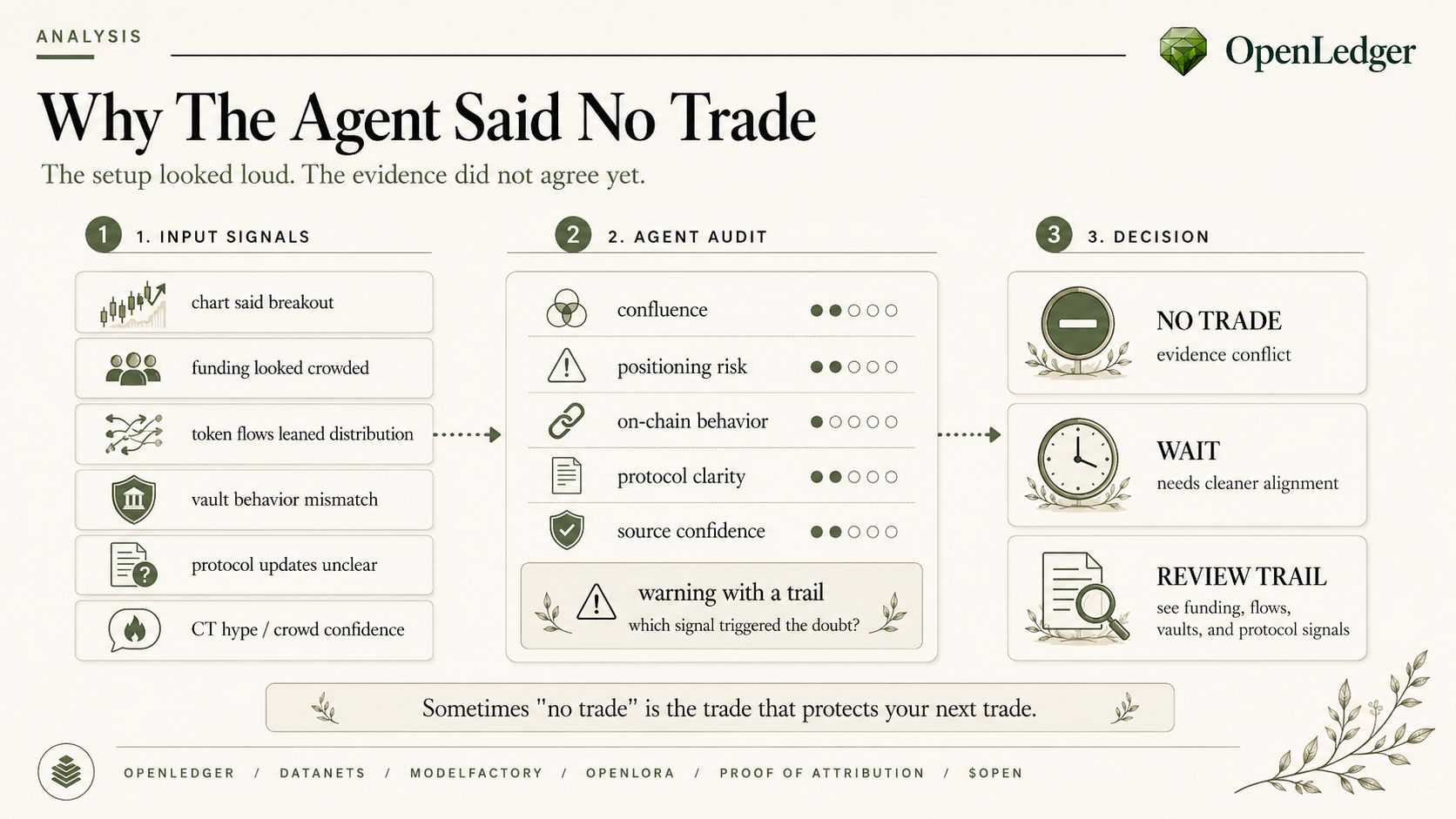
i keep picturing it almost like this. somewhere upstream there’s a Datanet with actual usable signal. somewhere else ModelFactory has made a model deployable instead of leaving it as some idea nobody can touch. somewhere OpenLoRA is sitting there ready to make behavior narrower, cheaper, more task-shaped. somewhere OctoClaw might be waiting if the output wants to stop being output and start becoming an action context. then a query arrives. not ten years of theory. one live moment. one pressure event. and suddenly the system has to choose
which data path
which model path
which specialization path
which attribution path
maybe which execution path
that is the real thing
not the broad existence of the stack
the selected line through it
and once i think about OpenLedger that way, the economic side starts making more sense to me and also looking more unstable. because routes are harder to romanticize than models. a model sounds ownable. a route sounds contingent. a model sounds like an asset. a route sounds like a temporary coalition that only becomes legible because pressure forced it to
which one is easier to sell to people
obviously the model
which one sounds more native to OpenLedger
honestly, probably the route
because even OpenLoRA starts reading differently under that lens. if specialization loads only when needed, then the meaningful intelligence was not sitting there permanently anyway. it became specific inside the route. same with Datanets. their value is not just in existing beautifully. their value is in surviving selection and becoming influential in a live path that PoA can later defend. same with ModelFactory. the point is not just that deployment became easier. the point is that more possible routes can now exist and compete to become economically real later
that’s why i keep feeling like OpenLedger is not just building a marketplace for AI assets
it is building a marketplace for attributable routes, whether people say it that way or not
and maybe that’s where things get heavier in the present too
because if the route is the unit that matters, then every part of the network starts behaving a little differently. Datanets are no longer just data pools. they are route candidates. ModelFactory is no longer just a builder tool. it is a route proliferation engine. OpenLoRA is no longer just efficiency infra. it is route-shaping compression. OctoClaw is not just agent branding. it is route continuation under execution pressure. Proof of Attribution is not just fairness theater. it is the thing that tries to make the route economically legible after the fact. and OpenLedger $OPEN is not just token wallpaper sitting on top of vibes. it becomes the settlement language for whatever route the system can defend as real enough to pay
that is a very different architecture mood than “the model is valuable”
and honestly a much more difficult one
because routes do not stay still. routes can be disputed. routes can be partial. routes can contain tiny influence slices that are economically meaningful but socially hard to explain. routes can look obvious after the fact and totally invisible before the fact. routes can multiply faster than public understanding of what got paid and why
so now i keep wondering whether OpenLedger is actually teaching people to stop thinking in model-centric terms altogether
not immediately, maybe
but slowly
past AI gave us this huge habit of thinking the important object is the model because everything else was hidden badly enough that you had no choice. hidden data, hidden tuning, hidden infra, hidden economics, hidden route. then the answer comes out and all the value gets mentally shoved into the one visible thing
OpenLedger kind of ruins that shortcut
or at least it tries to
because if you actually take attribution seriously, the shortcut starts breaking. now the answer is not proof of one mind sitting there. it is evidence that one route held. one route got selected. one route survived enough scrutiny to become payable
“the route is what the system can defend.”
that line feels ugly but useful
and maybe this is the future pressure too. maybe the longer OpenLedger grows, the less convincing model-centric value becomes. because more Datanets means more candidate inputs. more ModelFactory routes means more deployable intelligence paths. more OpenLoRA usage means more temporary specialization. more OctoClaw execution means more outputs stretching into consequence. all of that pushes the same direction: value gets harder to pin on one object and easier to see as a structured path through many objects
that could get messy fast
because humans still want simple stories. who built it. who deserves the reward. what got used. what mattered most. one winner, one cause, one answer. but route logic is meaner than that. it keeps saying maybe several things mattered and only became real together. maybe no single component was the full adult in the room. maybe the economically relevant intelligence was not the model or the dataset or the adapter or the agent but the path they formed for one live moment under one demand event
and if that’s true, OpenLedger is doing something bigger than just making AI payable
it is changing what the payable thing even is
not intelligence in the abstract
not infrastructure in the abstract
not even contribution in the abstract
the route
the selected composition that became defensible enough for PoA to trace and concrete enough for OpenLedger to settle around
and yeah, maybe that is harder to explain than “the model matters”
but hard to explain does not mean false
sometimes it means the architecture is finally telling the truth
and maybe that’s the real shift here
OpenLedger might matter less because it makes models valuable and more because it makes routes economically visible
that feels closer to the actual machine
and honestly a lot more serious
because the second value lives in the route, the whole stack stops feeling like a pile of components
and starts feeling like a system where temporary alignment is the thing that gets priced