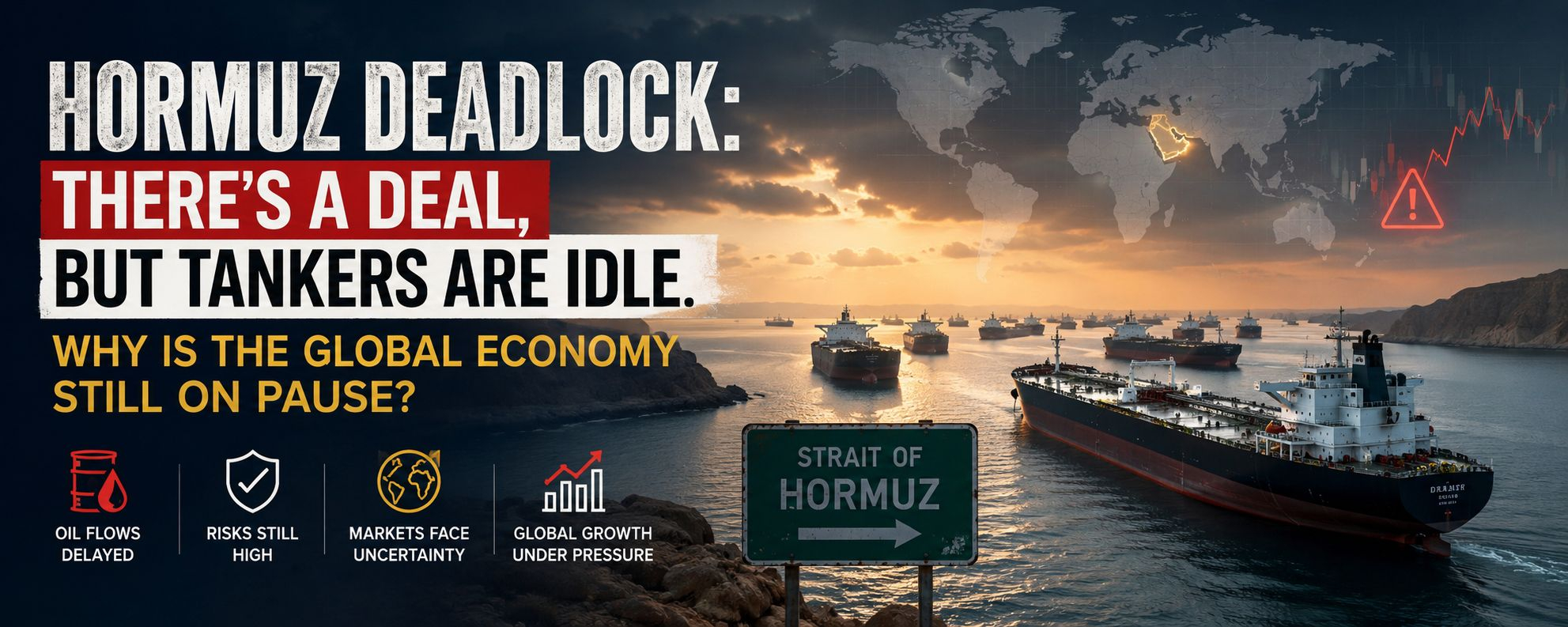
The headlines suggest the crisis is easing. Diplomats are talking, tensions have cooled, and a deal appears to be taking shape. Yet thousands of miles away, in the narrow waters of the Strait of Hormuz, a different story is unfolding.
Oil tankers are still waiting.
For global markets, that hesitation speaks louder than any political announcement. The Strait of Hormuz remains the world's most important energy corridor, carrying nearly 20% of global oil supplies. When confidence disappears from these waters, the effects ripple far beyond the Middle East—reaching fuel prices, inflation forecasts, supply chains, and financial markets worldwide.
The problem isn't whether a deal exists. It's whether the people responsible for moving billions of dollars worth of energy every day believe the risks have truly disappeared. Shipping companies, insurers, and commodity traders are demanding more than diplomatic promises; they want proof that stability has returned.
Until then, tankers remain cautious, insurance costs stay elevated, and global markets continue to price in uncertainty. The result is a strange and costly standoff: diplomacy says move forward, but commerce refuses to accelerate.
And in a world economy built on confidence, that gap may be the most important signal of all.
#USADPEmploymentChangeSlipsTo25500