The Real Story Behind Silver's Recent Movement
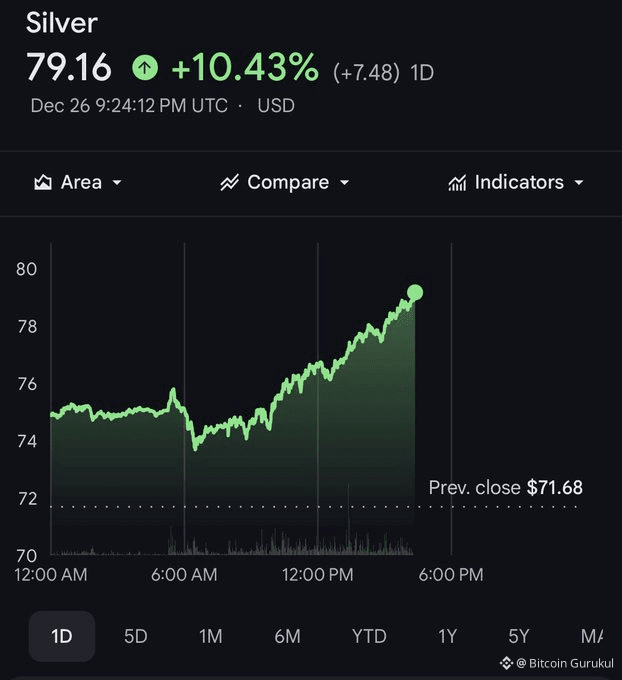
Silver has experienced a remarkable surge, climbing to $79.16 with a substantial 10.43% gain in just one day. While many observers focus solely on price movements, the underlying story reveals something far more significant happening in the global commodities market.
Understanding the Fundamentals: It's All About Supply
The current price action isn't driven by speculative trading or market sentiment alone. Something fundamental is shifting in the silver market, and it centers on one critical factor: physical availability.
When examining commodity markets, price charts only tell part of the story. The real narrative unfolds in the supply chain, where tangible metal changes hands and industrial needs must be met.
China's Strategic Export Policy Changes
A significant development is reshaping the global silver landscape. Beginning in 2026, exporters will face stricter regulatory requirements when shipping silver from certain regions. New policies will require:
Government authorization for export activities
Substantial operational scale
Access to significant credit facilities
These requirements effectively limit which entities can participate in international silver trade. Smaller and medium-sized operations may find themselves unable to meet these standards, reducing the number of active exporters in the market.
This matters because a large portion of worldwide silver production originates from regions implementing these controls. When export channels narrow from major producing areas, global markets respond quickly.
Historical Parallels Worth Noting
Similar patterns have emerged in other commodity markets. The rare earth elements sector experienced comparable dynamics when export restrictions tightened. Markets that depend on concentrated production sources become vulnerable when access policies change.
The Supply-Demand Imbalance
The silver market has been operating in deficit conditions for an extended period. Annual consumption has consistently exceeded new production for several consecutive years. This structural imbalance creates pressure that builds gradually until it manifests in price action.
Why Mining Can't Quickly Respond
Unlike some commodities, silver production faces unique constraints. The majority of silver doesn't come from dedicated silver mines. Instead, it emerges as a secondary product from copper, zinc, and lead mining operations.
This production structure means that even when silver prices rise significantly, supply cannot easily increase. Miners optimize operations for primary metals, and silver output remains largely fixed regardless of price incentives.
Inventory Levels Reaching Critical Thresholds
Storage facilities across major markets are reporting inventory levels near multi-year lows. Some regions maintain stockpiles that would only satisfy a few weeks of typical demand under current consumption patterns.
When inventory buffers shrink to minimal levels, markets become sensitive to any disruption in supply chains or unexpected demand spikes.
Physical Premiums Tell the Real Story
In Asian markets, buyers are paying substantially above spot prices to secure physical metal. These premiums reflect actual market conditions where participants need tangible delivery rather than paper exposure.
Premium expansion signals that availability concerns are real, not theoretical. When market participants willingly pay significant markups, it indicates genuine scarcity in physical channels.
The Paper Versus Physical Disconnect
Financial markets allow for extensive paper trading where contracts represent silver exposure without corresponding physical metal backing each position. Estimates suggest that claims on silver vastly outnumber available physical inventory.
This system functions smoothly as long as most participants remain satisfied with paper exposure. However, if preference shifts toward physical possession, the disconnect between paper claims and actual metal becomes problematic.
Markets are beginning to incorporate this risk into pricing mechanisms.
Industrial Demand Remains Robust
Silver serves critical functions across expanding technology sectors:
Solar Energy: Photovoltaic panels require silver for optimal conductivity
Electric Vehicles: Modern EVs use more silver than traditional vehicles
Electronics: Consumer and industrial electronics depend on silver's unique properties
Medical Applications: Silver's antimicrobial properties make it irreplaceable in healthcare
These applications lack easy substitutes. Even during periods of economic uncertainty, technological advancement continues driving silver consumption.
What This Means for Market Participants
The confluence of tightening export policies, depleting inventories, structural supply deficits, and persistent industrial demand creates a unique market environment.
Price movements reflect these underlying fundamentals rather than temporary speculation. Understanding the supply side dynamics provides context for evaluating future market developments.
Key Takeaways
Physical availability is becoming increasingly constrained
Export policy changes will reduce global supply flexibility
Inventory levels are historically low across major markets
Industrial demand shows no signs of meaningful decline
The gap between paper markets and physical reality is widening
Looking Ahead
Markets are dynamic, and conditions evolve continuously. However, the structural factors currently influencing silver appear durable rather than transient. Supply chains don't transform overnight, and production limitations remain real constraints.
For those tracking commodity markets, silver presents a case study in how fundamental supply-demand dynamics ultimately assert themselves regardless of short-term trading patterns.
Understanding these underlying forces provides valuable perspective beyond simply watching price charts move up and down.