
The next decade will witness a fundamental shift from purely speculative crypto-assets to Sovereign Digital Assets (SDAs). State-backed tokens, ranging from tokenized natural resources to digitized sovereign debt, will seek global liquidity on tier-1 exchanges like Binance. This vision outlines the roadmap for state-backed tokenization, focusing on regulatory harmony, institutional adoption, and the "Binance Effect" for national economies.

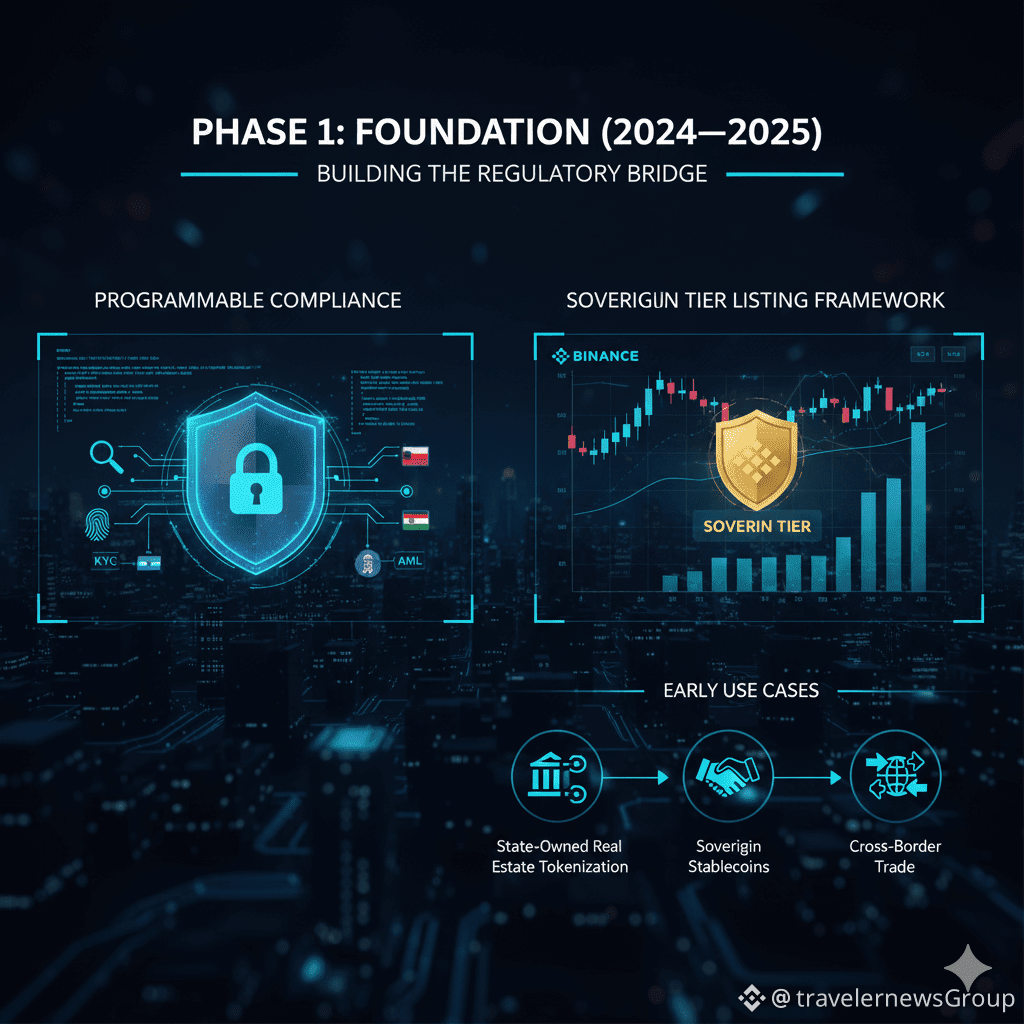
Phase 1: Foundation (2024–2025) – Building the Regulatory Bridge
The initial phase focuses on establishing a secure legal framework that allows sovereign entities to interact with centralized exchanges (CEXs) without compromising national security or global compliance.
Programmable Compliance: Developing smart contracts that automatically enforce KYC/AML (Know Your Customer/Anti-Money Laundering) requirements specific to the issuing state and the host exchange (Binance).
Listing Frameworks: Establishing a "Sovereign Tier" on Binance, where state-backed tokens undergo rigorous due diligence focused on treasury backing and legal enforceability.
Early Use Cases: Tokenization of state-owned real estate and initial "Sovereign Stablecoins" (CBDC-adjacent tokens) for cross-border trade.
Phase 2: Expansion (2026–2027) – RWA Integration & Liquidity Deepening
As Real-World Asset (RWA) tokenization matures, states will leverage Binance’s global reach to attract retail and institutional capital into national infrastructure.
Sovereign Debt Tokenization: Digital Treasury Bills (e-Bonds) listed on Binance, allowing users to earn yield directly from state-backed securities with T+0 settlement.
Commodity-Backed Tokens: States with vast natural resources (Oil, Gas, Gold, Lithium) issue tokens representing fractional ownership of these reserves, providing a hedge against inflation.
Binance Launchpool for Nations: Using launch platforms to introduce national development tokens to a global audience of over 200 million users.
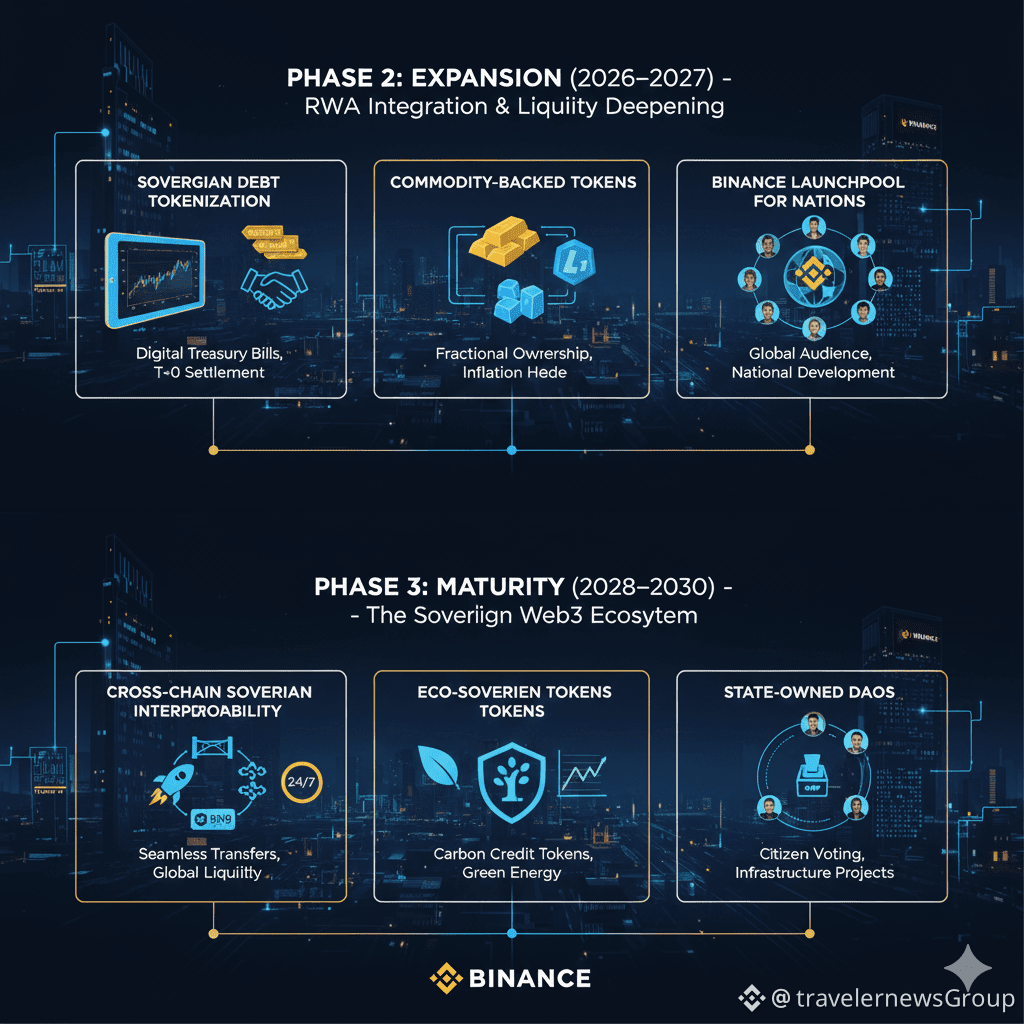
Phase 3: Maturity (2028–2030) – The Sovereign Web3 Ecosystem
By 2030, state-backed tokens will be the backbone of a new global financial system, bridging the gap between traditional finance (TradFi) and decentralized finance (DeFi).
Cross-Chain Sovereign Interoperability: State tokens will move seamlessly between the BNB Chain and other national blockchains via secure bridges, maintaining 24/7 global liquidity.
The Rise of "Eco-Sovereign" Tokens: States issue carbon credit tokens backed by national conservation efforts, listed on Binance’s green energy sectors.
State-Owned DAOs: Decentralized Autonomous Organizations governed by states and citizens, where state tokens confer voting rights on infrastructure projects or municipal budgeting.
Strategic Opportunities & Risks
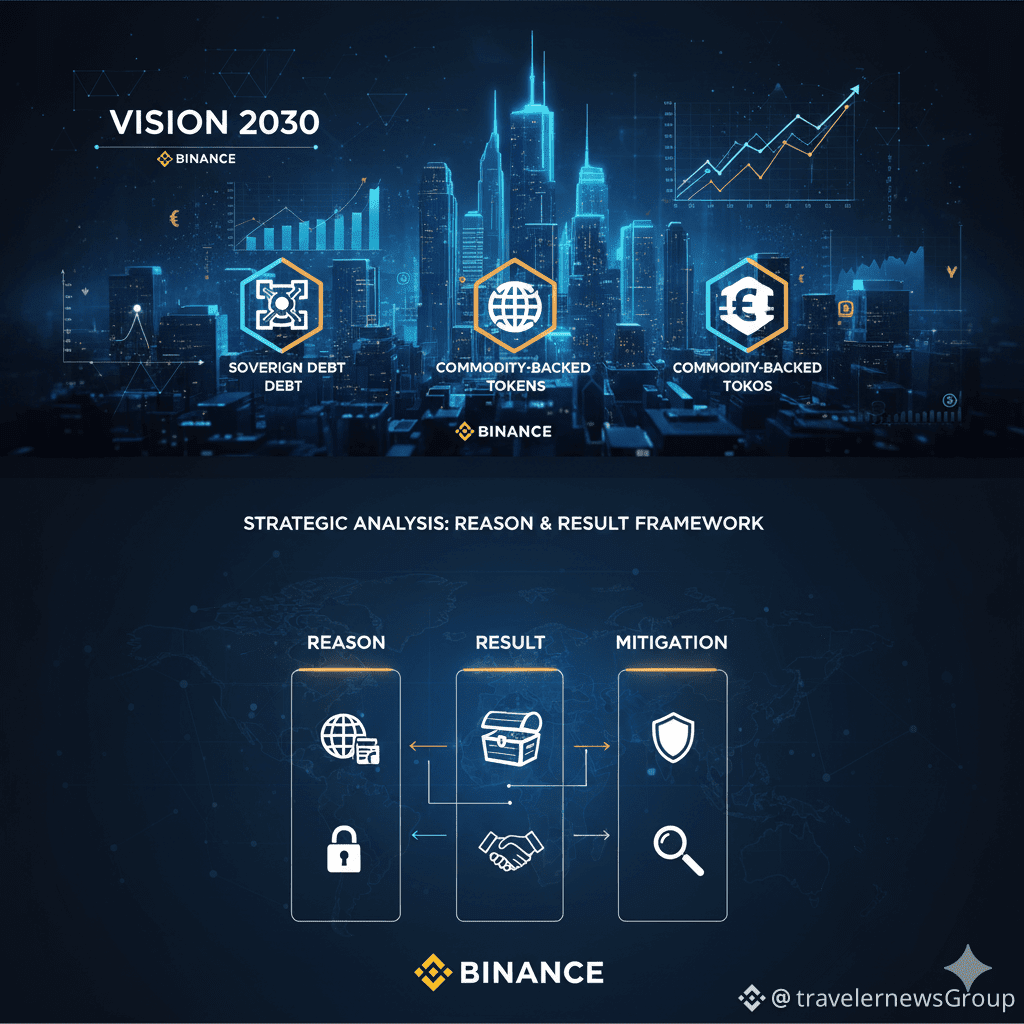
Here is the strategic analysis of State-Backed Tokens on Binance, restructured as a Reason-Result list to clearly demonstrate the cause-and-effect relationship of each strategic pillar.
Strategic Analysis: Reason & Result Framework
1. Global Liquidity Access
Reason: By listing sovereign tokens on a tier-1 exchange like Binance, a nation taps into a massive, 24/7 global pool of retail and institutional capital that far exceeds local market capacities.
Result: The state gains instant access to billions in liquid capital, enabling the rapid funding of national projects while maintaining price stability through professional Market Making (MM) strategies.
2. Institutional Transparency
Reason: Utilizing blockchain technology allows for the real-time, public verification of the assets (gold, energy, or debt) backing the sovereign token.
Result: This creates unprecedented international trust and lowers the "country risk" premium. Through regular third-party audits and Proof of Reserves (PoR), the state secures a higher credit reputation in the digital space.
3. Democratized Financial Inclusion
Reason: Lowering the barrier to entry allows everyday retail investors—rather than just large investment banks—to purchase fractionalized shares of a nation’s growth.
Result: A diversified and loyal investor base is formed. Combined with targeted educational campaigns, this results in long-term capital commitment and sustainable national economic support.
4. Regulatory Standardization
Reason: Aligning state-backed token frameworks with the rigorous listing requirements of global exchanges ensures compliance with international AML/KYC standards.
Result: The state achieves seamless integration into the global Web3 ecosystem, shielding the national economy from sanctions risks and illicit financial flows.
5. Technological Sovereignty
Reason: Moving national assets onto a programmable blockchain infrastructure allows for the automation of dividends, coupons, and governance.
Result: A drastic reduction in administrative overhead and the elimination of traditional "middlemen" (clearing houses), resulting in more efficient wealth distribution for the issuing state.
#Binance #BinanceSquare #SovereignTokens #FinTech #DigitalAssets
