Silver capped an extraordinary year on December 30, 2025 with a sharp rebound that took prices above seventy-six dollars per ounce. After a tough day of profit-taking that had briefly knocked the metal lower, silver surged nearly six percent in a single session, climbing from recent lows around seventy-one to seventy-three dollars. This dramatic recovery follows an even more volatile week in which silver briefly touched eighty to eighty-four dollars before margin hikes triggered a flash crash, marking one of the most tumultuous periods in recent precious metals history.
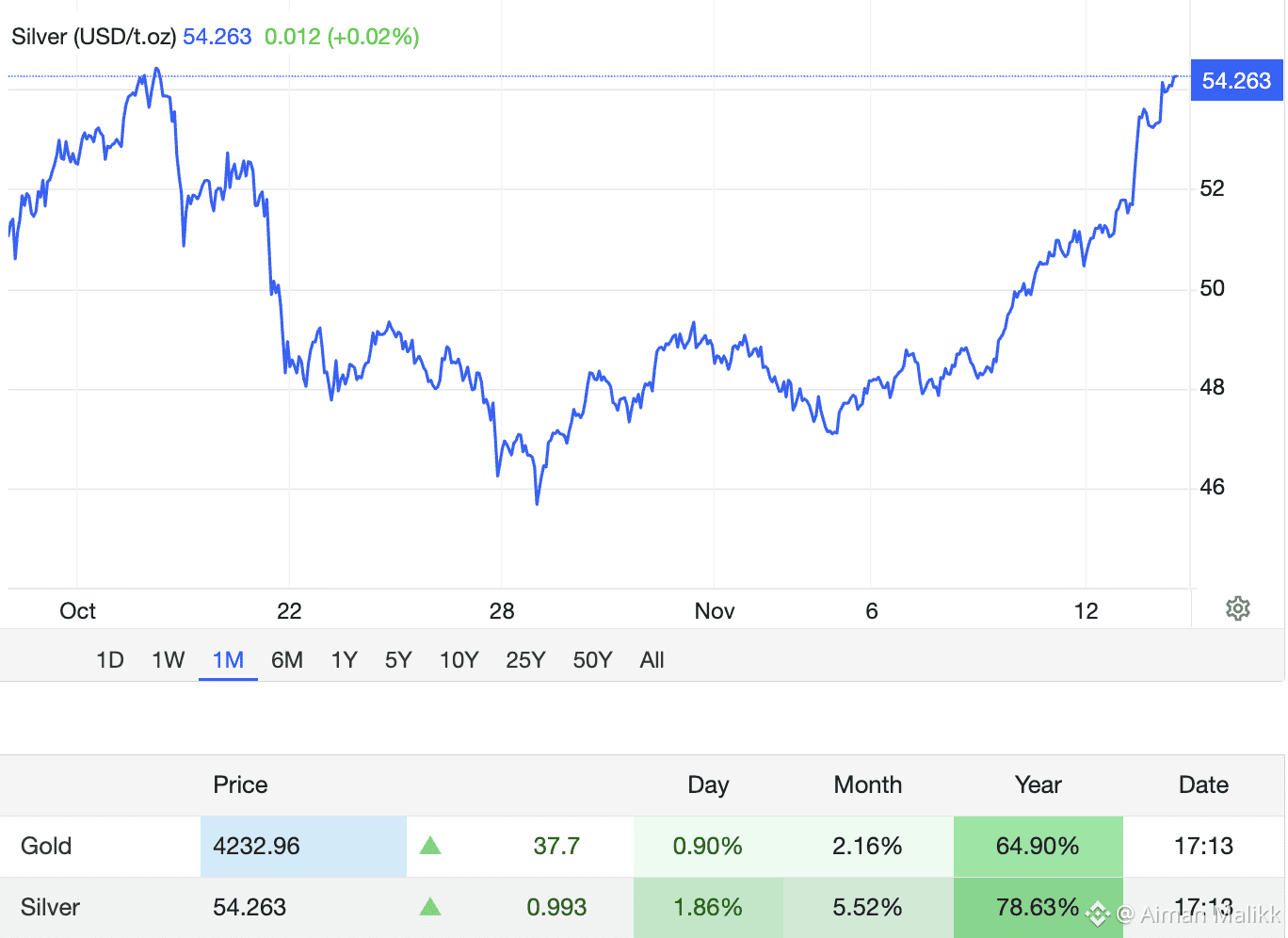
The performance of silver in 2025 has been nothing short of remarkable. Starting the year at roughly thirty dollars per ounce, the metal has gained around one hundred sixty percent, far outpacing gold, which rose about seventy percent over the same period. The rally has been driven by a combination of strong industrial demand and financial factors. Silver’s use in solar panels, electric vehicles, artificial intelligence data centers, and electronics has created structural deficits that have persisted for five consecutive years. This supply-demand imbalance has been further amplified by investments flowing through ETFs, central bank purchases, and a weaker dollar fueled by Federal Reserve rate cuts, all of which have contributed to negative real yields and heightened the appeal of tangible assets.
In contrast, cryptocurrency markets have not shared silver’s stellar trajectory. Bitcoin, the bellwether of digital assets, has hovered between eighty-seven thousand and ninety thousand dollars, struggling to sustain levels above ninety thousand. Despite earlier highs near one hundred twenty-six thousand dollars, Bitcoin has seen little net gain this year and has underperformed silver by a wide margin. While crypto continues to benefit from growing institutional adoption and ETF inflows, it has been trading more like a high-beta risk asset, sensitive to liquidity swings and profit-taking pressures.
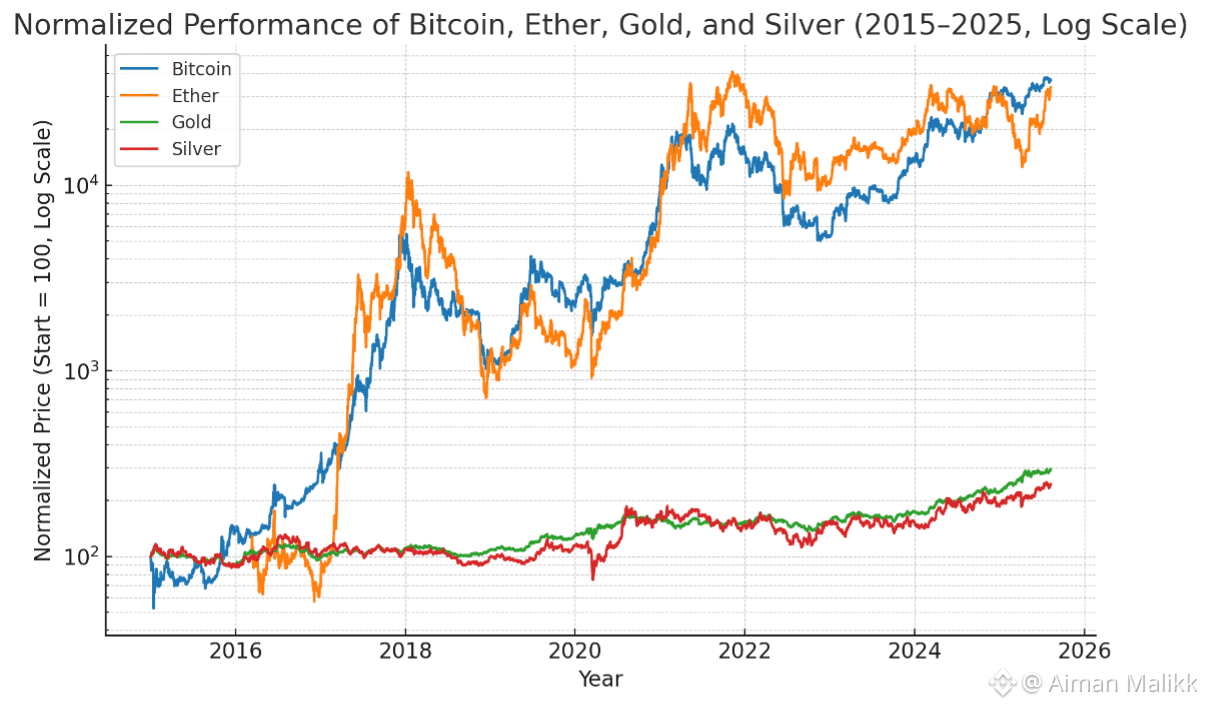
This divergence between precious metals and cryptocurrencies points to a notable shift in investor behavior. Many are rotating capital into hard assets that have tangible industrial utility and intrinsic scarcity. Silver, with its real-world applications and limited supply, is capturing investor attention in a way that digital assets, even Bitcoin with its capped twenty-one million supply, cannot fully replicate. The rally demonstrates how supply constraints and industrial demand can drive dramatic price moves, offering lessons for investors accustomed to the volatility of digital markets.
Looking ahead to 2026, some analysts speculate that capital may flow back into cryptocurrencies if risk appetite returns and new catalysts emerge. However, for the moment, silver’s surge serves as a reminder that diversification into physical commodities can act as an effective hedge against market volatility. As the year closes, both silver and Bitcoin remain poised for further swings, with silver eyeing additional gains fueled by continued industrial demand, and Bitcoin in need of fresh momentum beyond regulatory optimism to reclaim its leadership in market attention.
For investors, the lesson is clear: balancing digital assets with real-world commodities may provide stability in a landscape defined by extreme price movements and changing market narratives.