


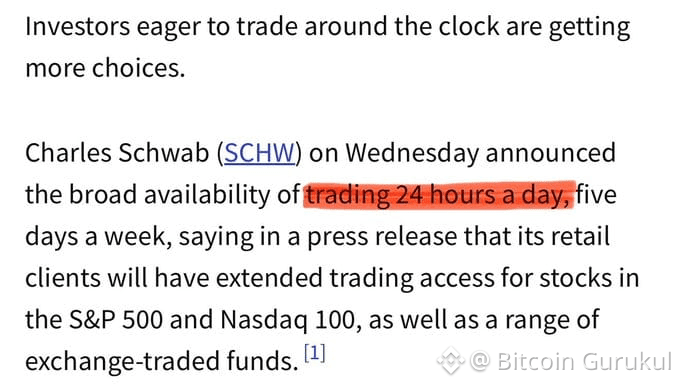
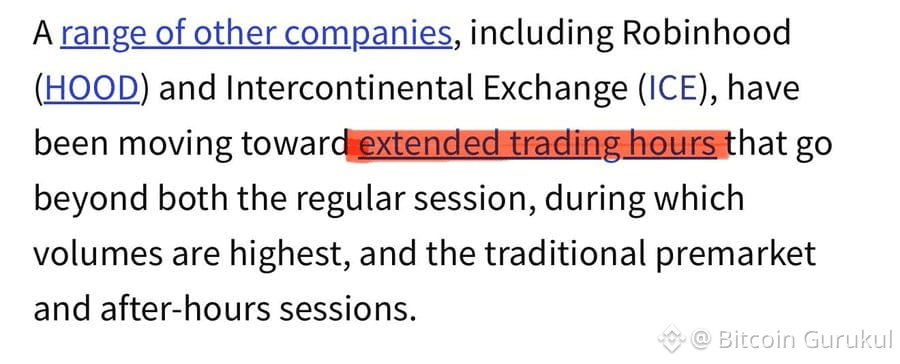
Charles Schwab (SCHW) just dropped major news that's about to reshape how Americans invest. Starting this week, their retail clients can now trade stocks around the clock—24 hours a day, five days a week. The announcement confirms that investors will have extended access to trade S&P 500 and Nasdaq 100 stocks, plus a variety of exchange-traded funds.
Sounds incredible, right? More freedom, more opportunities, more control over your money.
But here's what Wall Street isn't telling you.
The Promise vs. The Reality
On the surface, this feels like a win for everyday investors. You work late? No problem. Inspiration hits at 2 AM? Jump in. News breaks overseas while you're awake? You can react instantly.
But there's a darker side to this convenience that nobody wants to talk about.
What We Can Learn From Crypto Markets
If you've ever traded cryptocurrency, you already know what's coming. Crypto has operated 24/7 since day one, and the results speak for themselves—it's exhausting, unpredictable, and designed to drain retail traders.
Here's why traditional stock markets had scheduled hours in the first place: forced downtime protects investors.
When markets close, several things happen that actually work in your favor:
Liquidity stabilizes and resets
Traders step away and avoid emotional decisions
Leverage positions get evaluated with fresh eyes
Everyone operates on the same schedule
That protective barrier is about to disappear.
The Hidden Dangers of Always-On Trading
Let's get real about what 24/7 trading actually means for regular investors:
Institutions never sleep. Market makers never sleep. Algorithms never sleep.
But you do. And that's exactly the advantage they're counting on.
Here's What Happens When Markets Never Close:
Liquidity dries up overnight. During off-peak hours, fewer people are trading. When there are fewer buyers and sellers, prices become easier to manipulate. Large players can move stocks with smaller amounts of money.
Spreads widen dramatically. The difference between buying and selling prices grows when volume is thin. You'll pay more to enter positions and get less when you exit.
Stop-loss hunting intensifies. Professional traders know exactly where retail investors place their automatic sell orders. In low-volume periods, they can trigger these stops intentionally, forcing you out of good positions before prices recover.
News drops at strategic times. Ever wonder why major announcements sometimes happen at odd hours? In a 24/7 market, news can be released when retail investors are least prepared to respond.
You can't monitor everything. Even if you wanted to, you can't watch charts while you're sleeping, working, or living your life. Institutional traders have teams working in shifts. You don't.
The Emotional Toll Nobody Mentions
Crypto traders understand this pain intimately. The constant price action creates anxiety, FOMO (fear of missing out), and decision fatigue. You feel like you always need to be watching, always ready to act.
That's not investing. That's stress.
When stocks adopt this model, millions of investors who've never experienced this pressure are about to feel it for the first time.
Why This Benefits Wall Street, Not Main Street
Let's be honest about who this really helps.
Extended trading hours don't create new demand for stocks. They don't make companies more valuable. They don't improve the economy.
What they DO create is more opportunities for sophisticated players to trade against less-informed investors.
Institutional advantages in 24/7 markets:
Professional risk management teams operating in shifts
Algorithms that execute strategies while humans sleep
Direct market access with better prices and faster execution
Advanced tools for monitoring global markets continuously
Resources to hedge positions instantly as conditions change
What retail investors get:
More hours to make emotional mistakes
Increased pressure to constantly check positions
Higher costs from wider spreads during thin trading
Greater risk of being caught off-guard by overnight moves
The playing field isn't level. This change tilts it even further.
What This Means for Your Investment Strategy
If you're a long-term investor focused on building wealth steadily, this development might not affect you much—assuming you can resist the temptation to overtrade.
But if you're actively managing positions, using leverage, or trying to time the market, your life just got significantly more complicated.
Practical Steps to Protect Yourself:
Set clear boundaries. Decide specific times you'll check your portfolio and stick to them. Don't let 24/7 access turn into 24/7 obsession.
Use limit orders carefully. In thin overnight markets, market orders can execute at terrible prices. Always specify the price you're willing to accept.
Avoid trading during off-hours. Unless you have a compelling reason, stick to regular trading hours when liquidity is strongest.
Increase your position size awareness. Larger positions become riskier when markets never close because adverse moves can happen while you're unavailable to respond.
Consider longer time horizons. The shorter your trading timeframe, the more this change will hurt you. Longer-term strategies naturally insulate you from intraday volatility.
The Bigger Picture
This announcement from Charles Schwab won't be the last. Other brokers will follow. The pressure to offer 24/7 access will become industry standard.
We're witnessing a fundamental transformation in how stock markets operate. This isn't just a new feature—it's a complete restructuring of the investing landscape.
The question isn't whether this will affect you. It's whether you'll adapt wisely or become another casualty of always-on markets.
More trading hours don't equal more opportunity. They equal more ways to lose focus, make mistakes, and get taken advantage of by better-equipped players.
Don't mistake access for advantage.
Final Thoughts
Progress isn't always what it seems. Sometimes what's marketed as investor empowerment is actually investor extraction in disguise.
The stock market survived and thrived for decades with limited trading hours. There's a reason for that. Those boundaries protected regular people from their own worst impulses and from predatory practices that thrive in the shadows.
As those boundaries dissolve, you'll need to create your own.
Stay disciplined. Stay informed. And whatever you do, don't let the market convince you that you need to be engaged every hour of every day.
Your financial future depends on smart decisions, not constant activity.
The markets may never sleep now, but that doesn't mean you shouldn't.