
Când oamenii discută despre „delistare” de tokenuri sau monede pe o bursă de criptomonede, aceasta poate însemna lucruri diferite și este important să cunoaștem distincția pentru a evita confuzia.
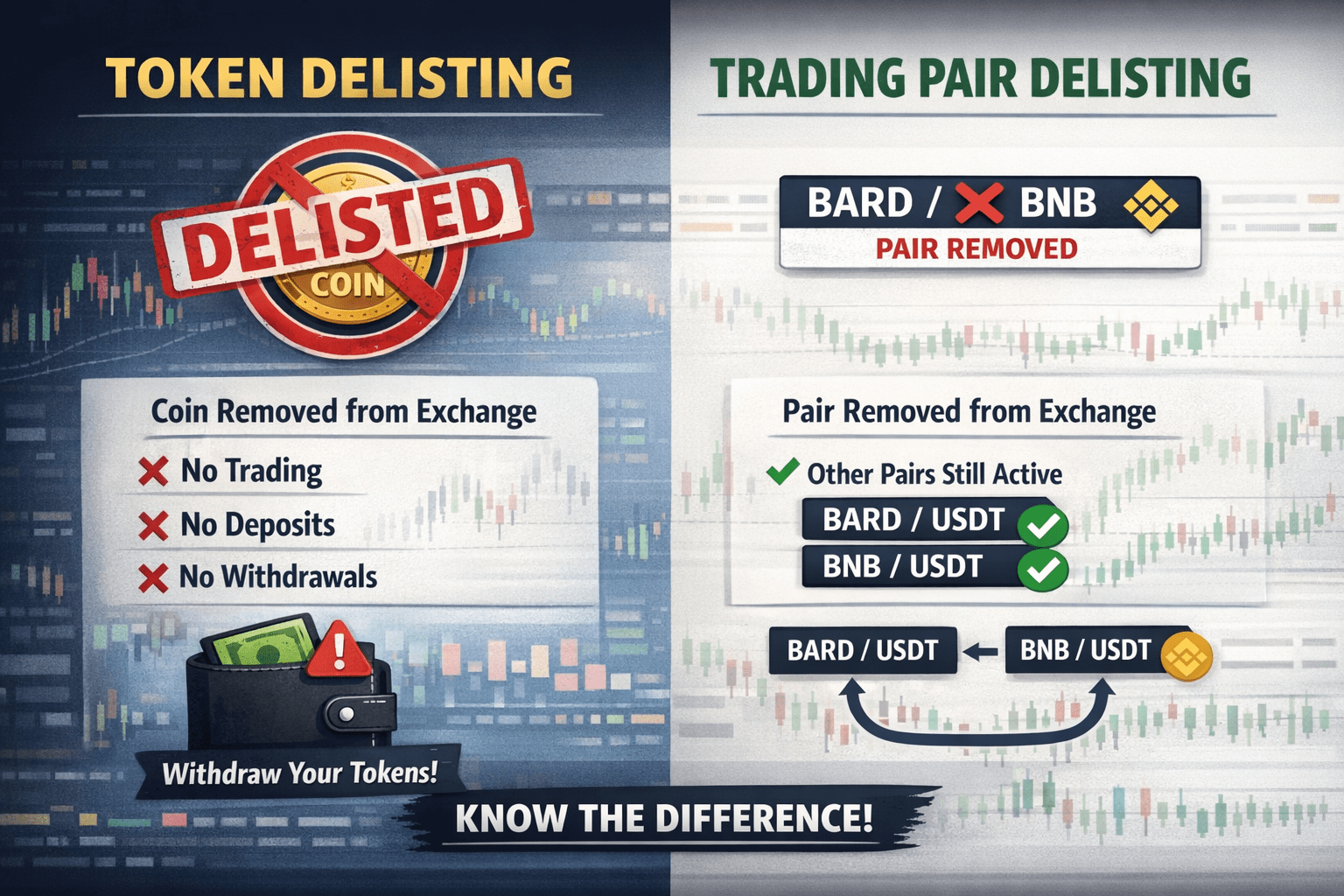
#delisting un token sau o monedă înseamnă că bursa îndepărtează complet acea criptomonedă de pe platforma sa. În practică, tokenul nu mai este disponibil pentru #trading , #Deposits sau #withdrawals pe acea bursă. Acest lucru se întâmplă de obicei dacă proiectul este inactiv, se confruntă cu probleme de reglementare sau tokenul nu îndeplinește standardele de listare ale bursei. Odată ce a fost delistat, utilizatorii care dețin acel token pe bursă trebuie să acționeze rapid pentru a-l retrage înainte ca accesul să fie restricționat sau suspendat.
Pe de altă parte, delistarea unei perechi de tranzacționare—precum BARD/BNB—înseamnă că schimbul oprește permiterea tranzacțiilor între cele două tokenuri specifice, dar tokenurile în sine rămân listate pe platformă. Utilizatorii pot continua să tranzacționeze aceste tokenuri în alte perechi disponibile, cum ar fi BARD/USDT sau BNB/USDT. Acest lucru se întâmplă de obicei când o pereche de tranzacționare are un volum sau lichiditate scăzută, făcându-l ineficient pentru schimb să suporte.
Pe scurt, delistarea unui token îndepărtează întreaga monedă de pe schimb, în timp ce delistarea unei perechi de tranzacționare îndepărtează doar o modalitate de a tranzacționa între două monede, menținând tokenurile active în alte perechi. Cunoașterea diferenței ajută comercianții să evite surprizele în opțiunile lor de tranzacționare.