
I've launched products in crypto long enough to know the playbook. You time major releases for bull markets when attention is highest, liquidity is flowing, and everything you ship gets amplified by momentum. Launch during bear markets or consolidation and your product gets ignored no matter how good it is. Marketing 101 says you maximize launch impact by releasing when markets are receptive, not when everyone's looking away.
Dusk launched DuskEVM mainnet in the second week of January during one of the quietest periods I've seen in months. No major market catalyst. Bitcoin consolidating. Altcoins bleeding. Retail attention at lows. Every growth metric suggesting you should delay launch until conditions improve. Yet Dusk shipped anyway, and I keep asking myself: why would anyone deliberately launch critical infrastructure when nobody's paying attention?
Dusk sits at $0.1377 today, down 15.47% with RSI at 32.53 deep in oversold territory. Volume crashed to 8.93 million USDT from 14.39 million yesterday. The 24-hour range from $0.1650 to $0.1339 shows continued selling pressure with no clear bottom. MACD negative at -0.0062, EMA(20) at 0.1668 well above current price. Every indicator screams this is terrible timing for product launches that need attention and adoption.
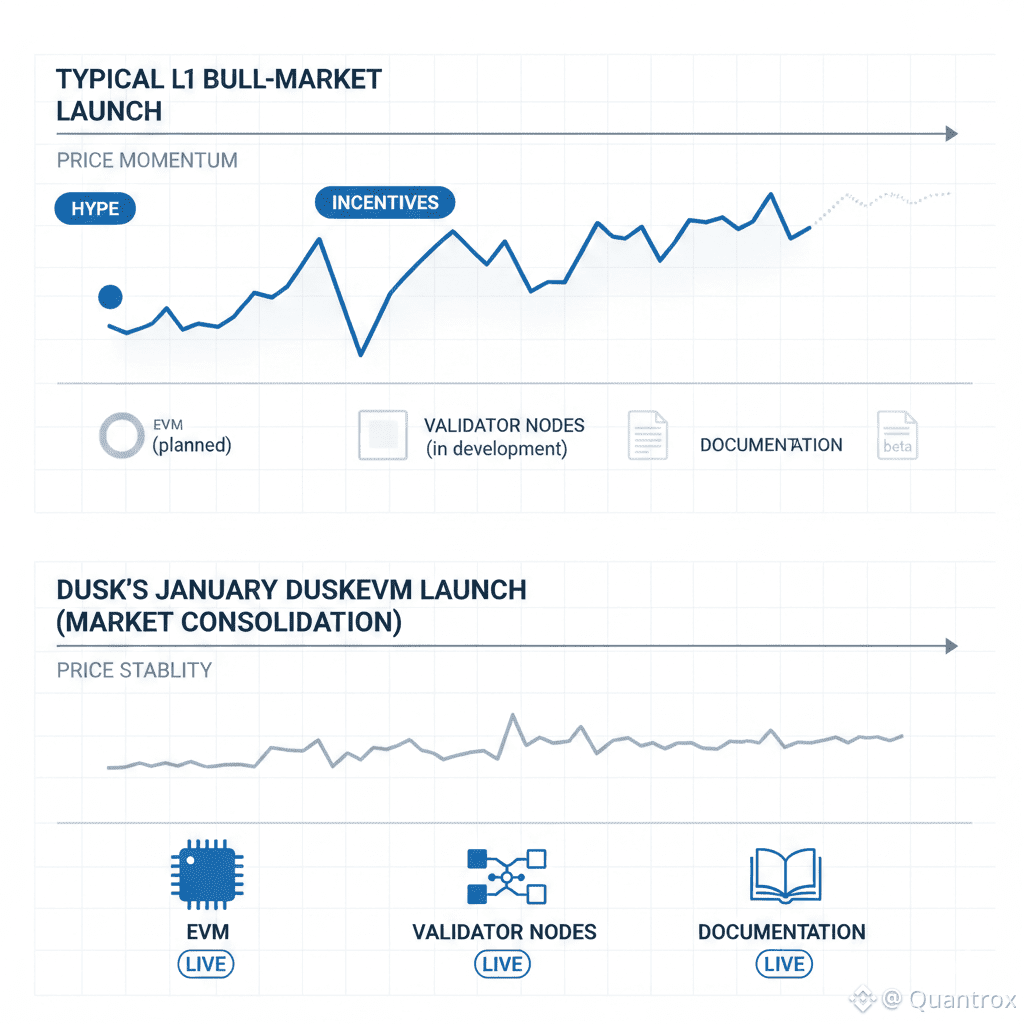
Most projects would postpone. Wait for better market conditions. Build anticipation. Launch when momentum could carry adoption. That's rational strategy that maximizes chances of success. Dusk ignored all of that and shipped DuskEVM during what might be the worst possible market window.
Either the team fundamentally misunderstands product launch strategy, or the target audience for DuskEVM doesn't care about crypto market conditions at all.
My gut says it's the second one, and that reveals something important about who Dusk is actually building for.
Retail users absolutely care about market conditions. They show up during pumps, participate in hype cycles, ape into new launches when everything's green. They disappear during drawdowns, ignore new releases when charts look bad, wait for "better entry points" that often never come. Timing launches for retail means waiting for bull market conditions when attention is maximum.
But institutions operate on entirely different timelines. You care whether the technology works, whether regulators approve it, whether it integrates with existing systems.
Dusk launching DuskEVM in January during terrible market conditions suggests they're building for institutions on regulatory timelines, not retail on speculation timelines. NPEX doesn't delay DuskTrade integration because Dusk token is down 15%. They delay if technical issues emerge or regulators raise concerns. Market sentiment is irrelevant to their decision making.
That explains why DuskEVM shipped when it did despite awful timing from a retail perspective. The institutions evaluating Dusk need EVM compatibility operational so they can test integration with their systems. Waiting three months for better market conditions means delaying institutional testing by three months, which pushes DuskTrade launch timeline back, which delays revenue generation.
From that perspective, launching DuskEVM in January makes perfect sense even though retail attention is minimal. The target users—developers building for institutional finance, institutions testing integration, partners preparing for DuskTrade—don't need hype. They need working infrastructure they can evaluate technically.
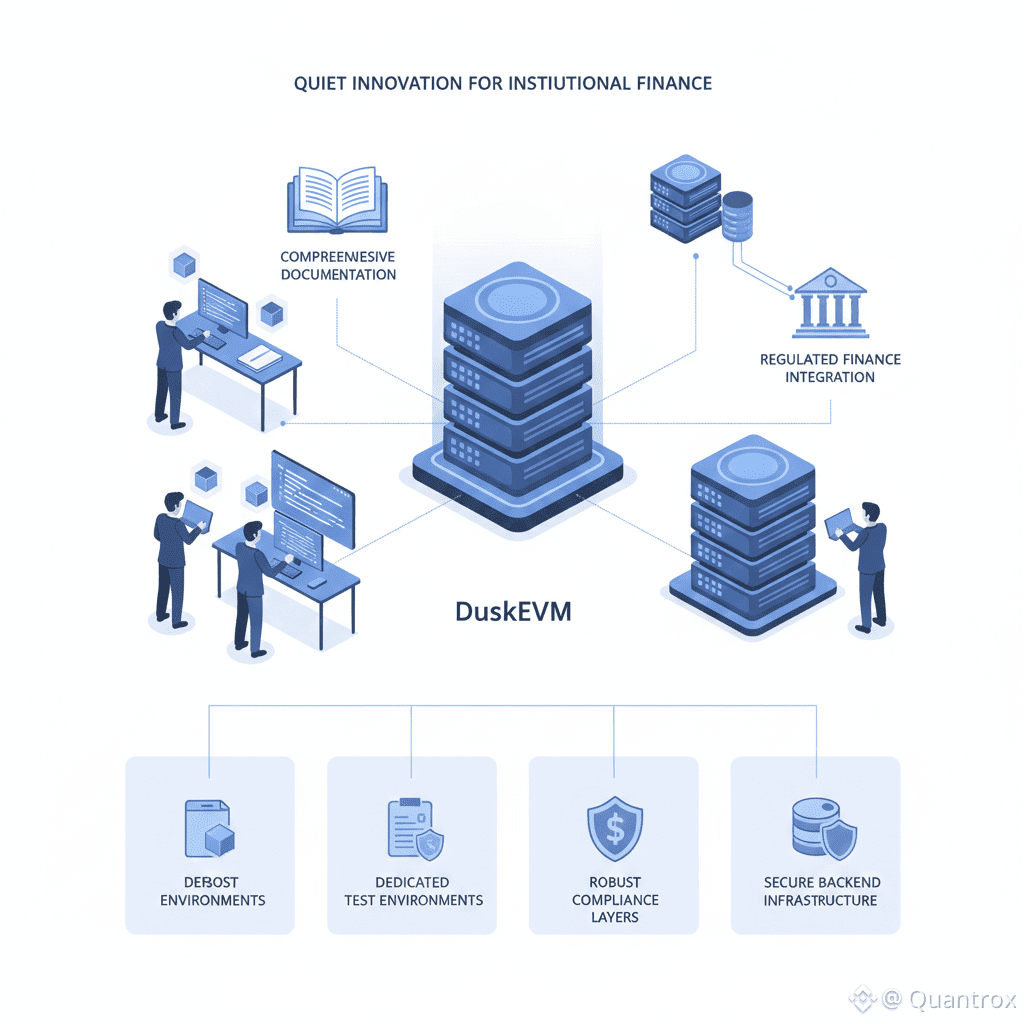
What caught my attention is how Dusk communicated the DuskEVM launch. No massive marketing push. No influencer campaigns. No airdrop announcements or incentive programs to drive retail attention. Just technical documentation, integration guides, and developer resources. That's how you launch infrastructure for serious users, not how you launch tokens for speculators.
The contrast with how most L1s launch products is stark. Typical pattern is teaser campaigns weeks in advance, partnerships announced for credibility, incentive programs to drive initial usage, aggressive marketing to maximize attention. Launch becomes a media event designed to pump token price as much as ship technology.
Dusk did almost none of that with DuskEVM. They announced it, shipped it, documented it, moved on. Like they were checking a box on a project timeline rather than trying to create market momentum. That approach only makes sense if you don't need retail attention to succeed.
Maybe I'm reading too much into launch timing and marketing strategy. Could be the team just isn't good at retail marketing and launched when ready without thinking about optimal market conditions. Could be resources were limited so they skipped expensive campaigns. Could be they're focused on building and don't care about short-term attention metrics.
But here's what doesn't fit those explanations. Chainlink integrated CCIP with Dusk right around the DuskEVM launch. That's not coincidence. Cross-chain interoperability for tokenized securities moving between chains requires EVM compatibility operational first. The timing suggests coordinated infrastructure rollout for specific use cases, not random product releases when development finishes.
Hedger Alpha going live on DuskEVM for confidential transactions adds another piece. You can't test privacy-preserving DeFi until the EVM layer exists to deploy contracts. Institutions evaluating whether Dusk's privacy model works for their use cases need Hedger operational so they can run actual tests with real contracts, not just read whitepapers about theoretical capabilities.
The developer activity on DuskEVM despite terrible market conditions supports this interpretation. Contracts being deployed aren't retail DeFi forks hoping to capture speculation. They're complex systems with proper architecture that takes weeks to build. Those developers started building before or immediately after launch, which means they were waiting for DuskEVM specifically, not just deploying to whatever chain is pumping.
Dusk's current price at $0.1377 reflects retail sentiment, which is terrible right now. But institutional evaluation doesn't stop because retail is bearish. If anything, quiet periods are better for serious technical evaluation without distraction from speculation and noise.
Time will tell whether launching DuskEVM during awful market conditions was brilliant strategy targeting the right users or misguided timing that cost them retail adoption momentum. For now, the infrastructure is live, developers are building, and institutions can evaluate integration. That's either exactly what Dusk needed or completely insufficient for success.
The answer depends on whether you believe Dusk succeeds through retail speculation or institutional adoption. Launch timing suggests the team believes it's the latter, even if that means ignoring everything conventional crypto marketing says about optimal release windows. Either they're right and most projects waste resources chasing retail attention, or they're wrong and just cost themselves critical early momentum.
Dusk operators keep running infrastructure regardless. DuskEVM processes transactions regardless. Market conditions at $0.1377 with 15% daily losses don't change whether the technology works for institutional use cases. That's the bet being made through launch timing that defies conventional wisdom. Whether it pays off won't be clear until DuskTrade launches in 2026 and we see if institutions actually show up.
