$RIVER 📉 Un semnal pe care investitorii globali nu ar trebui să-l ignore
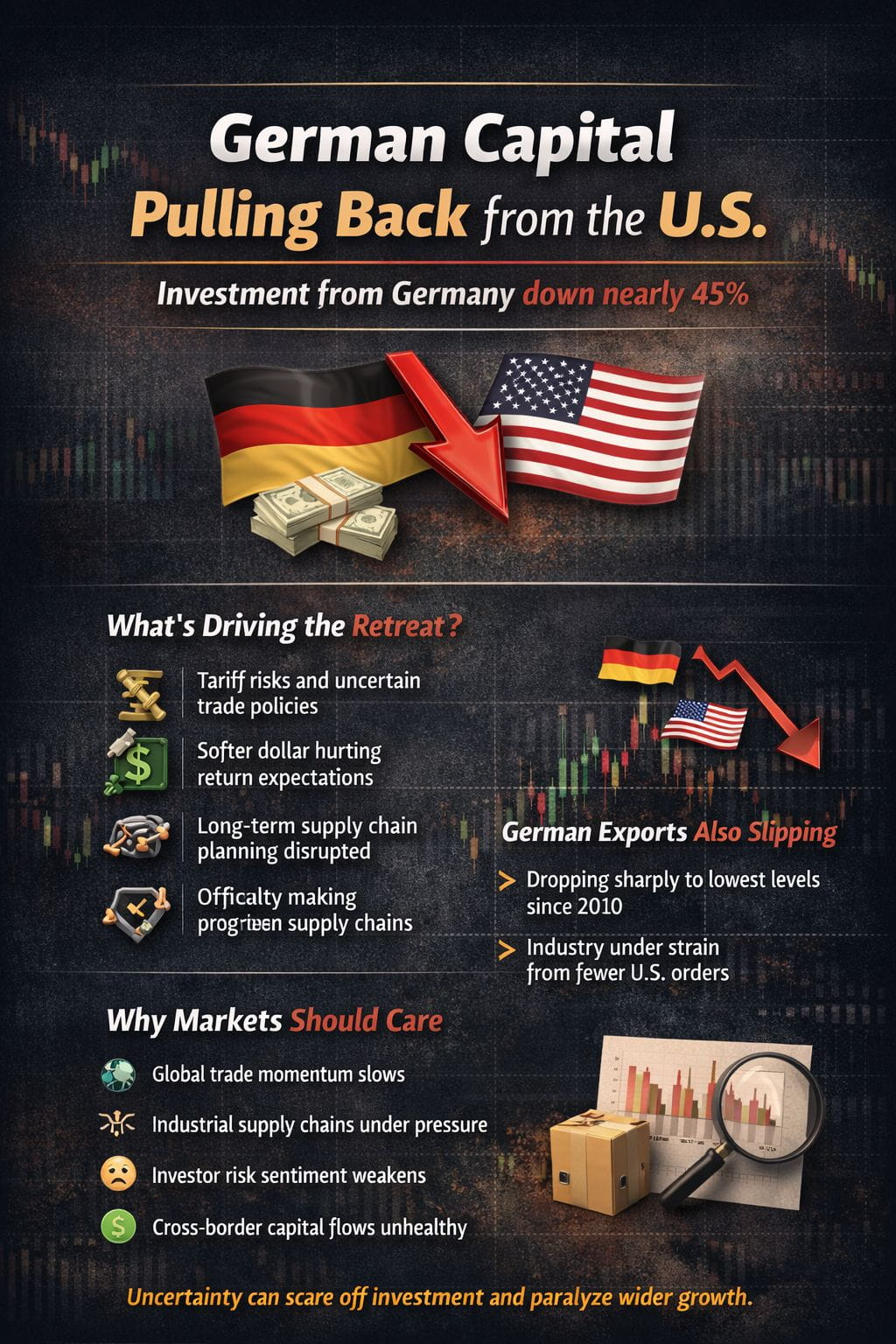
Fluxurile de investiții din Germania către Statele Unite au scăzut brusc — cu aproape 45% mai puțin comparativ cu nivelurile anterioare din actualul ciclu politic din SUA. Acest tip de declin este rar și semnificativ.
Aceasta nu este doar o încetinire normală.
Reflectă o pierdere a încrederii.
🔍 Ce se află în spatele schimbării?
Companiile germane și investitorii instituționali devin mai precauți în ceea ce privește angajarea capitalului în SUA. Principalele îngrijorări includ:
Riscuri continue de tarif și tensiuni comerciale
Politicile comerciale neclare și care se schimbă frecvent
Un dolar american mai slab reduce potențialele randamente
Dificultăți în a lua decizii pe termen lung privind lanțul de aprovizionare
Din cauza acestei incertitudini, multe companii își amână proiectele, reduc investițiile sau renunță complet la planurile de expansiune în SUA.
📦 Exporturile slăbesc și ele
Încetinirea nu este limitată la investiții.
Exporturile germane către SUA au scăzut vizibil
Declinul este cel mai abrupt observat din jurul anului 2010
Pe teren în Germania, impactul este deja vizibil:
Comenzile din fabrici încetinesc
Lanțurile de aprovizionare sunt sub presiune
Încrederea în afaceri se răcește
Atunci când atât exporturile, cât și investițiile străine se retrag în același timp, de obicei indică îngrijorări structurale mai profunde — nu doar un ciclu temporar.
🌍 De ce este important pentru piețele globale
Germania este cea mai mare economie din Europa și o piatră de temelie a producției globale. Când capitalul german începe să se retragă:
Creșterea comerțului global își pierde avântul
Lanțurile de aprovizionare industriale se confruntă cu perturbări
Apetitul investitorilor pentru risc slăbește
Capitalul transfrontalier devine mai prudent
Piețele acordă atenție atunci când Germania își schimbă direcția — și de obicei ar trebui.
🧠 Mesajul mai mare
Această tendință subliniază o realitate mai largă:
Conflictele comerciale nu doar că afectează concurenții din străinătate
Incertitudinea descurajează investițiile pe termen lung
Capitalul evită instabilitatea mai repede decât urmărește oportunitățile
Dacă incertitudinea persistă, efectele economice în lanț ar putea extinde bine dincolo de Germania și Statele Unite.
👉 Punctele cheie pentru investitori și comercianți
Urmăriți fluxurile de investiții străine, nu doar titlurile politice
Incertitudinea comercială este de obicei negativă pentru alocarea capitalului
Încrederea tinde să se destrame înainte ca datele privind PIB-ul să o reflecte
📉 Stresul la nivel macro se acumulează adesea în liniște — până când nu o mai face. 👀