
Chainlink (LINK): Arhitectul Tăcut al Nouului Sistem Financiar
În lumea zgomotoasă și adesea haotică a cripto, unde monedele meme apar și dispar în câteva zile, este ușor să treci cu vederea giganții care construiesc în tăcere fundația viitorului. În timp ce toate privirile au fost îndreptate asupra ultimei creșteri, Chainlink (LINK) și-a consolidat constant poziția ca fiind cea mai critică piesă de infrastructură în întregul ecosistem blockchain. Tendința sa recentă de creștere nu este doar zgomot; este un semnal că piața se trezește la valoarea imensă a conectării datelor din întreaga lume.
Chainlink nu este doar un alt token; este rețeaua de oracle descentralizată care permite contractelor inteligente de pe orice blockchain să interacționeze în siguranță cu date reale și sisteme externe. Gândiți-vă la el ca la podul dintre insula digitală a cripto și vasta continentă a economiei globale tradiționale.
Autostrada Cross-Chain: Rezolvarea celei mai mari probleme a criptomonedelor
De ani de zile, spațiul blockchain a fost fragmentat. Ethereum, Solana, Avalanche — toate sunt insule izolate cu propriile reguli și active. Mutarea valorii sau a datelor între ele a fost stângace, costisitoare și adesea nesigură. Aici intervine Protocolul de Interoperabilitate Cross-Chain (CCIP) al Chainlink, un schimbător de jocuri care a fost în sfârșit deblocat.
CCIP este ca protocolul TCP/IP al internetului pentru blockchain-uri. Permite dezvoltatorilor să construiască aplicații care pot trimite fără probleme mesaje, transfera token-uri și declanșa acțiuni între mai multe lanțuri. Nu este vorba doar despre confort; este vorba despre crearea unui strat global de lichiditate unificat.
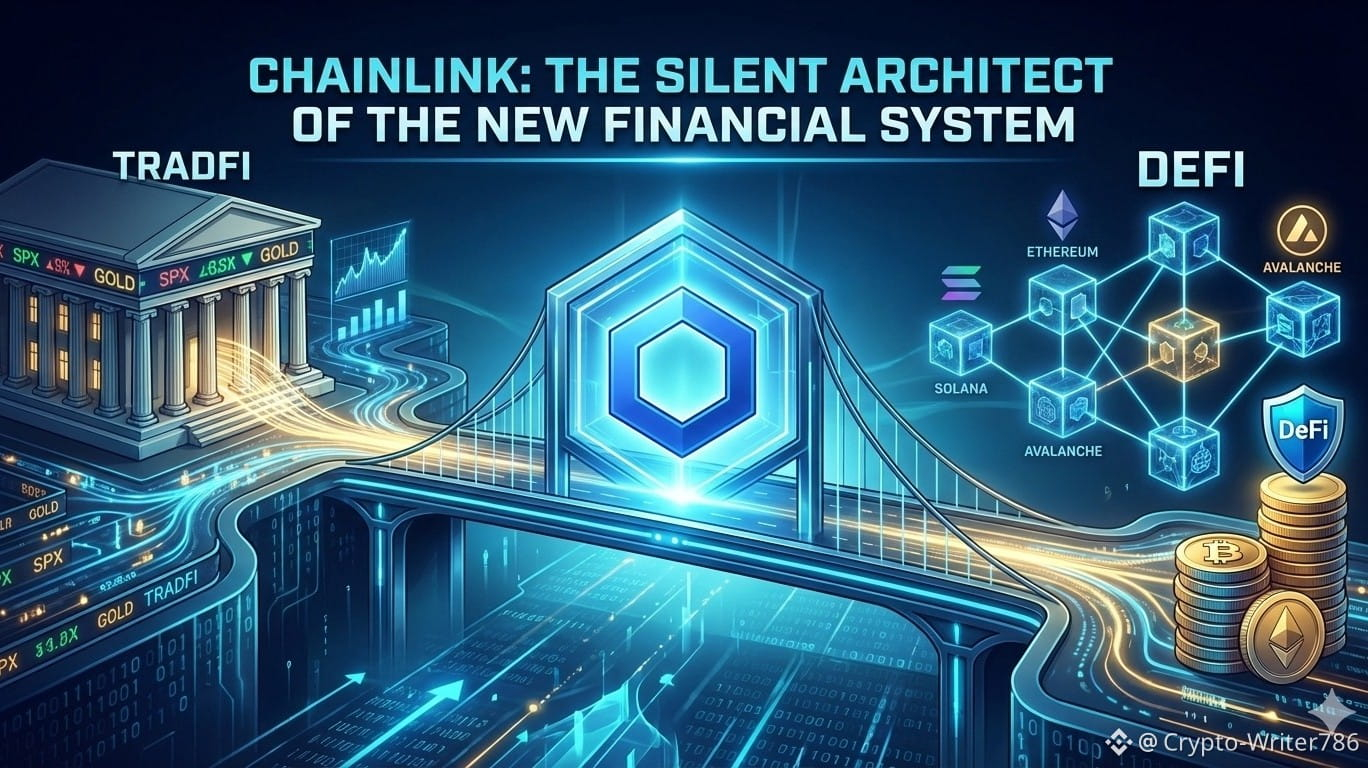
Imaginea de mai sus ilustrează perfect acest concept: Chainlink acționând ca un pod robust și sigur care conectează diferite lumi blockchain, permițând un flux liber de valoare și informații care anterior era imposibil.
Oportunitatea de Trilioane de Dolari
Cea mai semnificativă tendință care conduce momentum-ul Chainlink este convergența inevitabilă a finanțelor tradiționale (TradFi) și a finanțelor descentralizate (DeFi). Instituțiile financiare globale majore nu mai urmăresc doar din margini; ele construiesc activ pe blockchain. Scopul lor? Să tokenizareze activele din lumea reală (RWAs) precum acțiuni, obligațiuni și imobiliare.
Pentru a face acest lucru în siguranță, au nevoie de o modalitate fiabilă de a aduce date off-chain — cum ar fi prețurile acțiunilor, ratele dobânzilor și datele meteorologice — pe blockchain. Chainlink este standardul din industrie pentru aceasta. Rețelele sale de oracle descentralizate au securizat deja zeci de miliarde de dolari în valoare în ecosistemul DeFi, dovedindu-și fiabilitatea și securitatea. Pe măsură ce trilioane de dolari de active din lumea reală se mută pe blockchain, Chainlink va fi infrastructura critică care va alimenta această migrație.
După cum este arătat mai sus, Chainlink ia date financiare din lumea reală din surse tradiționale și le livrează în siguranță la diverse aplicații DeFi, permițându-le să funcționeze corect. Fără această legătură, întreaga premisă a tokenizării RWAs se destramă.
Jocul pe termen lung
Deși acțiunea prețului pe termen scurt poate fi interesantă, adevărata poveste a Chainlink este una de valoare fundamentală pe termen lung. Nu este o joacă speculativă; este o investiție în instalațiile de bază ale sistemului financiar viitor. Pe măsură ce mai multe blockchain-uri sunt lansate, mai multe aplicații sunt construite, iar mai multe active din lumea reală sunt tokenizate, cererea pentru serviciile Chainlink va crește. Într-o piață plină de zgomot, Chainlink este semnalul clar și incontestabil al unui viitor cripto matur, interconectat și axat pe utilitate.