Ethereum isn’t losing relevance. If anything, it’s more entrenched than ever. But over the last year, I’ve noticed something subtle in developer conversations. Not frustration, exactly — more like fatigue. Ethereum still does a lot of things well, but for certain applications, it’s starting to feel heavy. Fees don’t just fluctuate, they interrupt design decisions. AI logic feels bolted on rather than native. And once you need real-time interaction, everything starts to sprawl.
That’s where Vanar quietly enters the picture.
What’s interesting is that Vanar doesn’t ask developers to abandon what they already know. It stays EVM-compatible, which lowers the psychological barrier immediately. You’re not relearning everything from scratch. But once you look past that surface familiarity, it’s clear the stack was built with a different assumption: that applications won’t just execute transactions, they’ll interact constantly.
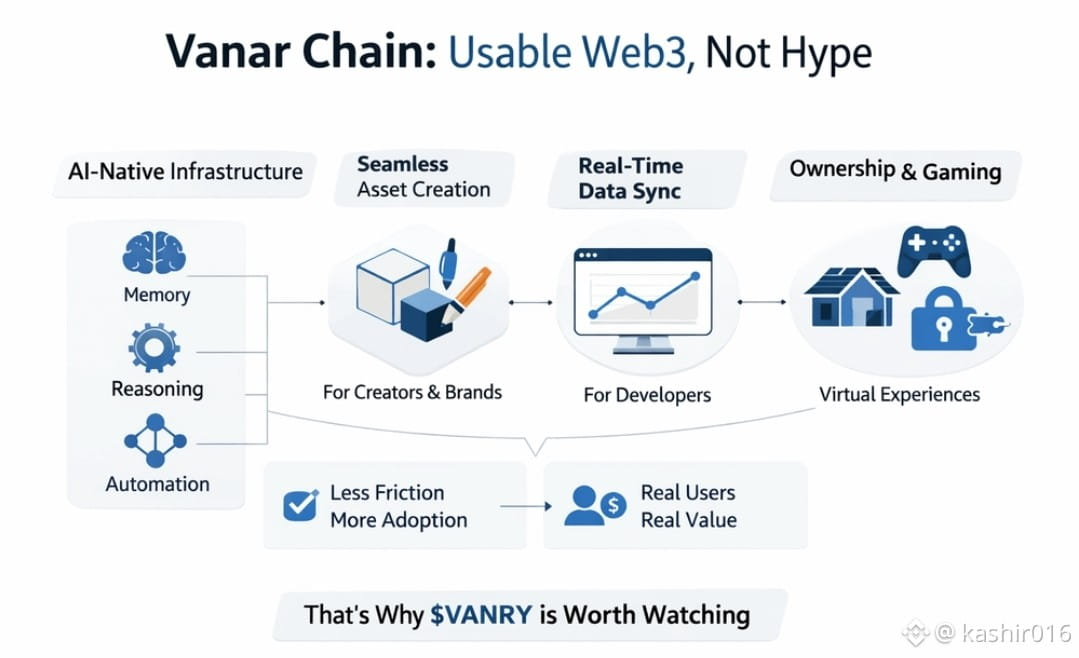
Memory, reasoning, automation — these aren’t treated as optional layers you glue on later. They’re part of the system’s spine. That changes how apps get designed. Instead of routing logic through off-chain services or stitching together tools to remember context, Vanar lets state and behavior live closer together. Things feel more continuous, less fragmented.
This matters most in environments where users don’t interact once and leave. Games, creator platforms, live experiences — these depend on flow. A small pause, an unexpected fee, or a delayed response isn’t a minor inconvenience. It breaks trust. Vanar seems tuned for that reality. Predictable behavior matters more here than raw flexibility, and the network leans into that trade-off.
What I also find notable is how consistency is treated as a design goal, not a side effect. Ethereum’s openness creates incredible composability, but it also means performance can vary depending on what else is happening. Vanar feels more opinionated. It sacrifices some breadth to keep execution steady. For certain applications, that’s not a weakness, it’s a requirement.
None of this needs the tired “Ethereum killer” framing. That narrative misses how infrastructure actually evolves. Ethereum remains the place where experimentation thrives. Vanar feels like a place where interaction-heavy apps can settle once they know what they need.
It’s less about ideology and more about fit. As Web3 apps start to behave more like real products people use every day, the underlying chains will need to support that rhythm. Vanar seems built with that future in mind.