

For years, the idea of play-to-earn has carried both promise and disappointment. It introduced a new way to think about gaming, where time spent could translate into real value. But in practice, many systems failed to hold up. Rewards were often misaligned, attracting short-term users and creating economies that could not sustain themselves.
Stacked, emerging from the Pixels ecosystem, feels like a response shaped by experience rather than theory.
The Core Problem: Incentives That Break Games
Most play-to-earn systems did not fail because of a lack of rewards. They failed because of how those rewards were structured.
When every player is treated the same, and every action is rewarded equally, the system quickly becomes inefficient. Players begin to optimize for extraction rather than engagement. Over time, this leads to inflation, reduced retention, and eventually, collapse.
The real challenge was never adding rewards. It was making sure those rewards actually made sense.
Stacked approaches this problem differently by focusing on incentive alignment instead of just reward distribution.
A Simple Experience, Powered by Complex Systems
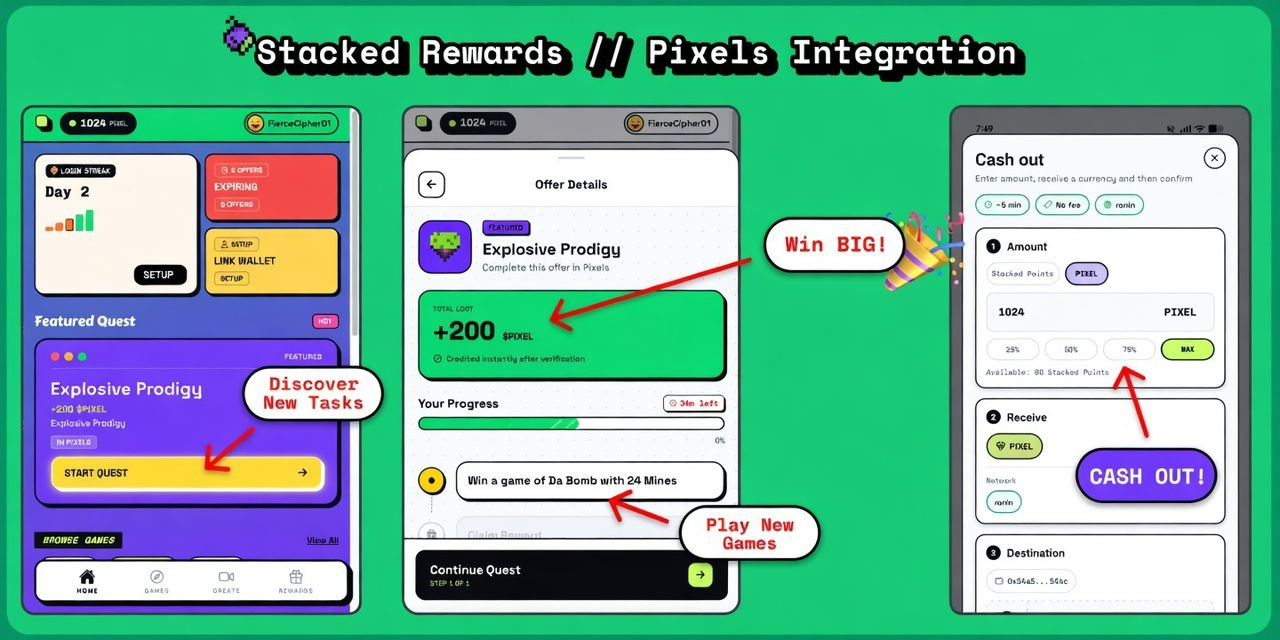
On the surface, Stacked is easy to understand. Players interact with one platform where they can play games, complete missions, build streaks, and earn rewards.
But underneath that simplicity lies a system designed to adapt.
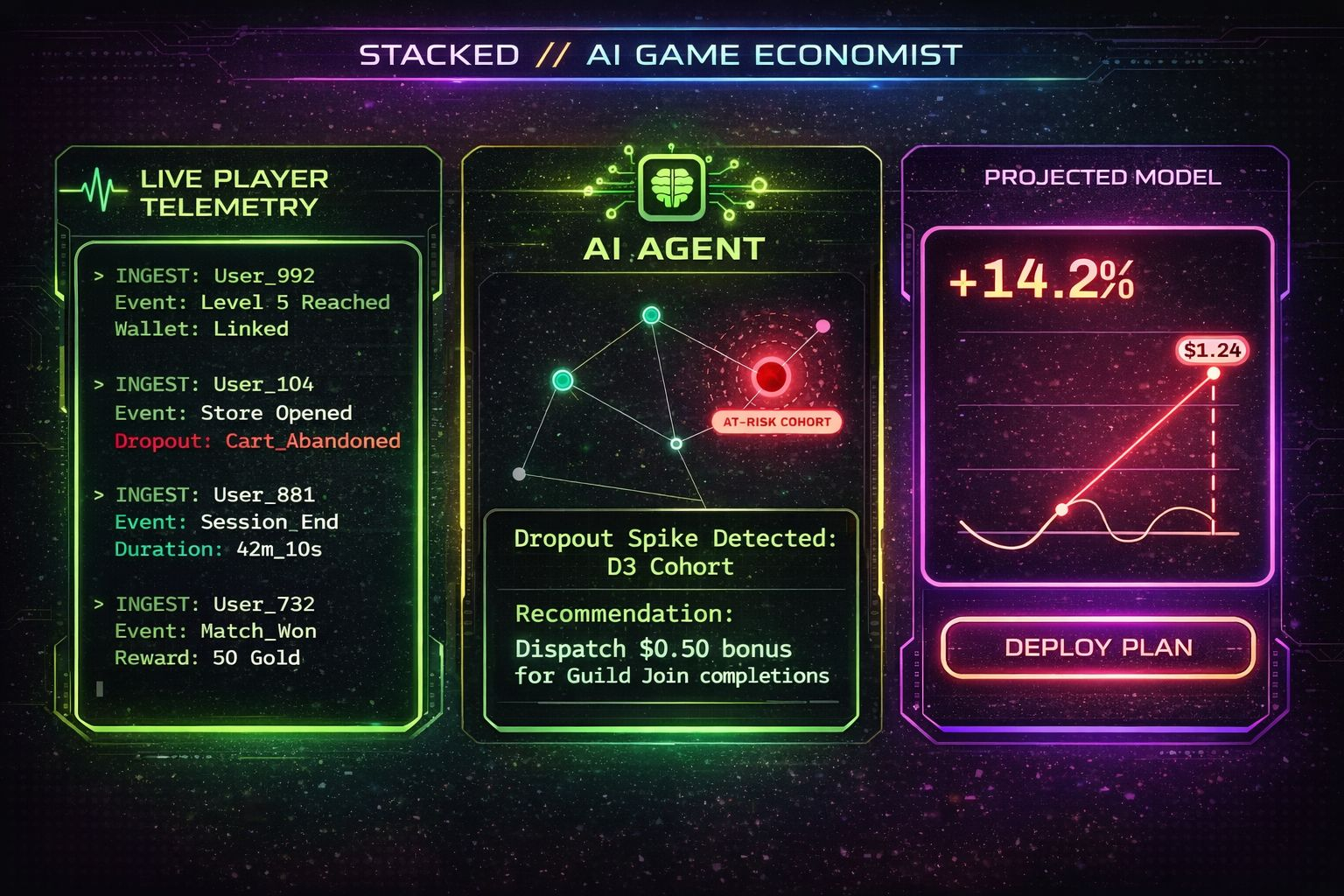
Instead of offering the same tasks to everyone, Stacked analyzes player behavior and adjusts rewards accordingly.
This means that:
Not every player sees the same mission
Not every action is rewarded equally
Rewards are tied to meaningful engagement
Rewards are no longer static. They evolve based on how players actually behave.
This shift turns rewards into a strategic layer rather than just an incentive.
From Isolated Games to a Connected Ecosystem
One of the most compelling aspects of Stacked is how it connects multiple games into a shared system.
With Pixels, Pixel Dungeons, Sleepagotchi, and Chubkins all integrated, players are no longer confined to a single experience. Their activity contributes to a broader network where progress and rewards carry across titles.
This creates a sense of continuity that has been missing in many Web3 ecosystems.
It stops feeling like separate games and starts feeling like a unified world.
Rethinking Sustainability in Play-to-Earn
Sustainability has always been the biggest challenge in play-to-earn. Systems that rely purely on token emissions tend to struggle over time.
Stacked introduces a different approach by focusing on return on reward spend. Instead of asking how much to distribute, it asks whether those rewards are actually driving value.
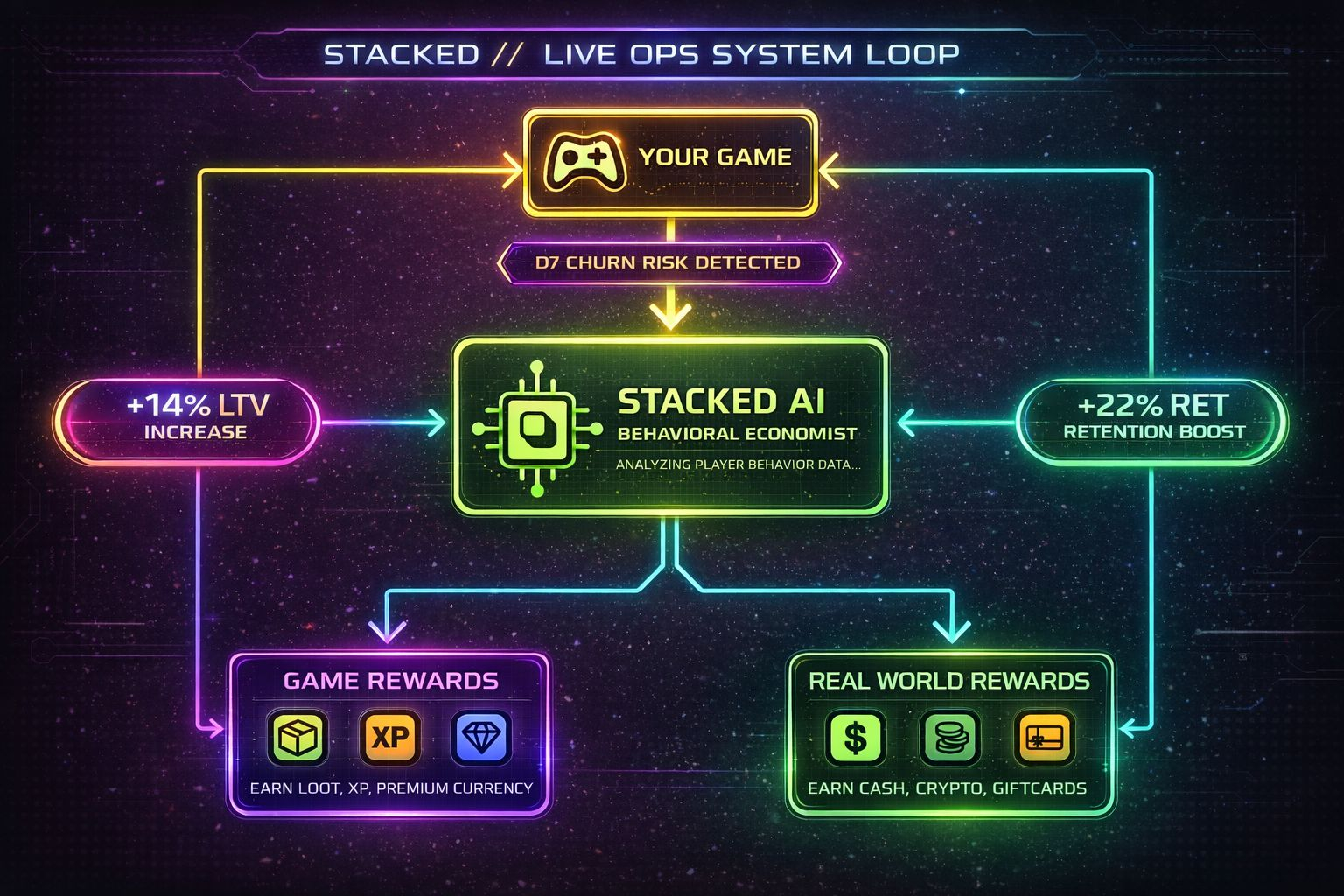
This creates a more balanced loop where:
Engagement leads to rewards
Rewards encourage meaningful behavior
Meaningful behavior supports the economy
The goal is not to give more rewards. The goal is to give better rewards.
Over time, this kind of system has the potential to create a healthier and more resilient ecosystem.
The Expanding Role of $PIXEL
As the ecosystem grows, the role of $PIXEL is also evolving.
Rather than being limited to a single game loop, it is becoming part of a broader system that includes staking, multiple reward types, and deeper integrations across experiences.
The introduction of additional reward formats, including more stable assets, also signals a move toward flexibility and long-term stability.
This is not just about one token anymore. It is about building an ecosystem where value can flow in different ways.
Built in the Real World, Not Just on Paper
One of the strongest aspects of Stacked is that it is not theoretical.
It has been developed through real usage, shaped by millions of players and continuous iteration within live environments. This gives it a level of practicality that many systems lack.
This is not a concept. It is a system that has already been tested and refined in production.
A Subtle but Important Shift
Stacked does not try to redefine play-to-earn overnight. Instead, it introduces a more thoughtful approach to rewards, one that prioritizes alignment, adaptability, and sustainability.
It moves away from simply rewarding activity and focuses on rewarding the right kind of activity.
And that shift might be what finally makes play-to-earn work.
Final Thoughts
The evolution of Web3 gaming will not come from bigger rewards or louder narratives. It will come from systems that understand players better and design incentives more carefully.
Stacked represents a step in that direction.
If it continues to develop at this pace, it may not just improve the Pixels ecosystem. It could quietly set a new standard for how rewards should work in games.