
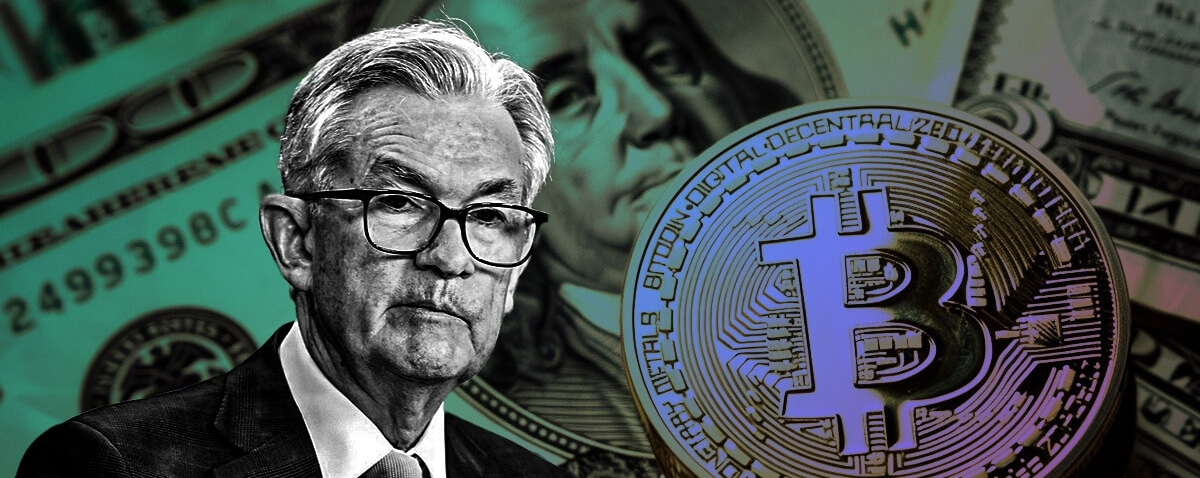
Fed crypto” usually refers to how the Federal Reserve affects or regulates crypto markets.
Right now, the biggest themes are:
Interest rates & Bitcoin
Higher Fed rates usually pressure crypto because liquidity tightens.
Expectations of future rate cuts tend to support Bitcoin and other risk assets. Analysts are still debating when meaningful cuts will happen.
Stablecoin regulation
The U.S. Senate is advancing the “Clarity Act,” a major crypto framework bill.
It includes AML/KYC rules, DeFi definitions, and restrictions on paying interest-like rewards for simply holding stablecoins.
Fed payment access for crypto firms
The Fed is considering limited payment-system access for some crypto and fintech companies.
Traditional banks are strongly opposing the move.
Tokenized securities
The Fed recently clarified that tokenized securities should generally be treated the same as traditional securities under capital rules.
Market impact
Crypto markets now react heavily to:
FOMC meetings
inflation data
unemployment reports
Fed liquidity policy
A simple relationship traders watch is:
Lower Fed Rates
⇒
Higher Liquidity
⇒
Stronger Crypto Risk Appetite
Lower Fed Rates⇒Higher Liquidity⇒Stronger Crypto Risk Appetite
Recent crypto-policy headlines:
What is in the US Senate's landmark crypto bill?
Reuters
What is in the US Senate's landmark crypto bill?
Today
Clarity Act Text Reveals Stablecoin Rules, Crypto Provisions Ahead Of Hearing
investors.com
Clarity Act Text Reveals Stablecoin Rules, Crypto Provisions Ahead Of Hearing
Today
BofA and Goldman push back Fed rate-cut expectations on inflation risks, jobs data
Reuters
BofA and Goldman push back Fed rate-cut expectations on inflation risks, jobs data
Yesterday
If you want, I can also explain:
how Fed rate cuts affect crypto prices,
whether the Fed can create a CBDC,
Bitcoin vs Fed money printing,
or the latest U.S. crypto regulations in simple terms.
Dont use any platform name
The central bank’s monetary policy strongly influences digital asset markets.
Key connections:
Higher interest rates
Borrowing becomes more expensive
Liquidity decreases
Investors often move toward safer assets
Digital assets commonly face selling pressure
Lower interest rates
More money flows through the financial system
Risk appetite increases
Speculative assets often rise
Inflation expectations
Some investors buy digital assets as a hedge against currency debasement
Others avoid them during economic uncertainty because of volatility
Regulation
Banking access, taxation, stable-value tokens, and anti-money-laundering rules can significantly affect adoption and prices
A simplified relationship traders watch:
Lower Interest Rates
⇒
Higher Liquidity
⇒
Higher Risk Asset Demand
Lower Interest Rates⇒Higher Liquidity⇒Higher Risk Asset Demand
Central bank announcements that usually move digital markets:
Interest-rate decisions
Inflation reports
Employment data
Liquidity programs
Banking regulations


#BinanceOnline #ClarityActDraft #HotCPIBitcoinPressure #MARAsNetLossWidensto$1.3BillioninQ1 #DigitalAssetInflows857M